.svg&w=384&q=75 "naujapitch logo")
Lionel Messi and Cristiano Ronaldo: Final World Cup Chapters
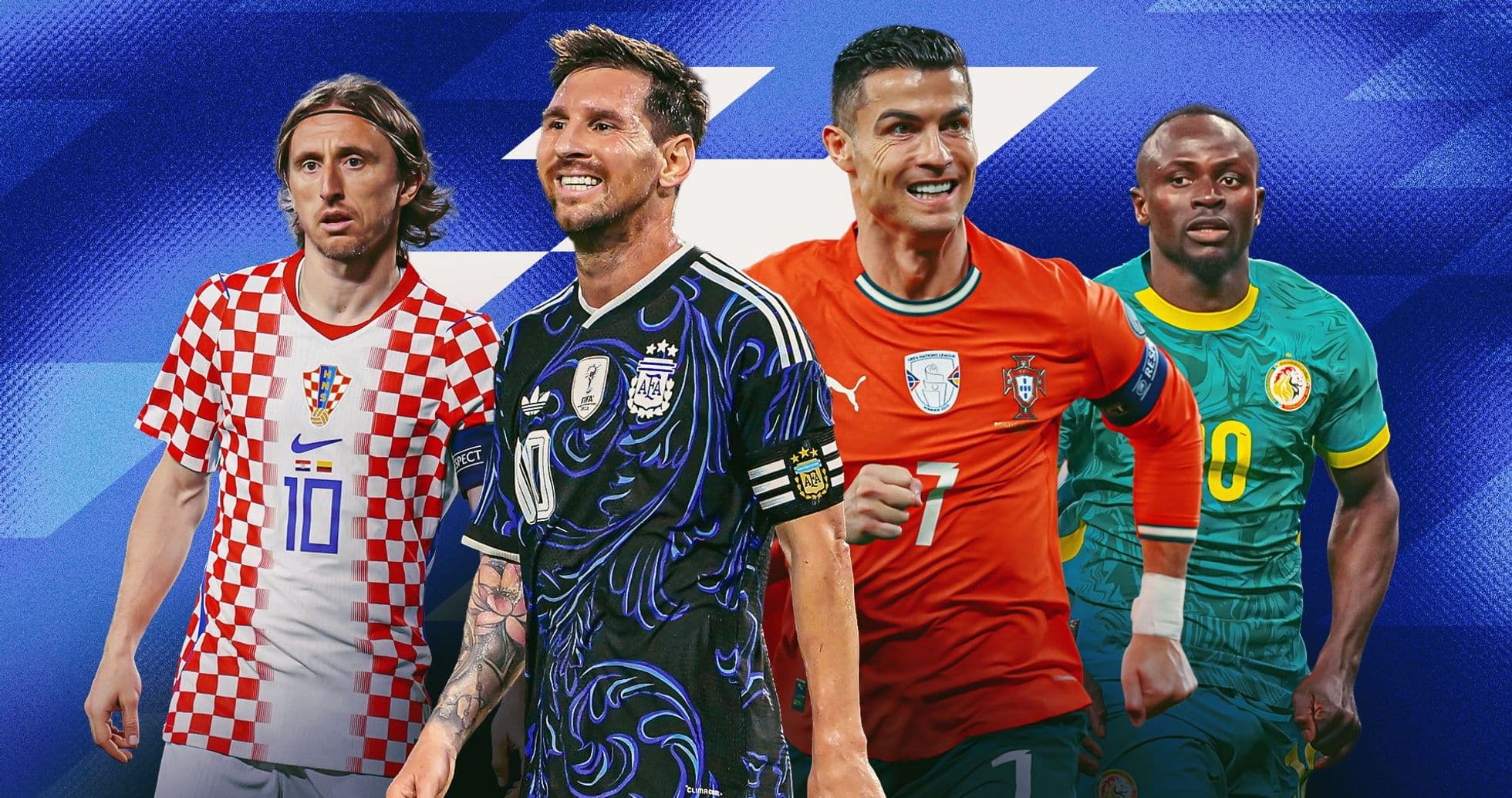
Lionel Messi turns 39 with another World Cup in front of him and, somehow, the story still isn’t finished.
He has already climbed the one mountain that once seemed beyond him, dragging Argentina past France in that wild 2022 final to complete the only missing line on his CV. Since then he has traded the grind of European football for the glare and glamour of Inter Miami, managing his body in MLS while still producing those impossible touches and angles that belong to a younger man’s game.
Now comes a sixth World Cup, a record, in a tournament stretched across a continent and played in punishing heat. Doubts swirl over whether he can survive the expanded format. Yet history keeps warning against underestimating Messi. He has never been one for a quiet exit.
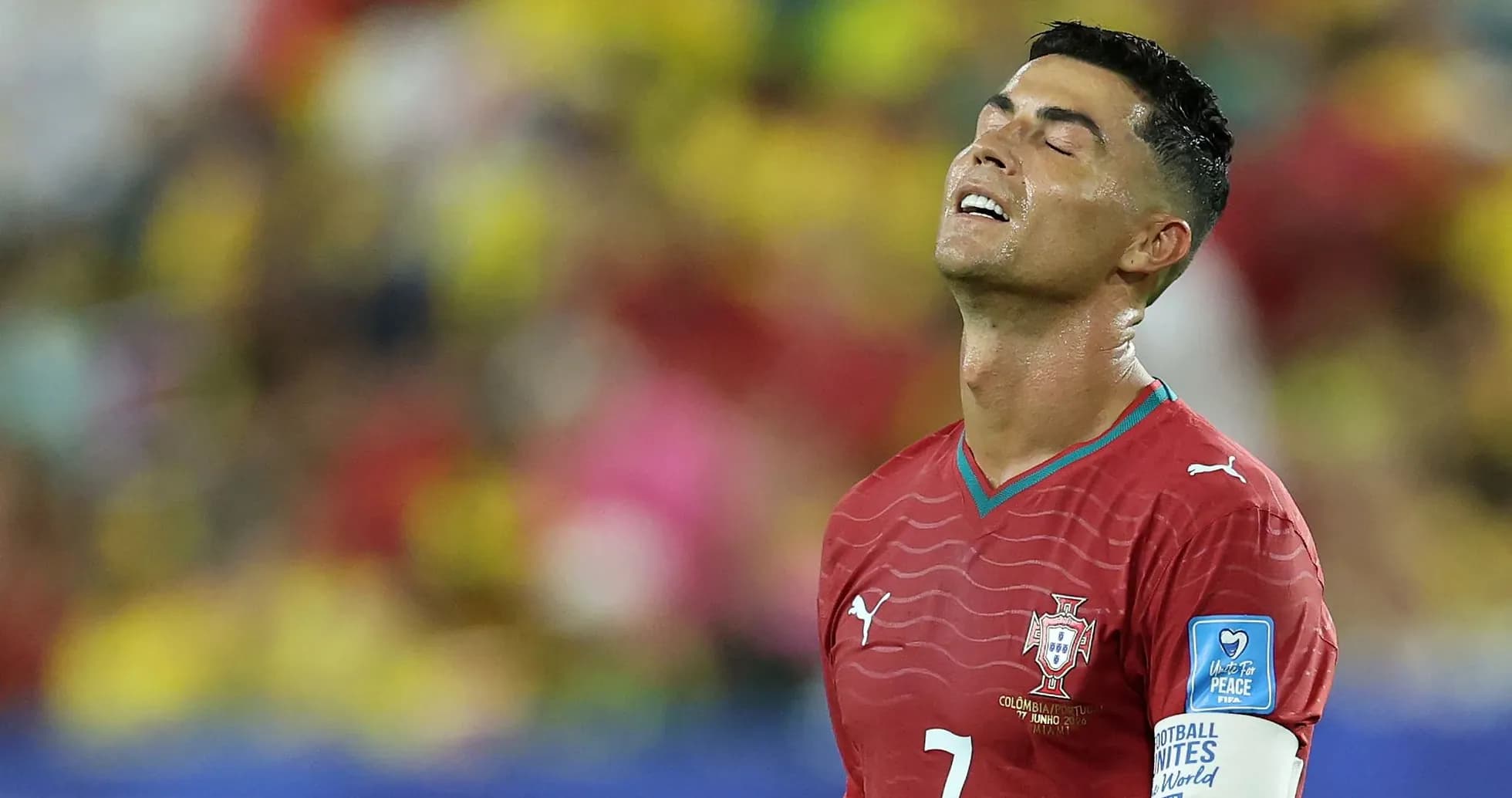
On the other side of the old rivalry, Cristiano Ronaldo arrives with a different kind of burden. At 41, if he lifts the trophy, he becomes the oldest World Cup winner of all time. He has five Ballons d’Or, more goals than anyone can count at first glance, but no World Cup and not a single knockout goal to his name at the tournament. For a figure of his stature, that gap glares.
Logic says a player his age should have been gone from the top level years ago. Ronaldo has ignored logic. He scores relentlessly for Al-Nassr in Saudi Arabia, talks openly about carrying on, and remains the axis around which Roberto Martinez spins his Portugal. With Rafael Leao, Pedro Neto and Goncalo Ramos waiting to inherit the shirt, this feels like the last great throw of the dice. His sixth World Cup, his final swing at immortality on this particular stage.
They will not be alone in chasing one last dance.
Ochoa, Neuer and the goalkeepers who refuse to leave
Guillermo Ochoa’s sixth World Cup looked unlikely not long ago. A cult figure of the tournament for two decades, the Mexican goalkeeper had drifted out of the national picture, with just a single appearance since the CONCACAF Nations League finals in March 2024. Javier Aguirre seemed ready to move on.
Then Angel Malagon ruptured his Achilles in March. A door creaked open, and Ochoa, 40, walked back through it.
His career has taken him all over Europe — Spain, Italy, France, Portugal, Belgium — and most recently to Cyprus with AEL Limassol. He has hinted this will be his farewell, a final World Cup for a man who long ago became part of the tournament’s furniture.
Germany have their own throwback in goal. With Marc-Andre ter Stegen battling injuries and doubts hanging over Oliver Baumann, Julian Nagelsmann reached for the most familiar name of all and pulled Manuel Neuer out of international retirement.
Neuer, 40, had stepped away after Euro 2024 on home soil, one of a cluster of veterans who seemed done with the national team. Then came another strong season at Bayern Munich, another reminder of his authority, and Nagelsmann handed him a fifth World Cup. He has already confirmed Neuer will start in North America as Germany try to avoid the humiliation of a third straight group-stage exit.
Modric and Dzeko: final chapters for master craftsmen
Luka Modric turns 40 at this World Cup, second only to Ronaldo among the oldest outfield players, and still everything Croatia want to be. He led them to their first final in 2018 and then to third place in 2022, bending games to his tempo, dictating emotions as much as passes.
To keep his legs fresh, he joined AC Milan last summer after leaving Real Madrid, trading status for minutes. North America will be his fifth World Cup, and he stands on the brink of another milestone: he is set to become just the fourth player to reach 200 international caps, likely just behind Messi in that race.
Edin Dzeko’s path has been rougher. Bosnia and Herzegovina have struggled to qualify since their solitary World Cup in 2014, and it would have been easy for him to assume that was that. Instead, at 40, he dragged his country back into the spotlight, inspiring a play-off run that ended with victory over Italy and a ticket to the tournament.
He is about to pass 150 caps and has already scored more than 70 times for his country. A January move to Schalke revived his club career too; he fired them back into the Bundesliga to prove there is life in the old number nine yet. He has not appeared at as many major tournaments as his talent deserved, which makes this last World Cup bow feel like overdue recognition.
Asian icons at a crossroads: Son and Salah
Some farewells may be softer, more uncertain. Son Heung-min turns 34 in July. Compared with others, time is still on his side, but the load he carries is heavier than most. He captains South Korea, symbolises their footballing obsession and shoulders the pressure of a nation that expects its star to deliver every time.
He has already walked away from the European game to join LAFC in MLS. By the time 2026 ends, he may feel he has given enough, that the strain of leading his country has finally caught up with him.
Mohamed Salah, just days older than Son, knows that weight too. For years he has hauled Egypt forward almost single-handedly. There is more help now — Omar Marmoush, fresh from Manchester City, leads an improved supporting cast — but the Pharoahs still look to Salah first.
His form for Liverpool has dipped sharply over the last year, and his only previous World Cup in 2018 was marred by the shoulder injury he suffered in that Champions League final. For a player who has dominated club football, his global-tournament record feels incomplete. This World Cup offers one more chance to change that.
With a move to Saudi Arabia looming after his departure from Anfield, the winding down of his career appears close. Expecting him to still be driving Egypt on in 2030 stretches belief.
Mane and Mahrez: Africa’s great wingers eye the exit
Sadio Mane, 34, has been the heartbeat of Senegal’s golden period. He scored the decisive penalty that clinched their first Africa Cup of Nations in 2021 and dragged them to back-to-back World Cups, even if injury cruelly robbed him of a place in 2022.
His move to Al-Nassr has taken him out of the weekly European spotlight, but his commitment to Senegal has not dimmed. He still wears the armband, still sets the tone. With Ismaila Sarr and Illiman Ndiaye blossoming around him, his experience could be the difference between another respectable showing and something deeper, more historic, in 2026.
Riyad Mahrez completes a remarkable African trio. At 35, the Algerian remains one of the most elegant players of his generation, his first touch still drawing gasps, his dribbling still hypnotic. Yet for all that talent, he has only one World Cup appearance — back in 2014.
Algeria have missed every tournament since Brazil. This summer finally gives Mahrez the platform his ability has long demanded, even as he winds down his career with Al-Ahli in Saudi Arabia. For a player of his artistry, a proper World Cup stage feels overdue.
De Bruyne, Van Dijk and the fading ‘Golden Generation’
Kevin De Bruyne’s relationship with his own body has become a running theme. His first season at Napoli after leaving Manchester City has been chopped up by injuries, and as his 35th birthday approaches, the fear grows that his frame is beginning to betray him.
When he is fit, almost nobody can match him. His passing still slices defences open, his shooting from distance still changes games in an instant. Belgium’s so-called ‘Golden Generation’ is fading, but De Bruyne remains the conductor. Rudi Garcia’s squad is in transition, younger, less heralded, yet if De Bruyne can stay on the pitch, Belgium suddenly look like a dangerous outsider again.
Virgil van Dijk, too, is walking the line between peak and decline. He will turn 35 during the tournament, and although he has been the rock on which Liverpool’s modern era was built, the last season has raised uncomfortable questions. Has he lost a yard? Has his anticipation dulled?
Strikers have spent years trying to avoid his side of the pitch, such was his dominance. Now Dutch fans are hoping the World Cup stirs one more vintage performance from their captain. It is only his second finals, and almost certainly his last.
James, Neymar and the World Cup’s complicated love stories
Few players owe as much to a World Cup as James Rodriguez. In 2014 he lit up Brazil, scoring the goal of the tournament, earning a move to Real Madrid and becoming, briefly, the game’s next great hope. The years since have been choppy. Injuries, short-term contracts, spells at various clubs — most recently Minnesota United — have turned his career into a series of cameos.
Yet whenever Colombia call, James responds. He will be 35 by the time the tournament kicks off, but his presence in North America still feels non-negotiable for Colombian fans. One last World Cup chapter for one of its most recognisable faces fits the narrative almost too well.
Neymar’s relationship with the World Cup has been more tortured. Brazil’s all-time top scorer has not played for his country since tearing his ACL in October 2023. When Carlo Ancelotti took over the national team in September and kept overlooking him, the idea of a final World Cup seemed to fade.
Then injuries hit Brazil’s forward line. Ancelotti turned, almost at the last possible moment, and named Neymar in his 26-man squad. The reaction in Brazil was instant, wild, emotional. But there is a catch: Neymar, now 34, picked up another injury just days after the call-up. His fitness, again, is the central question.
His body is clearly rebelling. The notion of him making it to 2030 in one piece feels fanciful. This, then, is his last shot at the trophy that has hovered just out of reach, the one that would deliver Brazil their sixth star and finally settle his place in the country’s unforgiving hierarchy of legends.
England’s spearhead and the quiet ticking of the clock
Harry Kane, by contrast, arrives not as a fading light but as a striker at full burn. At 32, after smashing more than 60 goals for Bayern Munich this past season, he stands alone as England’s all-time leading scorer and arguably in the best form of his life.
Could he go again in 2030? Possibly. England fans certainly hope so, especially given the drop-off behind him. Yet the calendar matters. A European Championship on home soil in 2028 looms, a tournament that would offer a perfect stage for a farewell in front of his own supporters.
That same lure might tug at others. Jordan Pickford, John Stones, perhaps even Marcus Rashford could see 2028 as the right moment to close their international careers. If so, this World Cup becomes their last global mission, their final crack at ending England’s decades-long wait for the biggest prize of all.
Across the globe, the pattern repeats. Legends stretching their careers to squeeze one more tournament out of tired legs. Bodies creaking, minds still burning. North America 2026 will not just crown a new champion; it will close the book on an era. The only question left is who writes the final, unforgettable line.