.svg&w=384&q=75 "naujapitch logo")
Diego Forlan Critiques Cristiano Ronaldo's Static Role for Portugal
Diego Forlan has seen enough strikers to know when one is helping a team – and when he’s clogging it up.
Sitting on ESPN’s La Casa del Kun, the former Manchester United forward and 2010 World Cup Golden Ball winner broke down Cristiano Ronaldo’s role for Portugal with the cold clarity only a No.9 can deliver. The verdict was blunt: Ronaldo’s movement, or lack of it, is making life too simple for defenders and too complicated for his own teammates.
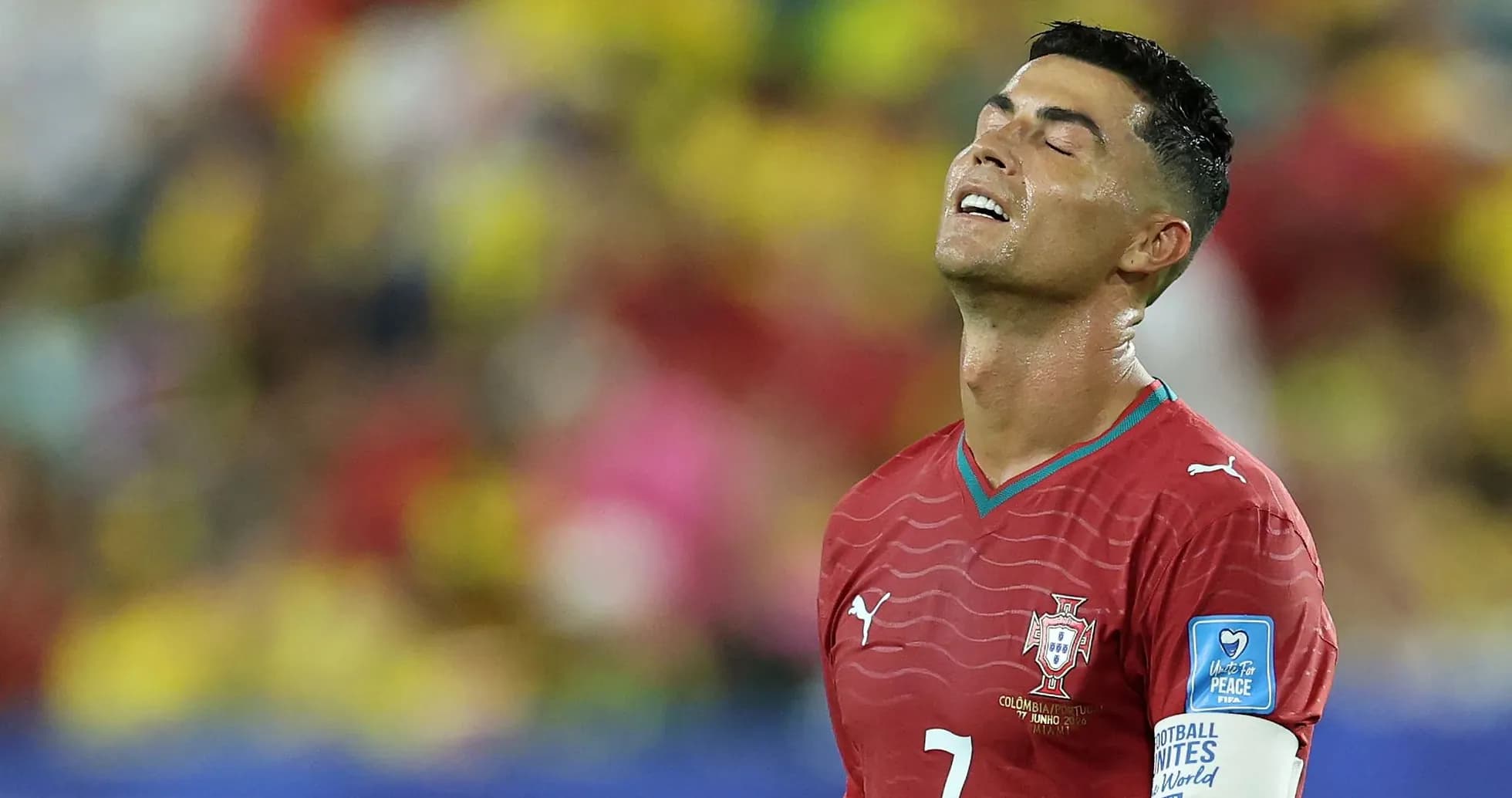
From Forlan’s point of view, the problem starts with Ronaldo’s new reality. He is no longer the explosive wide forward who hunted the ball all over the pitch. He is a penalty-box predator, a pure No.9. Dangerous, yes. But static.
"I'm speaking as a striker, the problem is that Cristiano is in the center, he is who he is, he is there as a No.9, and he stays there to take advantage of the goal because he no longer goes out to look for the ball, but he ends up conditioning Portugal," Forlan explained.
That word – conditioning – is doing a lot of work. Forlan described the classic scenario every centre-back dreams of: a star forward planted between them, easy to track, easy to contain.
"It's the typical situation where we used to say, 'I'm staying here because I'm close to the goal to score,'" he continued. "But you don't understand that you end up hurting your team because both center backs stay there, you don't move. The center backs stay put, one becomes a reference point and the other is left out. You have no one who can get to you because you start closing down that space."
In other words, Ronaldo’s presence in the middle pins the defence, but not in a way that opens lanes. It freezes them. The pitch narrows, the spaces Bruno Fernandes loves to slide into disappear, Bernardo Silva’s angles shrink, Rafael Leao’s runs lose their edge. Portugal’s attack, so rich in imagination, starts to look strangely predictable.
Forlan’s criticism isn’t a call to drop Ronaldo. It’s a call to shift him.
With a squad stacked with creators, the Uruguayan believes a small tweak in Ronaldo’s mentality could unlock the rest of the side. Not a reinvention. Just a bit of movement.
"If he moved a little to the wings, the others could get in and he could be involved," Forlan said, offering what sounded less like punditry and more like direct advice to an old teammate. "That's where Portugal falters because they don't explode because everything ends up going to one side, which is actually a funnel. I wouldn't say it's a problem, it's about making him understand. Telling him: 'Move, get out of there so you can do something'.
That word “funnel” captures Portugal’s current attacking dilemma. Too many moves end up channeled into the same congested area, with Ronaldo as the fixed point and everyone else forced to orbit around him instead of slicing through the lines. Against weaker opposition, his finishing can still paper over the cracks. Against elite defences, that predictability is a gift.
Roberto Martinez now stands at the centre of this tactical tension. Portugal have done their job in the group stage and are through to the round of 32, where Croatia await. Ronaldo has already shown he can still find the back of the net. The aura remains, the penalty-box instincts are intact.
But the “bottleneck” Forlan described hangs over the knockout rounds like a warning sign. Top sides will happily let a 39-year-old striker stand still between their centre-backs all night. They will block the cut-backs, crowd the half-spaces, and dare Portugal to find another way.
So the question is no longer whether Ronaldo can still score. It’s whether he is willing to move differently to help others score.
Forlan’s message is simple: shift to the flank occasionally, drag a defender out, open the channel. Let Bruno arrive. Let Bernardo combine. Let Leao run. Let Portugal breathe.
The pressure on Martinez to manage his captain’s role will only intensify from here. The pressure on Ronaldo is different, more personal. One of the game’s greatest match-winners is being asked, at the tail end of his career, to become a creator of space as much as a taker of chances.
If he accepts that challenge, Portugal’s ceiling rises. If he stays as a static reference point, Croatia – and anyone after them – will know exactly where to look first when they set up their defensive line.