.svg&w=384&q=75 "naujapitch logo")
Kylian Mbappé Takes a Stand Against Far-Right Politics
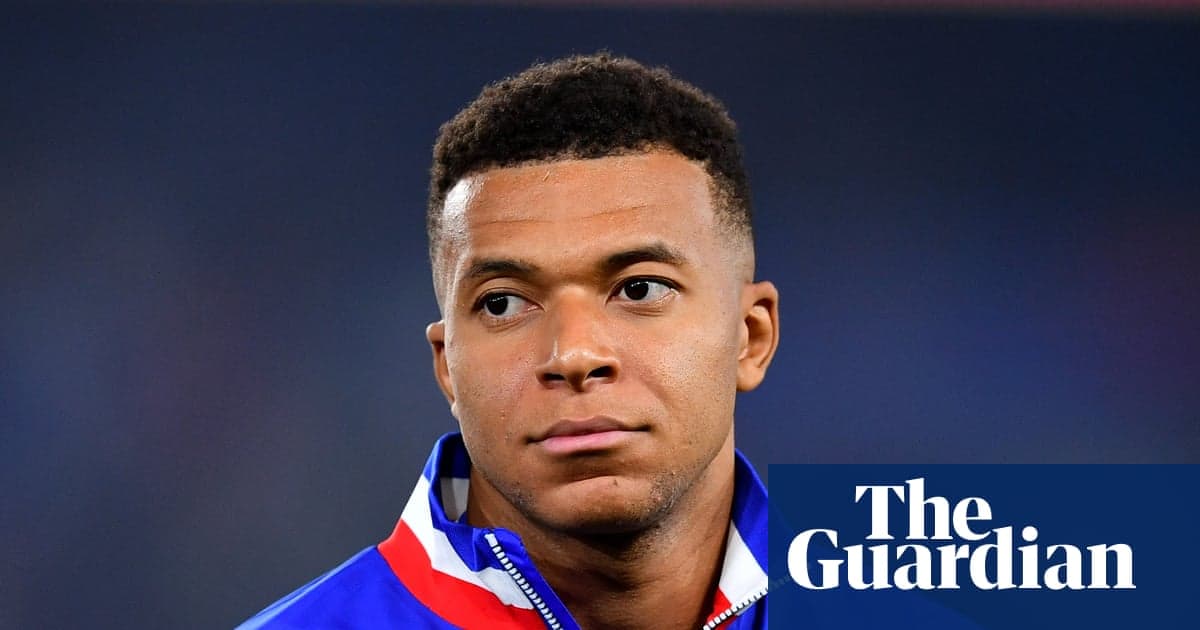
Kylian Mbappé is used to hostile atmospheres. They usually come with floodlights, whistles and a ball at his feet. This week, the French captain walked straight into a different kind of cauldron – and lit the fuse himself.
The 27-year-old, who grew up in the northern suburbs of Paris in a family of Algerian and Cameroonian heritage, chose the pages of Vanity Fair to spell out his unease at the prospect of Marine Le Pen’s far-right National Rally (RN) taking the Élysée next year.
“I know what it means and what consequences it can have for my country when people like them come to power,” he said.
In France’s charged political climate, that single line was never going to pass quietly.
Bardella swings back
Jordan Bardella, 30, the sharp-suited president of the RN and Le Pen’s political heir apparent, needed only a few keystrokes to turn Mbappé’s words into a counterattack.
He went straight for the footballer’s career choices.
“I know what happens when Kylian Mbappé leaves PSG: the club wins the Champions League! (And maybe soon a second time),” Bardella posted on social media.
The jibe cut to a raw sporting truth. Mbappé left Paris Saint-Germain in 2024 for Real Madrid in search of the biggest prize in club football, only to watch his former side finally lift the Champions League the following season. Bardella seized on that twist of fate as a metaphor for political judgment.
Marine Le Pen followed up on RTL radio, twisting the knife with a smile. She claimed she actually found it “reassuring” that Mbappé did not want her party to win, arguing that his own strategy of leaving PSG to win at Real Madrid “had not worked”.
Then came the punchline. Football fans, she said, were “free enough to know who to vote for without being influenced by Mbappé.”
The message was clear: thank you for the lecture, but stay in your lane.
“Not a political activist”
Inside the RN, the line of attack quickly hardened. Julien Odoul, an RN MP and party spokesperson, reminded everyone that Mbappé is not just any footballer; he is the captain of France.
With that armband, Odoul argued, comes a duty to represent “all of France”, including the millions who vote RN. The captain, he said, should not become a “political activist”.
It was a direct attempt to frame Mbappé’s intervention as a breach of his national role, to turn his status as a unifying sporting figure into a constraint: you lead the team, not the debate.
Yet Mbappé has never pretended to be apolitical. His words this week are the continuation of a stance he has been shaping for years.
During the snap parliamentary elections in 2024, as the RN surged, he described the party’s gains as “catastrophic”. That remark sparked an earlier clash with Bardella, who fired back that it was “embarrassing” to see wealthy athletes “give lessons to people who can no longer make ends meet, who no longer feel safe”.
The feud has been simmering ever since. This latest exchange has brought it to a boil.
“Foremost a citizen”
Mbappé’s answer to the “too rich to speak” accusation came in the same Vanity Fair interview that set off the latest storm.
“Even as a footballer, you’re foremost a citizen. We’re not disconnected from the world … or from what’s happening in our country,” he said.
People, he added, sometimes think that because players “have money, because we’re famous, these kinds of problems don’t affect us.” But footballers “have our say, like everyone”.
He admitted that the RN’s breakthrough in parliament in 2024 had jolted him and others inside the dressing room.
“We’re citizens and we can’t just sit there saying all will be fine and go and play,” he said. “We have to fight this idea that a footballer should just be content to play and keep quiet.”
That sentence goes to the heart of the confrontation. Bardella and Le Pen want Mbappé boxed into the role of entertainer. Mbappé refuses, insisting his platform gives him a responsibility, not a gag.
Symbol of a different France
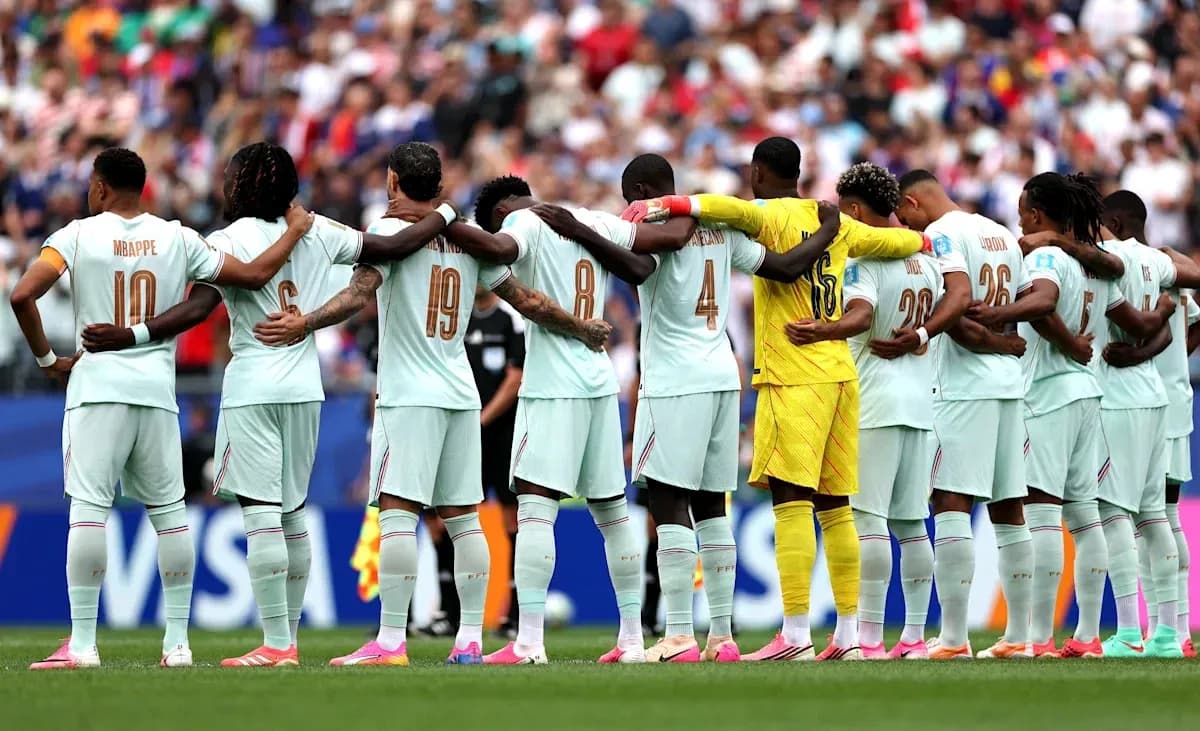
Mbappé is not just the captain of the national team; he is the emblem of a side that has long been held up as the mirror of a changing France.
Born in 1998, the year Zinedine Zidane led a multi-ethnic squad to a first World Cup and the team was mythologised as “Black-Blanc-Beur” (Black-White-Arab), Mbappé grew up under the shadow of that narrative – the idea that football could somehow soothe the country’s deep identity wounds.
He has spent much of his career pushing back against the stereotypes attached to the diverse, working-class suburbs where he was raised, using his own story as a counter-argument. Now, as many tip France to win this summer’s World Cup, the man who embodies that “new France” finds himself on a collision course with a party accused by its critics of deepening social divides.
That clash of symbols is not lost on anyone.
A risky target
From a strategic point of view, the RN’s decision to take on Mbappé is a calculated gamble.
William Thay, from the thinktank Le Millénaire, told Reuters that Bardella’s response this week was politically astute in one sense. Mbappé’s popularity at home, he argued, has dipped since his departure from PSG, with some fans bristling at what they see as arrogance and underwhelming performances at Real Madrid.
In that reading, Bardella is not attacking an untouchable icon but a slightly bruised star, one whose halo has slipped just enough to make him a safer target.
Yet Thay also warned of the other side of the coin. By going after one of France’s biggest sporting figures, the RN risks alienating moderates who already fear the party’s impact on social cohesion. The more the party clashes with a player who still commands huge admiration, the harder it becomes to reassure those voters that it does not seek to inflame cultural fault lines.
So the stakes are obvious. Mbappé has chosen to speak, clearly and repeatedly. The RN has chosen to hit back, publicly and personally.
One is preparing for a World Cup. The other for a presidential race. Both know that in today’s France, those two arenas no longer feel so far apart.