.svg&w=384&q=75 "naujapitch logo")
Pochettino's Fury After USMNT's Defeat to Turkiye
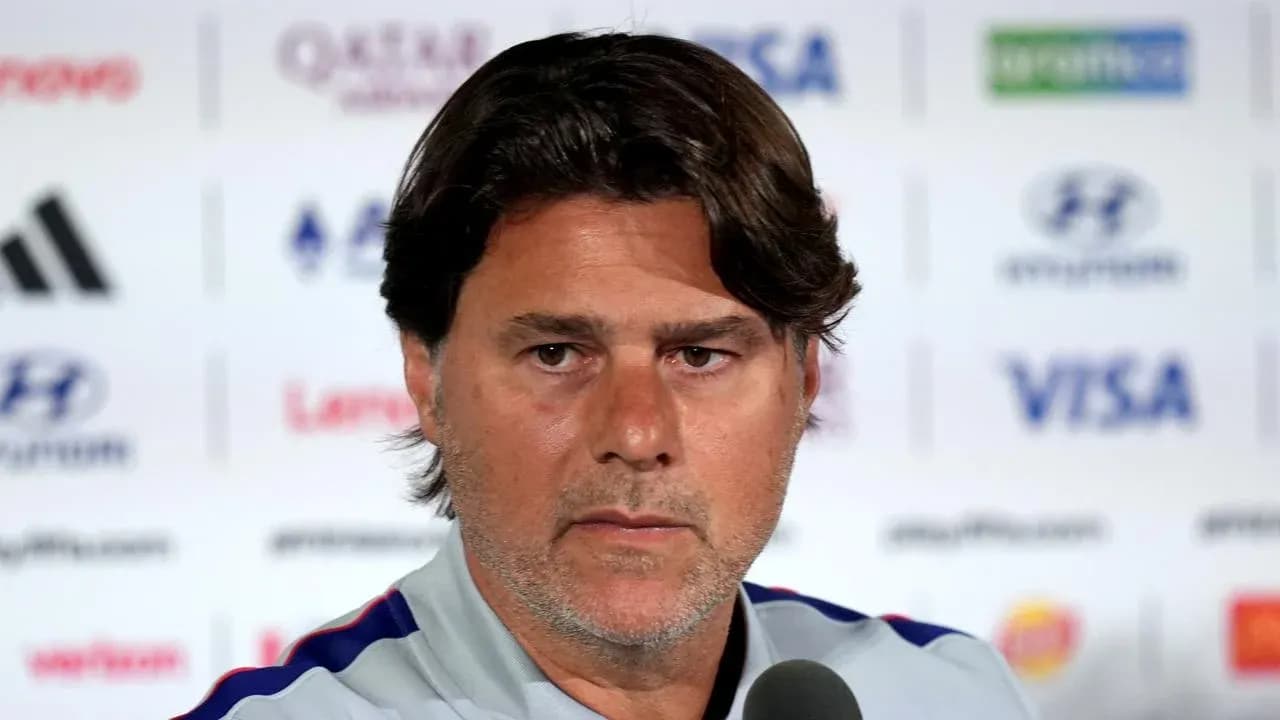
Mauricio Pochettino walked into the press room having lost a game but won a group. Only one of those seemed to matter to the people asking the questions.
The United States had just been beaten 3-2 by Turkiye, a chaotic, scrappy defeat that snapped their perfect start to the World Cup. The mood in the room matched the scoreline, not the standings. Every question circled the same theme: momentum lost, doubts raised, cracks exposed.
Pochettino snapped.
“The mood is like we [are going] home tonight and Turkey is staying,” he said, bristling. “I need to [remind] you and everyone that we won the group. Sorry guys, we won.”
He wasn’t smiling when he said it. This was not a coach basking in the glow of qualification. This was a manager furious that the achievement had been brushed aside within minutes of the final whistle.
The irony was obvious. Before the match, Pochettino had spoken about chasing another win, about the value of rhythm and standards. Then came the team sheet: nine changes from the XI that beat Australia. A side built more for managing legs than making history.
That history would have been a small slice, but a slice nonetheless. Had the USMNT found a way past Turkiye, they would have become the first American team ever to win all three group games at a World Cup. For many, that sounded like a landmark worth chasing.
Pochettino was having none of it.
“Making history is winning the World Cup,” he said. “It’s not winning three matches only within the World Cup. I don’t really understand. It’s a little bit petty if you will — you’re thinking a little too small. You’re telling me you could make history — what does it mean to win three matches if you lose the next one?”
That line cut to the heart of his approach. For him, the group stage is a runway, not a destination. Resting key players, rotating heavily, accepting a hit to short-term momentum – all of it, in his mind, sits under one heading: arrive at the knockouts alive, healthy and dangerous.
He pointed across the tournament to make his case. Germany, he noted, had rolled out many of their regulars just hours earlier and still fallen to a desperate Ecuador side. No guarantees, no perfect script, only risk.
The United States took their own risk in a different way. The heavily changed XI couldn’t quite cope with Turkiye’s urgency, and the game slipped away. Yet amid the defeat came a crucial positive: Christian Pulisic’s return.
The AC Milan forward had missed the Australia match with a calf issue after being withdrawn at half-time in the win over Paraguay. Here, he got back on the pitch, back into contact, back into the rhythm of tournament football. For a team built so much around his creativity and edge, that may prove more valuable than any group-stage clean sweep.
Pochettino’s message was clear. The group is won. The job, as he sees it, has barely started.
Arnold’s Iraq left to count the cost
While Pochettino bristled at the tone of questions after a group-topping campaign, Graham Arnold faced a different reality entirely: a World Cup over, a future uncertain, and a 5-0 defeat to Senegal as a brutal full stop.
Iraq’s hopes effectively disintegrated after 13 minutes, when Rebin Sulaka saw red with Senegal already 1-0 up. From there, the gulf in quality and composure grew wider with every attack.
Arnold didn’t sugarcoat it.
He lamented the “stupid red card” that flipped the contest from difficult to almost impossible, and then went straight to the numbers that will haunt his squad. Across three matches, Iraq conceded 12 goals; by his count, nine came directly from individual errors.
“The early red card was mentally tough on the players. Against a team like Senegal, mistakes are always punished,” he said. “I told the players after the match that we conceded 11 goals at this World Cup, and nine came from our own individual mistakes. We have to learn from that.
“In the second half, we ran out of energy. I also made changes to give more players the chance to experience representing Iraq at the World Cup, and I take full responsibility for that.”
Group I, with France and Norway alongside Senegal, always loomed as a harsh examination for a side that only just squeezed into the tournament. Iraq were the last team to qualify, dragged there by Arnold through an intercontinental playoff, reaching a World Cup for the first time in 40 years.
That context matters. So does the pride he still demanded his players and supporters hold onto.
“Everyone in Iraq should be proud of the fact that we made it here and we performed very well in two out of the three games,” he told reporters in Toronto.
Yet the questions now move from tactics to tenure. On the eve of the Senegal match, Arnold revealed his contract expires at the end of the tournament. The timing is awkward. Next year’s Asian Cup in Saudi Arabia could pit him against his old team, the Socceroos, in the group stage.
Does he stay for that reunion? Or does this World Cup, for all its emotional weight and hard lessons, mark the end of his Iraqi chapter?
“I’ve just asked them to leave it until after World Cup, then we can have a chat then,” he said on Friday.
For now, Iraq are out, their campaign reduced to memories of what might have been and mistakes that must not be repeated.
Panama fire flares in dead rubber
At Panama’s training session in New Jersey, with elimination already confirmed, a flash of anger broke the monotony.
Cecilio Waterman and Jose Luis Rodriguez clashed on the pitch ahead of Saturday’s game against England. Tempers flared, words were exchanged, and for a moment, a dead rubber didn’t feel so dead.
Coach Thomas Christiansen didn’t just play down the incident. He welcomed it.
“What happened today in training, this is a normal situation,” he said. “I would’ve liked to see these situations more often, that means the team is alive. They are willing to do a good effort... to be in the first XI for the game.
“If this happens another time, it’s a good sign that they are alive.”
Panama arrive at their final Group L match still searching for a first World Cup point. Five games at the tournament, five defeats, including that 6-1 hammering by England in 2018.
Now, they get England again. Another shot, another benchmark.
“Now we have the last game against England, a good way to finish a World Cup if it goes our way,” said Christiansen, who has been in charge since 2020 but is out of contract after the competition.
“I think we have made changes from the last time they faced Panama eight years ago, but we need to show it tomorrow.
“It will be a tough one but I’m thinking that the team will be able to compete and do a good game.”
For a squad already packing bags, that training-ground confrontation may be exactly what they need: proof that pride still burns, that reputations still matter, that this final 90 minutes is not just a formality.
France win, Deschamps mourns
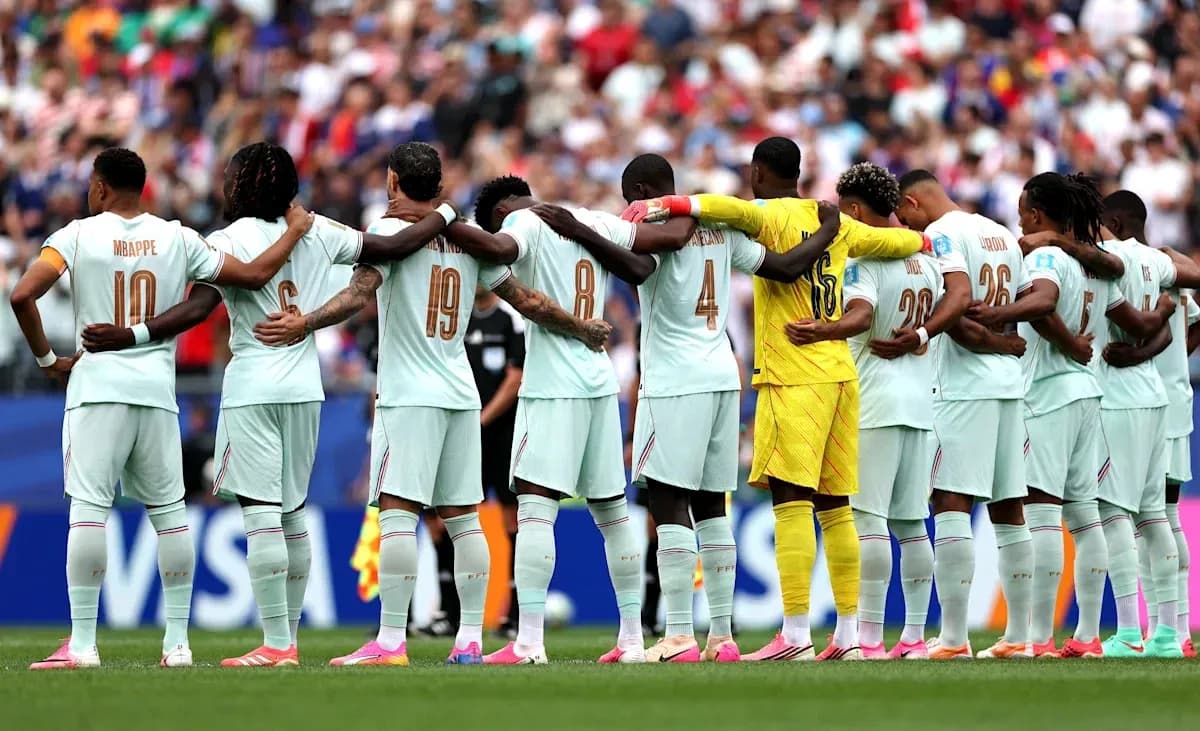
France eased past Norway 4-1, a scoreline that underlined their status as heavyweights. Their head coach, though, was thousands of kilometres away, dealing with something far more personal.
Didier Deschamps missed the game after returning home for his mother’s funeral. The players wanted to carry a visible sign of solidarity, planning to wear black armbands in his honour.
They were blocked.
The French Football Federation confirmed to The Athletic that FIFA denied their request. On top of that came confusion over a planned minute’s silence. It had initially been briefed that it would be held for Deschamps’s mother, but the FFF later clarified it was instead in honour of the victims of the Venezuelan earthquake.
On the pitch, France delivered. Off it, the night felt strangely disjointed, the gestures tangled in protocol and miscommunication.
Across this World Cup, managers and players are juggling more than tactics and selection. Pochettino fighting to protect his narrative. Arnold wrestling with regret and pride. Christiansen searching for life in a team already out. Deschamps grieving while his side marches on.
The knockout rounds will strip everything back to results. Until then, the stories behind the touchline keep asking the same question: who will still be standing when the real history is on the line?