.svg&w=384&q=75 "naujapitch logo")
Egypt's Historic World Cup Knockout Victory
Hossam Abdelmaguid walked alone from the halfway line, 18 years old with a nation on his shoulders and 70,000 people holding their breath in Texas. One clean strike later, Egypt were in uncharted territory.
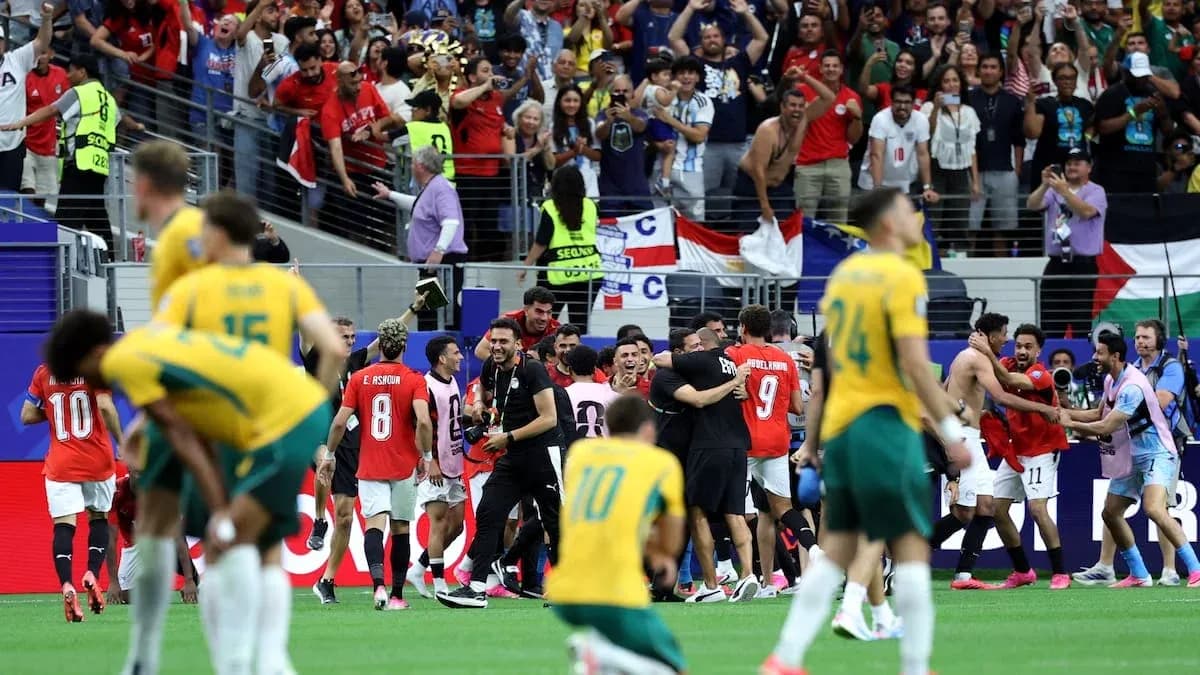
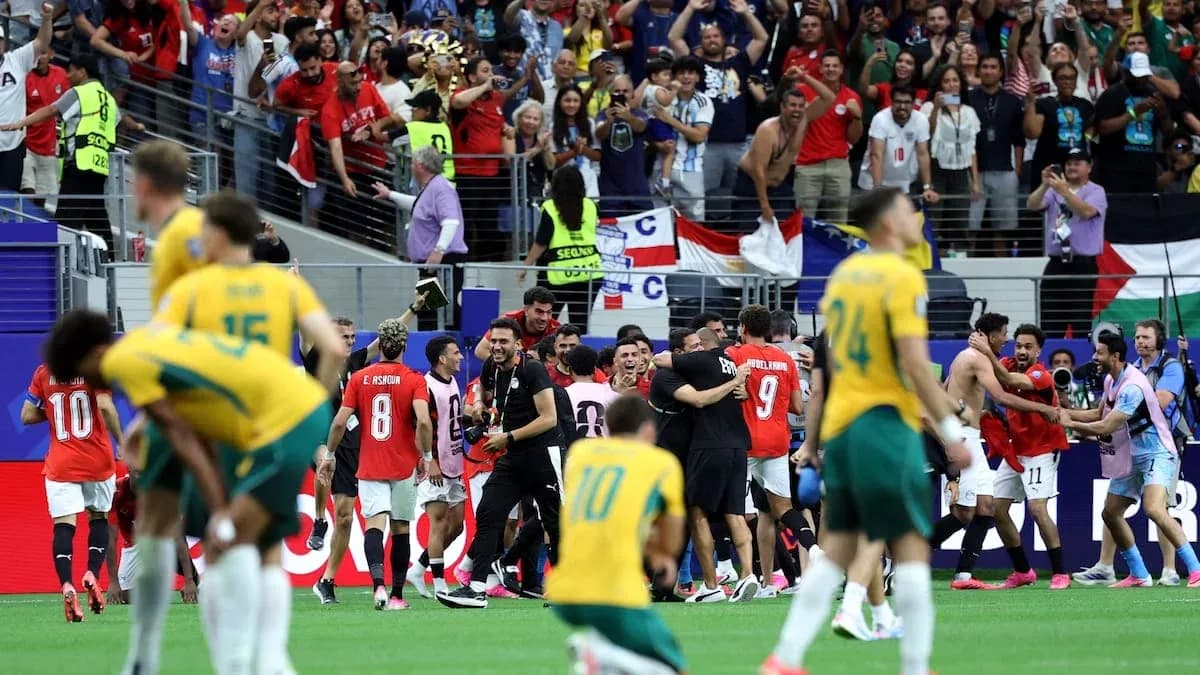
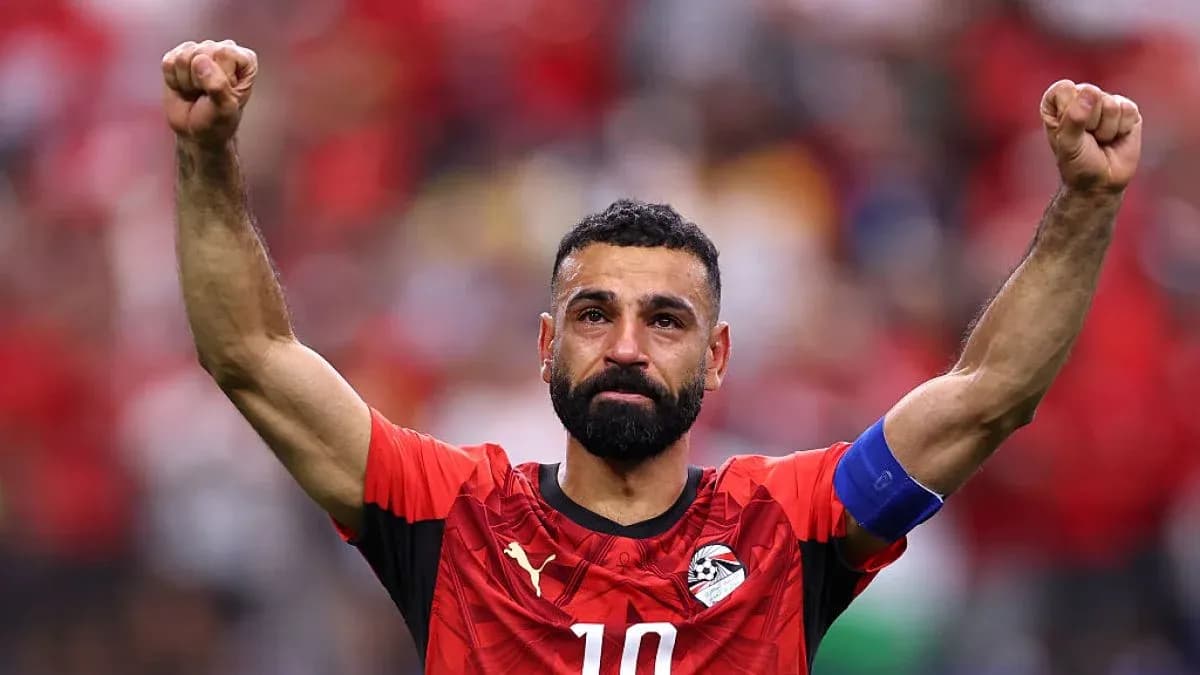
For the first time in their history, the Pharaohs are in the last 16 of a World Cup, edging past Australia 4-2 on penalties after a fraught 1-1 draw over 120 minutes. Mohamed Salah, their wounded captain, ended the night in tears of joy. Australia ended it on their knees.
A night that rewrote Egypt’s World Cup story
This was not a classic in the purist’s sense. It was tight, tense, and often scrappy. It was also everything knockout football should be: nervy, unforgiving, and loaded with consequence.
Egypt arrived with a new kind of weight. Seven-time African champions, but historically spectators rather than protagonists on this stage. They had tasted their first ever World Cup win earlier in the group phase against New Zealand. This was the next step: win a knockout tie, or go home as nearly-men again.
Australia knew that feeling. The Socceroos had never won a men’s World Cup knockout match either. Something had to give.
It almost did within five minutes. Cristian Volpato, the playmaker who switched allegiance from Italy to Australia on the eve of the tournament, rattled the top of the crossbar with a fierce effort that had Mostafa Shobeir beaten. A warning shot, literally.
Egypt looked rattled early. Their back line hesitated, passes went astray, and the crowd sensed vulnerability. Then, almost out of nowhere, Hossam Hassan’s side struck.
Ashour pounces as Egypt seize the moment
Against the run of play, Nestory Irankunda switched off for a heartbeat. It was enough. Karim Hafez swung in a teasing cross to the back post, and Emam Ashour ghosted in unmarked, guiding a precise header home after 13 minutes for his second goal of the tournament.
The goal changed everything. Australia, a team that had scored only twice in the group stage, suddenly had to chase a game they rarely dominate. Egypt, in front of a largely partisan crowd, had something priceless: a lead and a little belief.
Australia’s response was tame. Ten minutes before the break, Aziz Behich finally tested Shobeir, but his shot dribbled comfortably into the goalkeeper’s arms. Shobeir, whose father Ahmed kept goal for Egypt at the 1990 World Cup, looked the calmer of the two teams’ keepers.
Salah, meanwhile, barely flickered. The 34-year-old, still feeling the effects of a hamstring strain from Egypt’s last game, drifted on the fringes of an attritional first half. One of the world’s great match-winners looked like a man searching for his rhythm.
The half ended with a jolt. Jordan Bos, one of the quickest players in the tournament, was left in a heap after a flying, full-blooded challenge from Rabia. Bos could not continue and Kai Trewin replaced him at the interval, a significant blow to Australia’s attacking thrust on the left.
Australia drag themselves back from the brink
Seconds after the restart, Egypt should have killed it.
Omar Marmoush, the Manchester City attacker, slid in at the back post with the goal gaping and somehow steered his effort wide from close range. It was the kind of miss that haunts teams in tournaments. Egypt would soon learn why.
Hassan had warned about Australia’s physical edge, and it began to tell. Set pieces, duels, long balls into the box – the Socceroos leaned into their strengths. Under pressure from an in-swinging free-kick, Mohamed Hany mistimed his header and diverted the ball into his own net 10 minutes after half-time.
His second own goal of the tournament. A cruel statistic, and a lifeline for Australia.
From there, the match turned into a grind. Both teams understood what was at stake: a first ever World Cup knockout win. Neither wanted to be the side that blinked.
Egypt finished the 90 minutes stronger. Salah, still on the margins but growing into the game, linked play as the Pharaohs pushed for a late winner. Deep into added time, Patrick Beach produced a superb save to deny Ramy, stretching to claw the ball away and drag the contest into extra time.
Extra time, frayed nerves, and a looming shootout
Extra time brought tired legs and frayed concentration. Egypt, buoyed by their late surge in normal time, tried to press the advantage. Salah snatched at a chance on his weaker right foot, firing high over the bar early in the additional 30 minutes.
The longer it went, the more inevitable penalties felt.
Australia, having weathered the storm, focused on survival. Egypt probed, but the final ball lacked precision. Salah still could not quite bend the game to his will in open play. When the whistle blew after 120 minutes, there was a sense that destiny would be decided from 12 yards.
Tony Popovic made his move. In a last throw of the dice, the Australia coach sent on experienced goalkeeper Mathew Ryan specifically for the shootout, banking on his presence and penalty pedigree to tilt the balance.
It didn’t.
Souttar’s miss, Salah’s nerve, Abdelmaguid’s moment
The shootout played out in front of the Egypt fans, a wall of noise and whistling that grew louder with every step an Australian player took towards the spot.
Harry Souttar went first. The defender, normally so composed, skied his kick over the bar. Immediate advantage Egypt.
The next five penalties found the net. Salah, who had looked subdued for most of the match, walked up with the air of a man who has taken this responsibility countless times. One calm run-up, one ice-cold finish. The captain did his part.
Then came Lucas Herrington. Just 18, the young defender struck his effort firmly but too high, the ball crashing off the bar and back out. Another crack in Australia’s resolve.
That left Abdelmaguid. Still a teenager, staring down Ryan and the weight of Egyptian football history. No fuss, no theatrics. He sent Ryan the wrong way and buried his kick, sparking an eruption of green, red, black, and white in the stands.
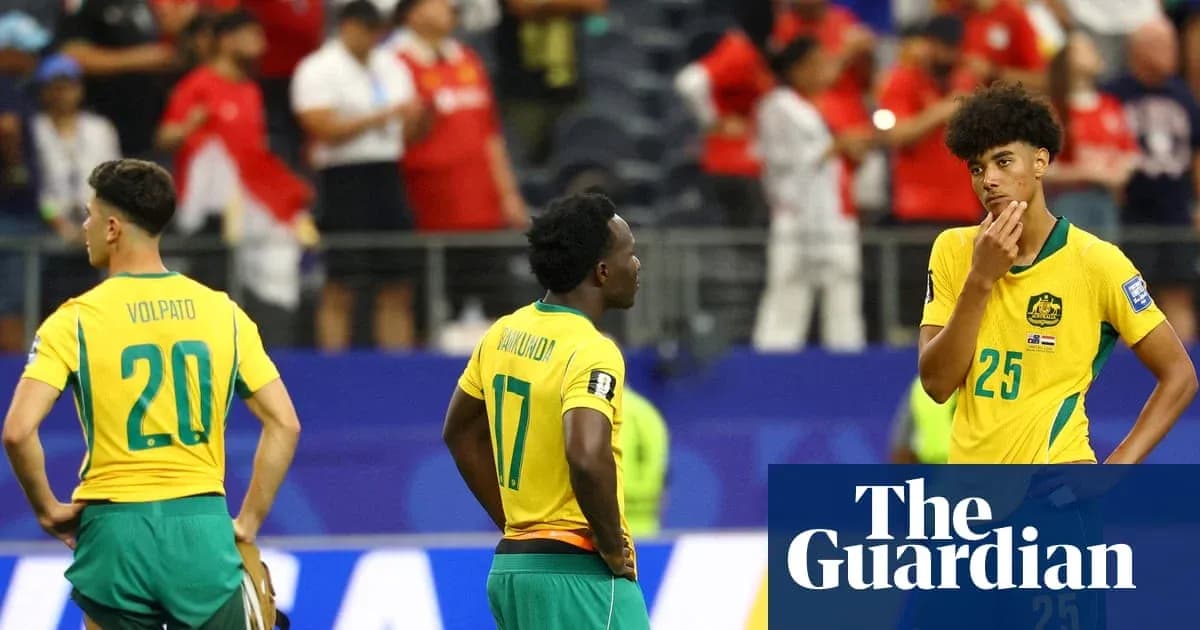
Salah dropped to his knees in tears. Teammates sprinted towards Abdelmaguid. Australia’s players stood frozen, processing how close they had come and how brutally it had slipped away.
Argentina – or Cape Verde – await
The reward for Egypt’s nerve is as daunting as it is glamorous. Lionel Messi’s Argentina are expected to emerge from their last-32 tie against World Cup debutants Cape Verde. Only a seismic shock would prevent a meeting between the reigning champions and a nation finally finding its voice on this stage.
Whoever they face in Atlanta on Tuesday, one thing is clear: Egypt will walk out not as guests at football’s top table, but as a side that has already broken one barrier and is hungry for more.
They have their first World Cup knockout win. They have their captain fit enough to keep going. And they have an 18-year-old who now knows exactly what it feels like to decide a nation’s fate from the spot.
How far can that belief carry them?