.svg&w=384&q=75 "naujapitch logo")
Egypt vs Australia: Tactical Analysis of a Penalty Shootout
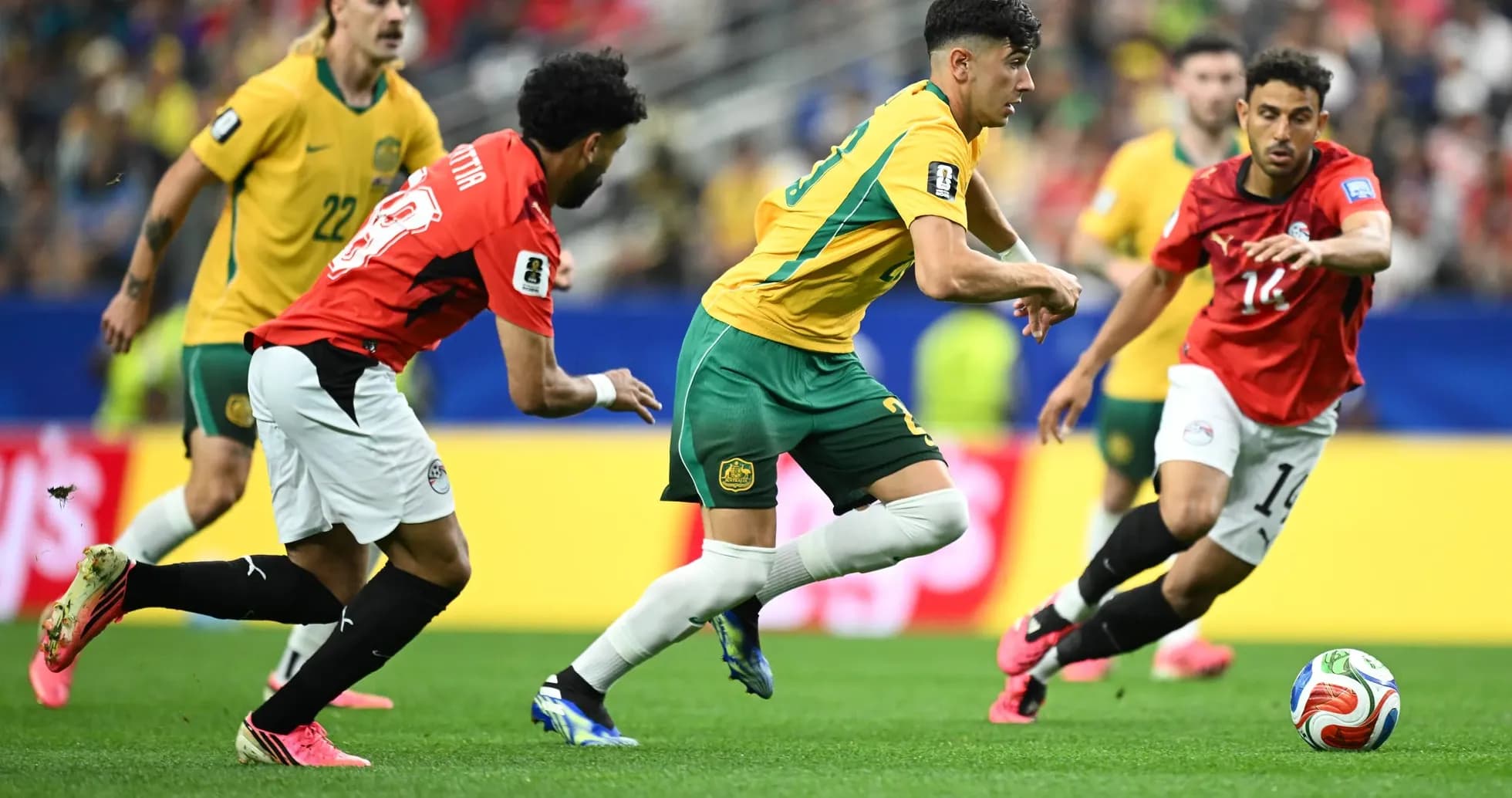
Australia and Egypt produced a tense, structurally interesting Round of 32 tie at AT&T Stadium, decided only on penalties after a 1-1 draw across 120 minutes. Egypt’s 4-4-2 controlled territory and tempo, while Australia’s 3-4-2-1 tried to compress central zones and counter vertically. The statistical profile – Egypt with 58% possession, superior xG (1.36 to 0.87) and more shots on goal (4 to 1) – underlined an Egyptian side that largely dictated the game but struggled to turn control into clear separation.
Egypt’s initial tactical plan was clear: a classic 4-4-2 with Mohamed Salah and Mostafa Ziko high, supported by Omar Marmoush drifting inside from the left and Emam Ashour from the right. With Hamdy Fathy and Marwan Attia in the central pairing, Egypt built patiently through a back four of Mohamed Hany, Yasser Ibrahim, Rami Rabia and Karim Hafez. Their 723 total passes at 85% accuracy show a strong emphasis on circulation and positional play, using the full width to move Australia’s back three laterally.
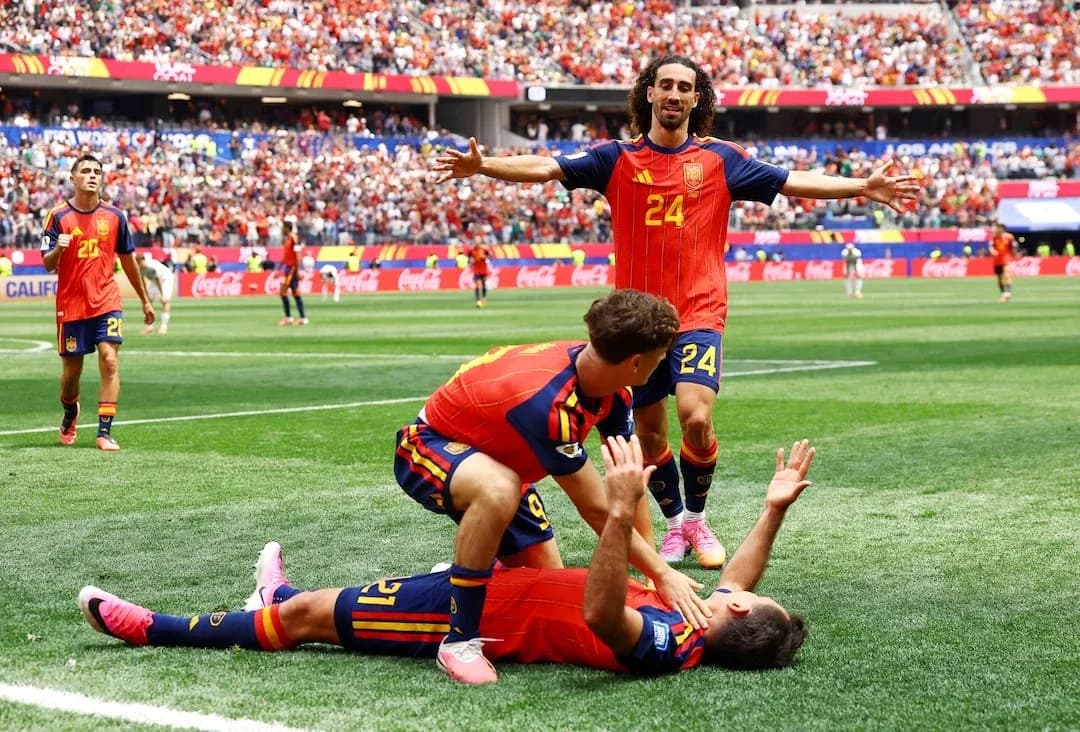
The opening goal on 13 minutes, finished by Emam Ashour and assisted by Karim Hafez, reflected this structure: full-back advanced high, wide midfielder arriving in the half-space. Egypt consistently created overloads down the flanks, especially their left, with Hafez pushing on and Marmoush tucking inside to drag markers away. The 7 corner kicks to Australia’s 4 and 8 shots inside the box underline how often Egypt managed to pin Australia back and deliver from advanced wide positions.
Australia’s 3-4-2-1, with Patrick Beach in goal behind a back three of Lucas Herrington, Harry Souttar and Alessandro Circati, was designed for compactness. Wing-backs Jordan Bos and Aziz Behich were asked to cover huge vertical distances, while the double pivot of Jackson Irvine and Aiden O’Neill tried to screen central lanes into Salah and Ziko. In possession, the Socceroos built with three plus two, using Irvine to step into higher lines and Cristian Volpato and Connor Metcalfe to occupy pockets behind Egypt’s midfield.
However, Australia’s attacking profile shows a side relying more on volume than precision. They finished with 16 total shots but only 1 on goal, and an unusually high 9 blocked shots. That combination suggests Egypt’s back line defended their box aggressively, stepping out to block rather than dropping onto the six-yard line. Ibrahim and Rabia, in particular, appeared comfortable defending front-foot, with the midfield line recovering quickly to close shooting lanes.
The equaliser at 55 minutes – an own goal by Mohamed Hany credited to Australia – came from the kind of pressure Australia had been trying to create: forcing errors in the defensive third rather than carving open clear chances. It was less about intricate chance creation and more about putting balls into dangerous zones and challenging Egypt’s defensive decision-making.
Substitutions shifted the tactical tone as the game wore on. At 46', Kai Trewin (IN) came on for Jordan Bos (OUT), signalling a tilt towards greater defensive solidity on Australia’s left and perhaps a desire to guard against Egypt’s right-sided rotations. Later, at 74', Mohamed Touré (IN) came on for Nestory Irankunda (OUT) and Ajdin Hrustić (IN) came on for Cristian Volpato (OUT), adding fresh legs and a more creative left foot in Hrustić between the lines. These changes hinted at a late attempt to improve ball progression and set-piece quality rather than fundamentally alter the structure.
Egypt’s changes around 67' were more about maintaining physical intensity and aerial presence. Hossam Abdelmaguid (IN) came on for Hamdy Fathy (OUT) and Haissem Hassan (IN) for Mostafa Ziko (OUT), refreshing the front line and central presence. Later, Mahmoud Trézéguét (IN) replaced Karim Hafez (OUT) at 80', which subtly changed the left flank from a full-back–driven overlap pattern to a more winger-oriented threat, with greater one-v-one capacity but less natural width from deep.
Extra time underlined the physical and mental demands rather than offering major tactical innovation. Both sides had already used substitutions to balance energy and penalties planning. Australia’s late goalkeeping change at 119', with Mathew Ryan (IN) coming on for Patrick Beach (OUT), was a clear penalty-shootout strategy, prioritising Ryan’s experience and penalty-saving profile. On Egypt’s side, late introductions like Hamza Abdelkarim (IN) for Omar Marmoush (OUT) at 106' and Mahmoud Saber (IN) for Marwan Attia (OUT) at 120' helped manage fatigue and offered fresh legs for the final minutes and the shootout.
Discipline played a minor but telling role. Egypt collected two yellow cards – Haissem Hassan at 105' and Yasser Ibrahim at 120', both for “Foul” – reflecting a team that occasionally had to break Australia’s transitions with tactical infringements, especially as spaces opened up in extra time. Australia, by contrast, finished without a booking, consistent with their more reactive, structurally conservative approach.
In goal, the statistical picture supports the broader tactical story. Patrick Beach (Australia) made 3 saves before being replaced, while Mostafa Shobeir (Egypt) was required to make only 1 save. Combined with the shots data, this confirms Egypt generated more on-target danger, while Australia’s attacks were often smothered before testing the goalkeeper. The goals prevented metric at -0.9 for both sides suggests each conceded slightly more than modelled expectations would predict, with the own goal a significant distortion on Egypt’s defensive output.
Ultimately, the statistical verdict is of an Egypt side that controlled the ball, created the better quality chances and forced Australia into a low-block, counter-punching game. Egypt’s higher xG (1.36 to 0.87), superior passing volume (723 to 507) and accuracy (85% to 80%), and more shots on goal (4 to 1) indicate they did enough in open play to justify progression. Australia’s 42% possession, heavy reliance on blocked shots and a goal via own goal illustrate a team that defended bravely and remained structurally organised but lacked cutting edge in the final third.
The penalty shootout, which Egypt won 4-2 after a 1-1 draw over 120 minutes, ultimately aligned with the balance of play. Egypt’s territorial control and attacking structure did not translate into a decisive scoreline in normal or extra time, but their superiority in key metrics and composure from the spot ensured that the more proactive, possession-dominant side advanced from this finely poised tactical battle.