.svg&w=384&q=75 "naujapitch logo")
Colombia Dominates Ghana in World Cup Match
Colombia’s 1-0 win over Ghana at Arrowhead Stadium in this World Cup Round of 32 tie was a territorial and structural domination more than a thriller on the scoreboard. Nestor Lorenzo’s side imposed a high-possession, high-volume attacking game, pinning Carlos Queiroz’s Ghana into their own half for long stretches. The numbers underline it: 61% possession, 20 total shots to 8, and an xG of 2.18 to 0.26. Yet the margin remained a single goal, shaped by Colombia’s aggressive rotations in a 4-3-3 and Ghana’s compact 4-1-4-1 block, plus an outstanding display from Lawrence Ati Zigi in the Ghana goal.
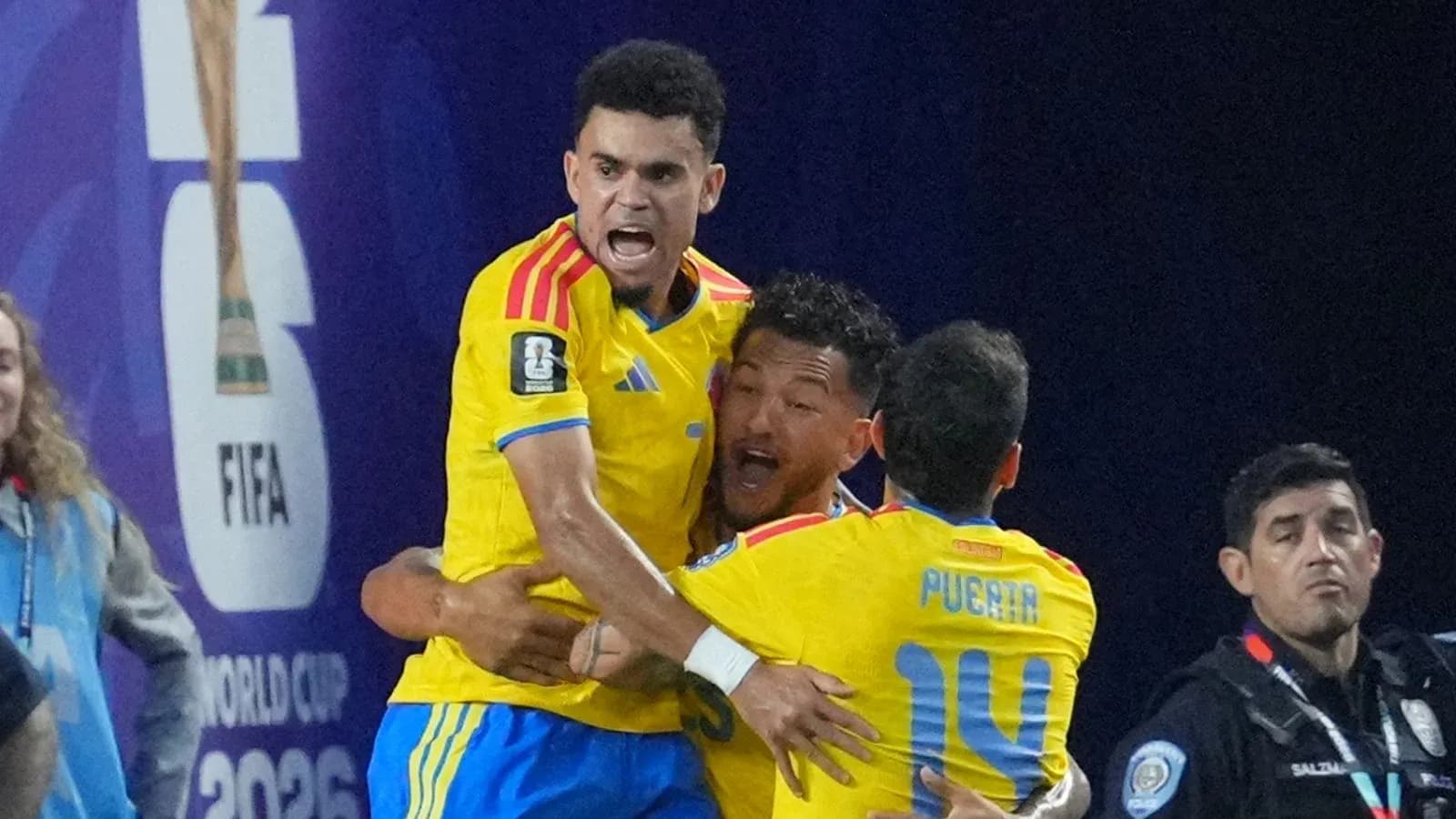
The decisive moment came early. After an 8' substitution that brought Luis Javier Suárez on for Jhon Córdoba, Colombia’s front line gained extra mobility between the lines. At 14', Jhon Arias arrived from midfield to score the only goal, assisted by Suárez, a pattern that summed up Colombia’s plan: interior midfield runs attacking the half-spaces behind Ghana’s wide midfielders. Before that, Arias had already been involved in a 12' incident, picking up a yellow card for “Tripping”, but his response was to increase his influence in the final third rather than retreat into caution.
Ghana’s own structure, a 4-1-4-1 anchored by Thomas Partey, was designed to congest central zones and spring transitions through Antoine Semenyo and Jordan Ayew. However, the Black Stars never translated their defensive work into real threat: 0 shots on goal from 8 attempts, and only 2 efforts inside the box. Colombia’s centre-back pairing of Davinson Sánchez and Jhon Lucumí, shielded by Jefferson Lerma and Gustavo Puerta, kept Ghana’s lone striker Ayew isolated, forcing most Ghanaian shots from distance (6 from outside the box).
Colombia’s 4-3-3 was positionally disciplined but fluid. With Jhon Arias and James Rodríguez as advanced interiors ahead of Puerta, they repeatedly created 3v2 overloads around Partey. James Rodríguez, starting nominally as a forward in the right half-space, dropped into midfield to form a box with Puerta, Lerma and Arias. This allowed full-backs Daniel Muñoz and Johan Mojica to push high, stretching Ghana’s line of four midfielders horizontally. The result was sustained pressure: 12 shots inside the box, 4 blocked, and 8 on target.
The early change of Córdoba for Luis Javier Suárez at 8' subtly altered Colombia’s attacking profile. Suárez’s greater willingness to run channels pulled Derrick Luckassen and Jerome Opoku wider and deeper, opening lanes for Luis Díaz to attack Mensah on the left and for Arias to attack from deeper positions. The winning goal at 14' reflected that: Suárez operating as a connector rather than a pure penalty-box presence, feeding Arias’ late run.
In the second half, Lorenzo doubled down on technical control. At 46', James Rodríguez went off for Richard Ríos, adding more balance and defensive coverage in midfield while maintaining Colombia’s ability to circulate the ball. Ríos later entered the disciplinary log with a yellow card for “Tripping” at 78', but tactically he helped Colombia lock the game down, contributing to the 586 total passes with 532 accurate at an excellent 91% completion. This ball retention denied Ghana the chaotic transitions they needed.
Queiroz responded with a series of changes aimed at injecting pace and directness. Marvin Senaya made way for Alidu Seidu as early as 13', then at 62' both Iñaki Williams and Kwasi Sibo were replaced by Abdul Fatawu Issahaku and Elisha Owusu respectively, shifting the attacking emphasis towards fresh legs and more vertical running. Later, at 79', Jordan Ayew went off for Ernest Nuamah, and Caleb Yirenkyi for Prince Kwabena Adu, effectively reconfiguring the front line. Yet the structure behind them remained cautious, and with only 376 passes (312 accurate, 83%), Ghana struggled to progress cleanly through Colombia’s mid-block.
Defensively, Colombia were rarely stretched. The back four maintained good vertical distances to Puerta and Lerma, enabling immediate pressure on second balls. Ghana’s 10 fouls and three yellow cards — Caleb Yirenkyi for “Holding” at 49', Abdul Fatawu Issahaku for “Unsportsmanlike conduct” at 66', and Alidu Seidu for “Tripping” at 76' — reflected a team increasingly forced into reactive defending and tactical interruptions rather than proactive pressing.
The key disciplinary and VAR moments did not alter the scoreline but shaped the game’s rhythm. Beyond Arias’s early yellow, Colombia’s only other booking, Ríos at 78' for “Tripping”, came as they managed Ghana’s late push. Ghana’s trio of yellows, all for specific infractions, underlined their struggle to contain Colombia’s rotations without conceding dangerous free-kicks. At 56', a potential Colombia second goal by Luis Díaz was disallowed after a VAR intervention for offside, a reminder of how close the scoreline came to reflecting the underlying dominance more accurately.
In goal, Camilo Vargas (Colombia) had a largely controlled evening, with Ghana failing to register a single shot on target; his “Goalkeeper Saves” tally stood at 0, a testament to the protection offered by the defensive unit and Ghana’s inability to turn possession into penalty-box danger. At the other end, Lawrence Ati Zigi (Ghana) was central to keeping his team alive. Officially credited with 7 saves and 1.92 goals prevented against Colombia’s 2.18 xG, he consistently denied Colombia from close range and mid-range alike, particularly as Díaz and Suárez attacked the channels.
Statistically, the verdict is clear: Colombia produced more and better chances, controlled territory, and managed game states effectively after going ahead. Their 20 shots, heavy box presence, and high passing accuracy contrasted sharply with Ghana’s low xG of 0.26, 8 total shots, and complete lack of shots on target. Ghana’s 5 blocked shots show commitment in the box, but they were defending far too deep and too often.
From a broader tactical lens, this match showcased a mature Colombian side capable of translating a possession-based 4-3-3 into territorial dominance in a World Cup knockout context. Ghana’s 4-1-4-1, while structurally sound in the first phase, lacked the vertical connections and ball progression to threaten once they fell behind. The narrow 1-0 scoreline flatters Ghana; the underlying data and patterns point to a controlled, almost textbook, Colombian passage into the next round.