.svg&w=384&q=75 "naujapitch logo")
Cagliari vs Torino: A Season-Defining Match in Serie A
On a warm May evening at Unipol Domus, Cagliari and Torino closed out their Serie A narratives with a match that felt like a referendum on their seasons. The hosts, 16th with 40 points and a goal difference of -14 (38 scored, 52 conceded in total), had lived the campaign on a knife edge. Torino arrived safer in mid-table at 12th, on 44 points but with an even worse total goal difference of -19 (42 for, 61 against), a reminder that their attacking promise had often been undermined by defensive chaos.
The 2–1 scoreline, sealed by half-time and untouched thereafter, mirrored both clubs’ seasonal DNA. Cagliari’s year has been about narrow margins: in total they average 1.0 goals for and 1.4 against per game, surviving through structure, set moments and a stubborn streak at home, where they score 1.2 and concede 1.2 on average. Torino, on their travels, have been fragile: only 0.9 away goals scored and 1.8 conceded on average, a profile that foreshadowed the way this contest would tilt once the home side seized the initiative.
Fabio Pisacane’s selection told its own story of improvisation under duress. Cagliari’s absentee list was long and influential: M. Felici, R. Idrissi, J. Liteta, L. Mazzitelli and L. Pavoletti all missed out through various injuries, while J. Pedro was suspended for yellow cards. That stripped the squad of a natural penalty-box reference and a key creative presence between the lines. Pisacane’s answer was a 4‑3‑2‑1, a narrow Christmas tree designed to crowd central zones and protect a back four that has often been exposed.
In that structure, E. Caprile anchored the side in goal, shielded by a back line of G. Zappa, Y. Mina, A. Dossena and A. Obert. The midfield triangle of M. Adopo, G. Gaetano and A. Deiola sat beneath the dual creators M. Palestra and S. Esposito, with P. Mendy as the lone forward. It was a shape that accepted the absence of a classic target man and instead leaned into combinations, late runs and set-piece threat.
Leonardo Colucci’s Torino, missing Z. Aboukhlal and F. Anjorin through injury plus G. Gineitis via suspension and A. Ismajli with a muscle problem, doubled down on their identity: a 3‑4‑2‑1 that has been one of their most-used templates this season. A. Paleari stood behind a trio of L. Marianucci, S. Coco and E. Ebosse, with a broad midfield band of M. Pedersen, E. Ilkhan, M. Prati and R. Obrador. Ahead of them, G. Simeone and N. Vlasic floated off D. Zapata.
The absences shaped the tactical voids. Without Pavoletti and J. Pedro, Cagliari lacked a natural penalty-box focal point and an experienced link-man, forcing Esposito and Palestra to assume more responsibility between the lines. For Torino, the loss of Gineitis removed a powerful, vertical midfielder who often knits transitions together; instead, Prati and Ilkhan had to balance ball progression with screening duties, a trade-off that would prove costly.
Discipline has been a defining sub-plot for both sides across the season, and it underpinned the match’s edge. Heading into this game, Cagliari’s yellow-card profile showed a pronounced late-game spike: 27.85% of their yellows arrive between 76–90 minutes, with another 24.05% between 46–60. Their two red cards in total have both come in that 76–90 window, a sign of a team that often walks the disciplinary tightrope as fatigue and pressure mount. Torino, by contrast, spread their cautions more evenly but with a steady rise: 20.00% of their yellows between 76–90 minutes and 21.43% in 91–105, plus a solitary red in the 46–60 band. This match, locked at 2–1 from the break, was always likely to move into that emotional territory, even if the cards themselves are not individually listed here.
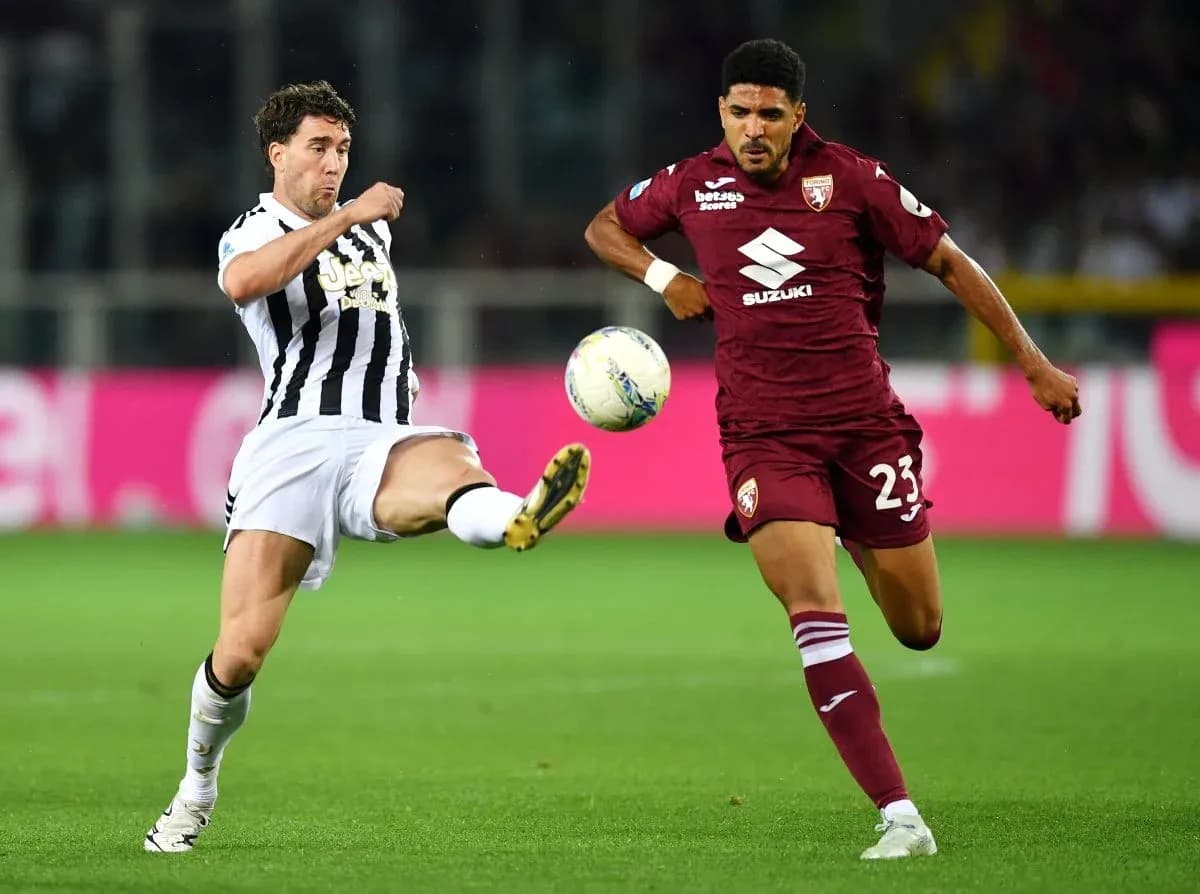
Within that framework, the “Hunter vs Shield” duel was clear. For Torino, G. Simeone has been the spearhead of their attack: 11 total league goals from 31 appearances, 58 shots with 28 on target, and 22 key passes. He thrives on early service into the channels and quick combinations around the box. Cagliari’s shield was the left side of their defence, especially A. Obert. Over the season Obert has become a defensive pillar: 65 tackles, 18 successful blocks and 40 interceptions, plus 9 yellow cards that speak to his front-foot aggression. His duel with Simeone, particularly when the forward drifted into the right half-space, was a running narrative. Obert’s willingness to step in front, block and disrupt prevented Torino from turning promising territory into clean looks at Caprile’s goal.
In the “Engine Room” zone, the contest revolved around S. Esposito versus the Prati–Ilkhan axis. Esposito’s season numbers underline his importance: 7 total goals, 5 assists, 67 key passes and 954 total passes at 75% accuracy. He is Cagliari’s rhythm-setter and their main conduit for vertical passes. Against a Torino side that in total concedes 1.6 goals per game and has shipped 61 overall, his ability to find pockets between the lines was always going to be decisive. With no penalties missed in total this campaign for either side (Cagliari 2/2, Torino 5/5), the margins were more likely to come from open play craft than from the spot.
Cagliari’s choice of a 4‑3‑2‑1 also intersected neatly with Torino’s structural frailty. Torino’s away defensive record – 34 goals conceded, 1.8 per game – has often been exposed by teams that overload the half-spaces behind their wing-backs. Palestra and Esposito repeatedly drifted into those corridors, forcing Pedersen and Obrador to defend deeper and narrower, which in turn blunted Torino’s ability to spring wide in transition. With Deiola and Adopo holding their positions, Cagliari could compress the middle third and deny clean ball into Simeone’s feet.
From a statistical prognosis standpoint, the result aligns with the underlying trends. Cagliari, a side that has failed to score in total 14 times but carries just enough home punch, leveraged their 1.2 home goals-for profile against a Torino defence that routinely gives up high-quality chances on their travels. Torino’s total of 12 clean sheets, including 7 away, hints at a team capable of shutting games down when the structure holds, but their -19 total goal difference and heavy defeats (including a 6‑0 away loss at their worst) reveal how quickly things can unravel when the first line of pressure is bypassed.
Following this result, the narrative is less about a single 2–1 scoreline and more about two squads living out their season-long identities. Cagliari, patched together amid injuries and suspensions, leaned on structure, home energy and the craft of Esposito and the steel of Obert to tilt a tight game. Torino, again, found that having a prolific spearhead in Simeone is not enough when the shield behind him remains porous, especially away from home.