.svg&w=384&q=75 "naujapitch logo")
Bologna Defeats Atalanta 1–0 in Tactical Serie A Showdown
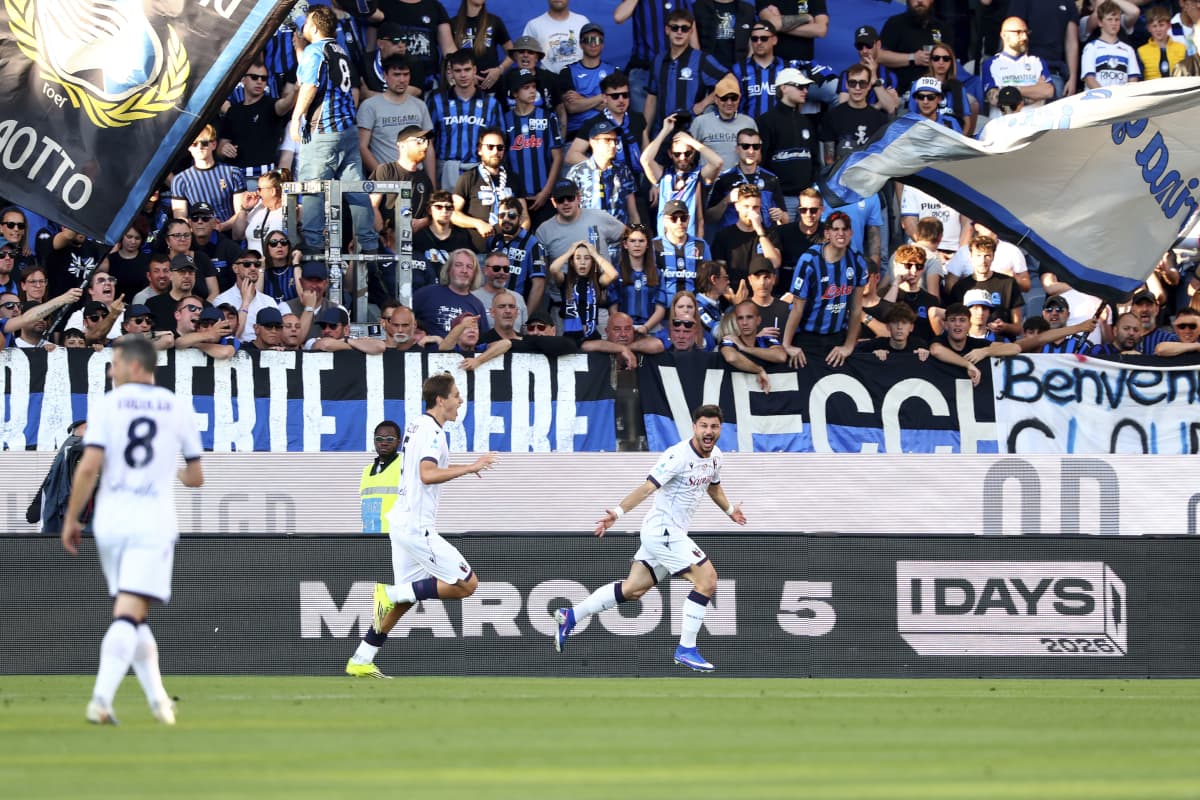
The late-afternoon light at New Balance Arena closed over a tight, tactical Serie A contest, and when the whistle finally cut through the Bergamo air, it was Bologna who walked away with a 1–0 win over Atalanta. Following this result, the table tells a story of two near-equals: Atalanta in 7th on 58 points with a goal difference of +15 (50 goals for, 35 against overall), Bologna in 8th on 55 points with a goal difference of +3 (46 for, 43 against overall). One side has built its season on balance and control, the other on sharp edges away from home.
This was Round 37, and it felt like it: a game played with the nervous precision of teams who know every duel, every press, every late run might define their European fate.
I. The Big Picture – Structures and Seasonal DNA
Atalanta lined up in their trusted 3-4-2-1, a formation they have used in 33 league matches this season. M. Carnesecchi stood behind a back three of G. Scalvini, B. Djimsiti and H. Ahanor. The wide lanes belonged to D. Zappacosta and N. Zalewski, with M. De Roon and Ederson patrolling the central corridor. Ahead of them, C. De Ketelaere and G. Raspadori floated behind the spearhead, N. Krstovic.
Heading into this game, Atalanta’s season profile at home was clear: 19 home matches, 9 wins, 6 draws, 4 defeats, with 25 goals for and 15 against. At home they averaged 1.3 goals scored and 0.8 conceded per match, a controlled, defensively reliable platform. They had also kept 7 clean sheets at home and failed to score 6 times, underlining that when their attacking rhythm breaks, it can vanish entirely.
Bologna arrived with a different identity: a 4-3-3 on the day, but a side whose season has been shaped by its away bite. L. Skorupski was shielded by a back four of Joao Mario, E. Fauske Helland, T. Heggem and J. Miranda. The midfield triangle of L. Ferguson, R. Freuler and T. Pobega sat behind a front three of F. Bernardeschi, S. Castro and J. Rowe.
On their travels, Bologna had been one of Serie A’s more dangerous visitors: 19 away games, 10 wins, 4 draws, 5 losses, with 30 goals for and 23 against. Away they averaged 1.6 goals scored and 1.2 conceded per match, a profile of a side willing to stretch games, confident they can trade chances and still emerge ahead.
II. Tactical Voids – Absences and Discipline
Both coaches had to navigate conspicuous absences. Atalanta were without L. Bernasconi (knee injury), I. Hien (suspended for yellow cards) and O. Kossounou (thigh injury). The loss of Hien and Kossounou in particular stripped depth and experience from the defensive rotation, putting even more responsibility on Scalvini and Djimsiti to marshal the back line in a high, aggressive system.
Bologna were missing an entire defensive spine: K. Bonifazi (inactive), N. Casale (calf injury), J. Lucumi (suspended for yellow cards) and M. Vitik (ankle injury), while N. Cambiaghi – a red-carded presence in the league this season – was also out with a muscle injury. Vincenzo Italiano had to trust a relatively improvised central pairing and lean heavily on structure and collective distances rather than established partnerships.
From a disciplinary perspective, the risk zones were well mapped heading into this game. Atalanta’s yellow cards are heavily concentrated late: 22.41% between 61–75 minutes and 24.14% between 76–90, with another 15.52% in stoppage time (91–105). Their red cards are split early and late, 50.00% in 0–15 and 50.00% in 76–90, a profile of a team that can boil over at the bookends of halves.
Bologna’s yellow-card curve peaks in the same late band: 26.87% between 61–75 minutes and 25.37% between 76–90. Their reds are scattered across the middle and end of games, with 33.33% between 61–75 and 16.67% in each of 16–30, 46–60, 76–90 and 91–105. This was always likely to be a contest that grew more volatile as fatigue and tension rose.
III. Key Matchups – Hunter vs Shield, Engine Room Battles
The headline duel was always going to be N. Krstovic against Bologna’s makeshift central defence. Krstovic arrived as Atalanta’s joint-top scorer in the league with 10 goals and 5 assists, a forward who combines volume (75 shots, 34 on target) with meaningful link play (21 key passes). His duel numbers – 267 contested, 117 won – speak to a striker who lives in contact, constantly testing centre-backs.
Yet Bologna’s away record suggested a unit comfortable under pressure. Conceding 23 goals in 19 away matches at an average of 1.2 per game, they rarely collapse, even when stretched. With E. Fauske Helland and T. Heggem stepping into a central role under duress, their ability to win first contact and manage Krstovic’s back-to-goal play was crucial. The 1–0 scoreline in Bologna’s favour underlines how effectively they limited his influence in the most dangerous zones.
Behind Krstovic, C. De Ketelaere operated as Atalanta’s primary creative hub. With 5 assists, 62 key passes and 102 attempted dribbles (51 successful), he is the player who bends the 3-4-2-1 into something more fluid, slipping between the lines and forcing midfielders and defenders into uncomfortable decisions.
Opposite him, Bologna’s “shield” was layered rather than singular. R. Freuler, once of Atalanta, anchored the midfield, screening the back four and trying to cut off passing lanes into De Ketelaere and Raspadori. L. Ferguson and T. Pobega added legs and vertical pressure, stepping out to disrupt Atalanta’s double pivot of De Roon and Ederson. This engine-room contest defined the rhythm of the match: whenever Freuler and Ferguson won the timing of the press, Atalanta’s build-up became predictable, funnelled wide and away from De Ketelaere’s preferred pockets.
On the flanks, Zappacosta and Zalewski tried to stretch Bologna’s 4-3-3 into a back five, forcing J. Rowe and F. Bernardeschi to track back. But Bologna’s wingers also represented the transition threat that has made them so dangerous away: with 30 away goals overall, their wide forwards are central to quick counters once the first line is broken.
IV. Statistical Prognosis – xG, Edges and What the Scoreline Suggests
We do not have explicit xG values from the data, but the seasonal trends frame the likely expected-goals balance. Atalanta, at home, average 1.3 goals for and 0.8 against; Bologna, away, average 1.6 for and 1.2 against. On paper, this projects a relatively even xG contest, something in the region of a narrow edge either way rather than a wide-margin blowout.
The final 1–0 to Bologna fits that pattern: a game of fine margins decided by a single moment, rather than sustained dominance. Atalanta’s overall defensive record (35 goals conceded in 37 games, 0.9 per match overall) held for large stretches, but their recurring issue surfaced again: when the attack stalls, they struggle to convert territorial control into goals. Having failed to score in 6 home games this season, this was another afternoon where structure and territory could not mask a lack of incision.
Bologna’s away DNA, by contrast, shone through. Ten away wins in 19, a high-scoring, resilient profile, and a team comfortable playing without the ball, trusting its front line to turn limited opportunities into decisive actions. The absence of key defenders might have threatened that identity, but the collective block held.
Following this result, the tactical story is of a Bologna side that has grown into one of Serie A’s most dangerous travellers, and an Atalanta team whose well-drilled 3-4-2-1 can still be blunted when their creators are squeezed and their leading scorer is kept at arm’s length.