.svg&w=384&q=75 "naujapitch logo")
Barcelona Triumphs Over Real Madrid in Key La Liga Clásico
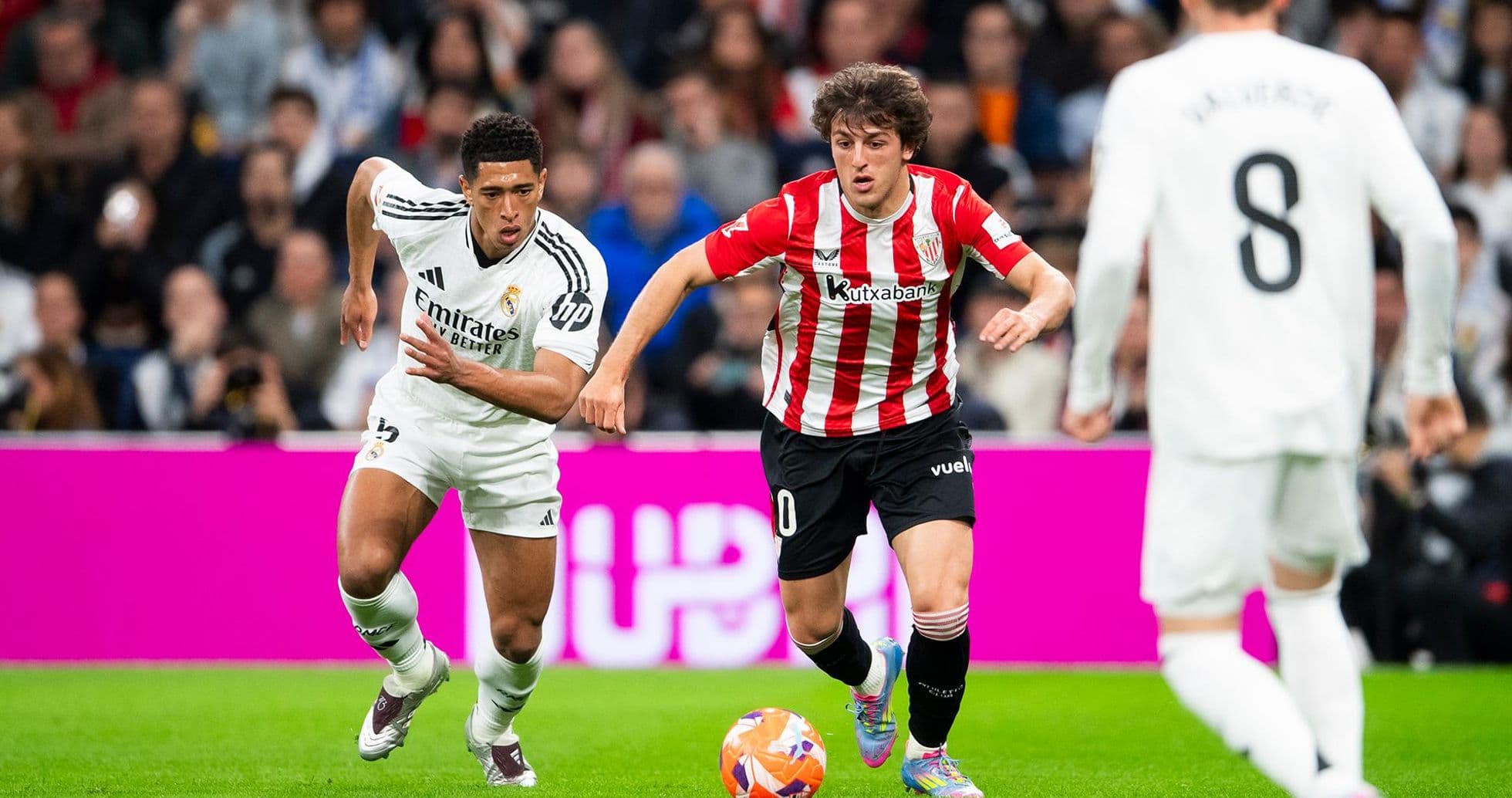
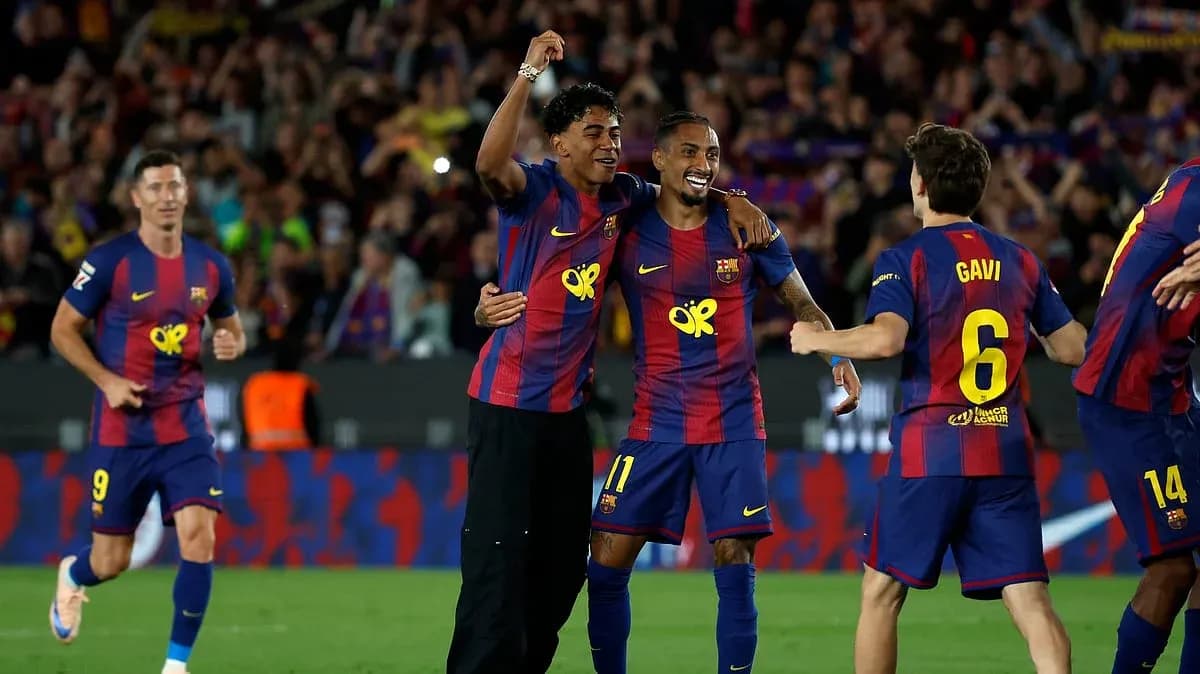
Camp Nou under the floodlights, La Liga’s title race effectively on the line, and a clásico that felt like a referendum on two different footballing projects. Following this result, Barcelona’s 2–0 win over Real Madrid did more than settle a grudge; it underlined why the league leaders sit on 91 points with a towering goal difference of 60, and why the visitors, still formidable on 77 points and a goal difference of 37, suddenly look a step behind.
I. The Big Picture – Flick’s control, Arbeloa’s compromise
Both sides lined up in a mirrored 4-2-3-1, but the symmetry ended on the tactics board. Hansi Flick leaned into Barcelona’s season-long identity: front-foot, vertical, and ruthless at home. Heading into this game, Barcelona had been perfect at Camp Nou in La Liga – 18 wins from 18, scoring 54 and conceding just 9, an average of 3.0 goals for and 0.5 against at home. That invincibility shaped everything: a high starting position for the back four, and a midfield box designed to suffocate Real Madrid’s first phase.
J. Garcia in goal sat behind a back line of J. Cancelo, P. Cubarsi, E. Garcia and G. Martin. Ahead of them, Gavi and Pedri formed the double pivot, with M. Rashford, Dani Olmo and Fermín rotating behind Ferran Torres. It was less a 4-2-3-1 than a morphing 2-3-5 in possession, with Cancelo stepping inside and Pedri orchestrating from the right half-space.
Alvaro Arbeloa, by contrast, brought a Real Madrid side stripped of several of its stars. The raw numbers said they arrived as the league’s second-best attack, with 70 goals overall and 2.0 goals per game, but they were missing much of that firepower. Instead, he leaned on structure: T. Courtois behind a back four of T. Alexander-Arnold, R. Asencio, A. Rudiger and F. Garcia, shielded by E. Camavinga and A. Tchouameni. J. Bellingham, Brahim Diaz and Vinicius Junior supported G. Garcia up top.
Yet where Barcelona’s 4-2-3-1 flowed, Madrid’s looked like a compromise between caution and obligation. The double pivot often sank too deep, leaving Bellingham isolated between the lines and Vinicius marooned against a compact block.
II. Tactical Voids – Absences that rewrote the script
The team sheets told their own story. Barcelona were without A. Christensen and the electric Lamine Yamal, both listed as missing through injury. Flick’s response was revealing: he trusted the ball circulation and control of Pedri and Dani Olmo over a pure wide dribbler, using Rashford as the chaos agent cutting in from the right or left depending on the phase. Without Yamal’s 16 goals and 11 assists in La Liga, the creative burden shifted inward, onto the midfield triangle of Pedri, Olmo and Fermín.
For Real Madrid, the voids were cavernous. K. Mbappe, Rodrygo, F. Valverde, Eder Militao, F. Mendy, A. Guler and D. Carvajal were all listed as missing. That is not just depth; it is the spine of a title-challenging side. Mbappé’s 24 league goals, Valverde’s two-way engine, Guler’s 9 assists, and Mendy’s balance on the left were all absent. Arbeloa had to rebuild his attacking hierarchy on the fly, leaning heavily on Vinicius Junior – 15 goals and 5 assists – and Bellingham’s late surges.
Disciplinary patterns also hinted at the emotional undercurrent. Heading into this game, Barcelona’s yellow cards clustered in the 46–60 minute window (27.59%) and again late from 76–90 (20.69%), suggesting a side that often ramps up aggression after half-time and in closing stages. Real Madrid’s yellows peaked between 61–75 minutes (22.06%), a phase where their press tends to fray and tactical fouls creep in. In a clásico, those windows are often where control is either consolidated or lost; here, Barcelona’s composure and territorial dominance ensured those spikes never turned into genuine jeopardy.
III. Key Matchups – Hunter vs Shield, Engine vs Engine
The “Hunter vs Shield” battle was defined less by one striker and one defender, and more by collective profiles. Ferran Torres, with 16 league goals, spearheaded Barcelona’s line. His movement between Rudiger and Asencio constantly probed the channel where Real Madrid’s reshuffled centre-back pairing had the least chemistry. With Barcelona averaging 2.6 goals overall this season and having failed to score in 0 league games, the threat was systemic rather than individual.
On their travels, Real Madrid had conceded 19 goals in 18 matches – 1.1 per game – a respectable figure that usually holds under pressure. But Camp Nou is not “usual” pressure. With Cancelo inverting and Gavi stepping high, Barcelona often created a 3v2 overload against Camavinga and Tchouameni, forcing the Madrid pivot to choose between jumping to Pedri or screening passes into Ferran’s feet. Too often, they were caught in-between.
The true “Engine Room” duel, though, unfolded between Pedri and Bellingham. Pedri’s season numbers – 8 assists, 59 key passes, 91% passing accuracy – encapsulate a player who dictates rhythm rather than chases it. In this match, stationed as the right-sided pivot, he repeatedly found the vertical lane into Olmo and Fermín, breaking Madrid’s first line. Bellingham, by contrast, was forced to drop deeper than ideal to help Camavinga, blunting his threat around the box.
On the flanks, Vinicius Junior versus J. Cancelo and P. Cubarsi was the game’s rawest duel. Vinicius arrived as one of La Liga’s most devastating ball-carriers: 189 dribble attempts, 86 successful, 80 fouls drawn. Yet Barcelona’s structure meant he was often receiving to feet with two or three bodies around him, and without Mbappé or Rodrygo stretching the opposite side, the pitch felt narrower for him than usual.
IV. Statistical Prognosis – xG, control, and what this win really says
We do not have explicit xG values from the data, but the season-long profiles allow a clear reading. Barcelona’s home average of 3.0 goals scored against 0.5 conceded, combined with 10 home clean sheets and zero matches failed to score, paints the picture of a side that consistently generates high-quality chances while conceding very few. Real Madrid’s away profile – 1.7 goals scored and 1.1 conceded on their travels, plus 7 clean sheets away – suggests resilience, but not the same suffocating control.
Following this result, the 2–0 scoreline feels like the logical intersection of those curves. Barcelona imposed their usual attacking volume and territorial dominance; Real Madrid, stripped of their primary scorers and creators, could not reach their typical away output. Courtois’ presence kept the margin respectable, but the structural imbalance – particularly in the middle third – meant the visitors were always chasing a game they never truly dictated.
In narrative terms, this clásico crystallised the season’s hierarchy. Barcelona’s 30 wins from 35, with 91 goals for and 31 against overall, are not just numbers; they are the statistical armour behind a performance like this. Real Madrid, with 24 wins and 70 goals scored, remain an elite side, but on this night at Camp Nou, their absences, tactical compromises and reliance on isolated brilliance were exposed by a machine that has been honed, week after week, into something close to inevitable.