.svg&w=384&q=75 "naujapitch logo")
Arsenal's Summer Reset After Champions League Heartbreak
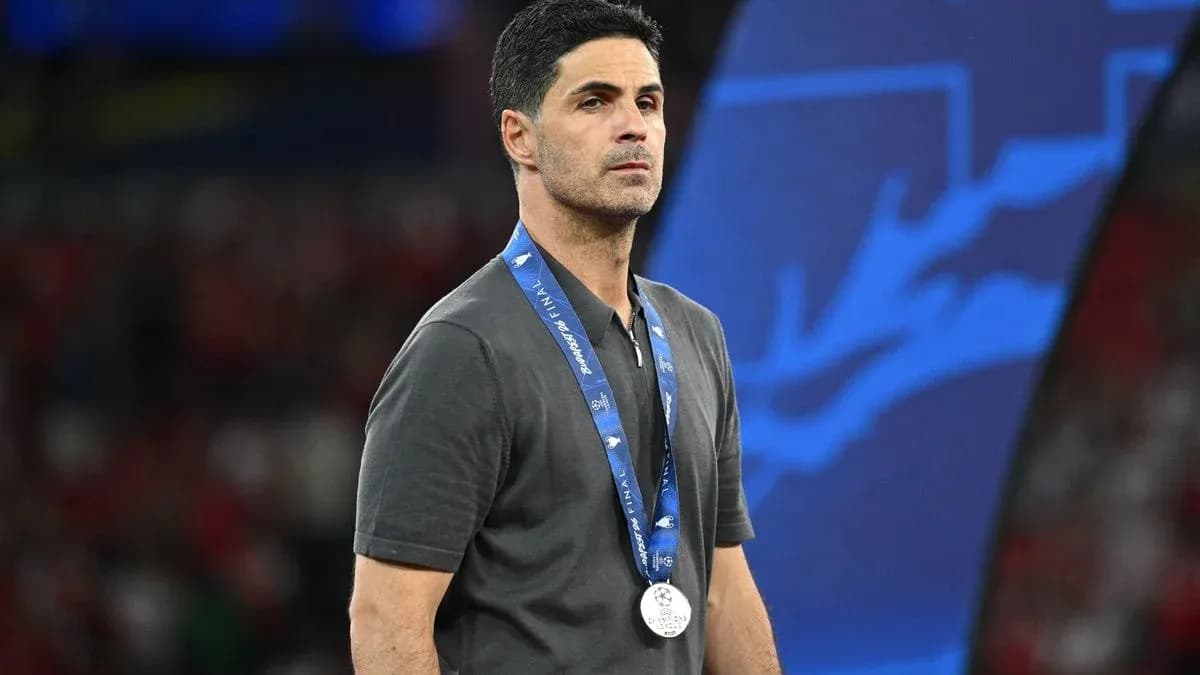
The pain of Budapest will linger at Arsenal for a long time. But it will not be allowed to fester.
Barely days after watching their Champions League dream die on penalties against Paris Saint-Germain, plans are already being drawn up at London Colney for a summer of sharp, decisive surgery on Mikel Arteta’s squad. Not tweaks. Not fine-tuning. A reset of the attack and the supporting cast around it.
From penalty anguish to transfer aggression
Arsenal’s season ended in the cruellest way. A 1-1 draw after extra-time, a shootout under the lights, and then the gut punch: Eberechi Eze and Gabriel failing from the spot as PSG, the reigning European champions, held their nerve. Two decades on from their only previous appearance in a Champions League final, another night of European history slipped through their fingers.
Yet this was no failure of a campaign. Arsenal had already ended a 22-year wait for the Premier League title earlier in the month, a seismic achievement that has shifted expectations around the club. The bar has moved. Winning domestically is no longer the finish line; it is the starting point.
Arteta knows it. And he is acting like it.
A clear blueprint: four key positions
Behind the emotion sits a very cold, very clear plan. Arteta has identified four areas that must be upgraded if Arsenal are to go from contenders to serial winners:
- Left winger
- Centre-forward
- Right-back
- Central midfielder (a six/eight hybrid)
The message is blunt. The squad that just won the league and reached a Champions League final still isn’t enough for where Arsenal want to go.
The Athletic’s David Ornstein, speaking on TNT Sports, highlighted the pressure building around the number nine role, particularly in the wake of Victor Gyokeres’ omission from the starting XI in Budapest.
“The number nine position is interesting,” he said, noting how Gyokeres, a marquee signing last summer, watched the biggest game of the season begin from the bench after helping carry Arsenal to the showpiece.
Kai Havertz was instead trusted to lead the line and repaid that faith with Arsenal’s only goal of the final. Gyokeres, who arrived as the supposed long-term solution through the middle, suddenly finds himself at the heart of a debate about where this attack goes next.
Ornstein also underlined the long-standing search for a left-sided attacker, describing it as “a big priority” that Arsenal have been monitoring for years. This feels like the summer when that patience turns into a major move.
Add in the hunt for a dynamic midfielder capable of operating as both a six and an eight, plus fresh competition or an upgrade at right-back, and you start to see the scale of what Arsenal are preparing.
“So when you tally up what they've got to do,” Ornstein noted, “you could see that outlay in the market from last summer repeated or even exceeded.”
Big names, big wages, big decisions
The ambition is clear. The cost will be, too.
Reports suggest Arsenal have money to spend, but they will not ignore the balance sheet. The Daily Mail claims the club are ready to listen to offers for several established names: Gabriel Martinelli, Leandro Trossard, Ben White and Gabriel Jesus.
All four have been central to Arsenal’s rise under Arteta. All four are also on significant wages. That combination makes them both valuable assets and potential sacrifices in a squad evolution that is becoming more ruthless with each window.
None of them has been publicly put on the market, but the willingness to entertain proposals underlines a shift in mindset. Sentiment will not block progress. If a sale funds a key upgrade, Arsenal are prepared to act.
Morgan Rogers and the left-sided puzzle
On the incoming side, Aston Villa’s Morgan Rogers has emerged as one of the names on Arsenal’s radar. At 23, with the versatility to operate as a left-sided forward or in the No 10 role, he fits the profile Arteta and the recruitment team have increasingly targeted: young, adaptable, technically sharp, and able to slot into multiple structures.
Arsenal are understood to be among several top clubs tracking him this summer. For a manager who wants his forwards to interchange, overload zones and press aggressively, that flexibility matters as much as raw numbers.
It also ties into Arteta’s admission that the left side of his attack needs an upgrade. That area, once seen as locked down, is now firmly under review.
Lessons from last summer
Arsenal did not hold back 12 months ago. They spent heavily on Gyokeres and Eze to inject more firepower and unpredictability into the final third. Yet when the biggest game of the season kicked off, both started on the bench.
Havertz, repurposed as a central striker, led the line. Others carried the creative burden. Eze, one of last summer’s headline arrivals, ended up defined not by a moment of brilliance, but by a missed penalty.
That contrast between investment and trust will shape this window. Arteta and the hierarchy will not just be asking who they can sign, but who they truly believe can decide a Champions League final, not watch it from the sidelines.
“Very ambitious, very fast, very smart”
Arteta did not hide from the scale of what comes next.
“We start to make some very important decisions if we want to reach another level,” he said after the defeat. “And we're going to have to show that ambition because we are more than capable of doing it, but it's going to demand to be very, very ambitious, very fast and very smart.”
Those are not the words of a manager satisfied with a near miss. They are the words of someone who recognises that windows like this do not stay open forever. Arsenal have a title-winning core, a Champions League final on their recent record, and a squad full of players entering their prime.
Now comes the hard part: turning all of that into sustained dominance.
The heartbreak in Budapest may yet prove to be a turning point rather than a scar. What Arsenal choose to do in this summer’s market will decide which way that story goes.