.svg&w=384&q=75 "naujapitch logo")
World Cup Drama: Politics, Power, and Player Performances
The World Cup is drifting towards its climax with a strange mix of adrenaline and exhaustion. On the pitch, Lionel Messi and Kylian Mbappé are locked in a Golden Boot dead heat. Off it, the sport is wrestling with power, politics and the lingering smell of England’s failure.
Messi and Mbappé are level on goals, but the Argentinian edges the charts thanks to an extra assist. The numbers are neat, the debate less so. Should a goal in the final carry more weight than one in a third-place play-off that half the world forgets to watch? It’s the kind of argument that keeps statisticians busy and romantics furious.
England’s Autopsy and Tuchel’s Dilemma
Back in England, the inquest hasn’t so much begun as set up permanent residence. Thomas Tuchel remains in charge, his job intact despite substitutions that left players and supporters staring at the touchline in disbelief.
The pattern was familiar. Tuchel earned early praise for game-changing switches, but as one observer pointed out, that cuts both ways: if the substitutes constantly rescue the game, what does that say about the starting XI? In a tournament of five substitutions, managers talk about “finishers” and “phases”, but England’s progress owed as much to fortune as design. They were, by many estimations, the weakest of the semi-finalists.
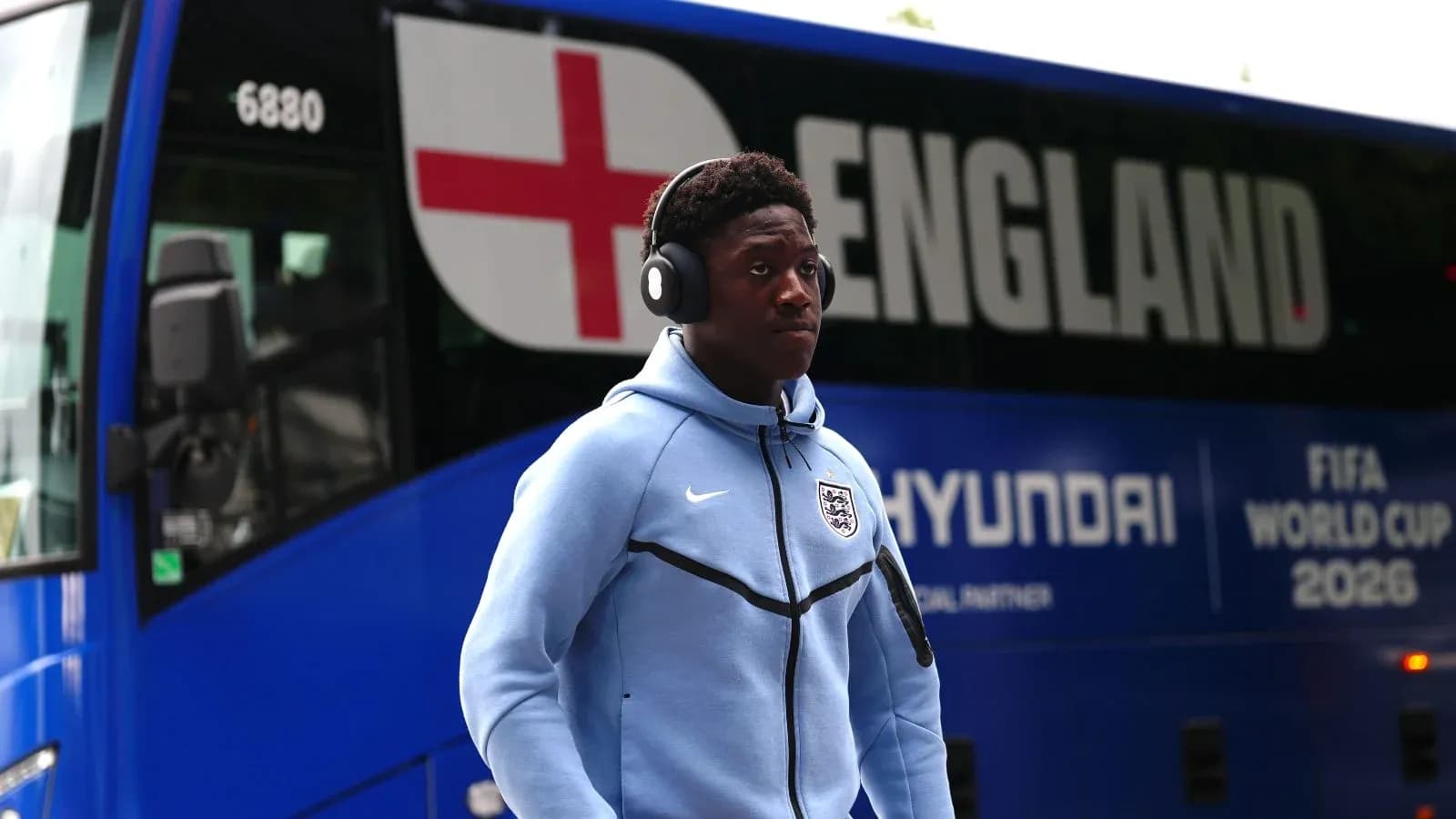
Now comes the third-place game, that awkward hybrid of obligation and opportunity. Tuchel’s choice is stark. Treat it like a final, or use it as a live training session. There is a strong case for generosity: split the goalkeepers’ minutes, unleash Ollie Watkins and Ivan Toney, give Kobbie Mainoo the stage he has earned. Bronze doesn’t rewrite the story, but it can at least send a few players home with something other than regret.
Rodri’s Revival and a Hint of Change
Elsewhere, the tournament has offered quieter, more personal narratives. Rodri has been one of them. After his ACL injury, there were genuine fears he might never again command a midfield with the same authority. It has taken time, trust and repetition, but in this World Cup he has looked like the heartbeat of a side, not a player searching for his old self.
There is a suspicion he may have played his final game for Manchester City. No declarations yet, no official bids, just the familiar murmur of change around a player whose value has rarely been higher. The coming weeks will tell whether this World Cup becomes a farewell note to his time in England.
Real Madrid, Mourinho and Alexander-Arnold’s Second Chance
In Madrid, club football is already pushing its way back into the conversation. Jose Mourinho’s return to Real Madrid in June, for a second spell, followed a season that fell short of the club’s standards: no LaLiga title, a Champions League exit in the quarter-finals, and a feeling of drift.
For Trent Alexander-Arnold, though, Mourinho’s arrival feels like a restart button. The England international, who joined from Liverpool last year, endured an injury-hit first season and rotated in and out of the side. The departure of Dani Carvajal in May has opened a clear lane: the right-back spot is there to be claimed.
Alexander-Arnold has been unequivocal about the new regime. Working with Mourinho, he says, is a “pleasure”, the demands “intense”, the standards relentlessly high. After a long spell out, he talks about laying “a solid foundation for a successful season” and a squad “willing and eager to learn and improve”. For a player whose creativity once redefined his position, this is a rare opportunity: a legendary coach, a vacant role, and a fanbase that expects trophies as a minimum.
Power at the Top: Infantino’s Grip Tightens
While managers come and go at club level, the game’s most powerful job appears locked down. Gianni Infantino has secured formal endorsement from more than 200 of Fifa’s 211 member associations for a fourth term as president. Only a small cluster of countries, including a few in Europe and notably Germany, have yet to offer official backing.
The support comes despite a climate of unrest swirling since the controversy around Folarin Balogun’s reprieve from suspension. Still, the numbers are overwhelming. Barring a political earthquake, Infantino will be re-elected by a landslide at the Fifa congress in March.
Football has survived Blatter, Warner, Blazer. The argument goes that it will survive Infantino too. It probably will. But the concentration of power at the top remains stark.
Heads of State and a Flashpoint Banner
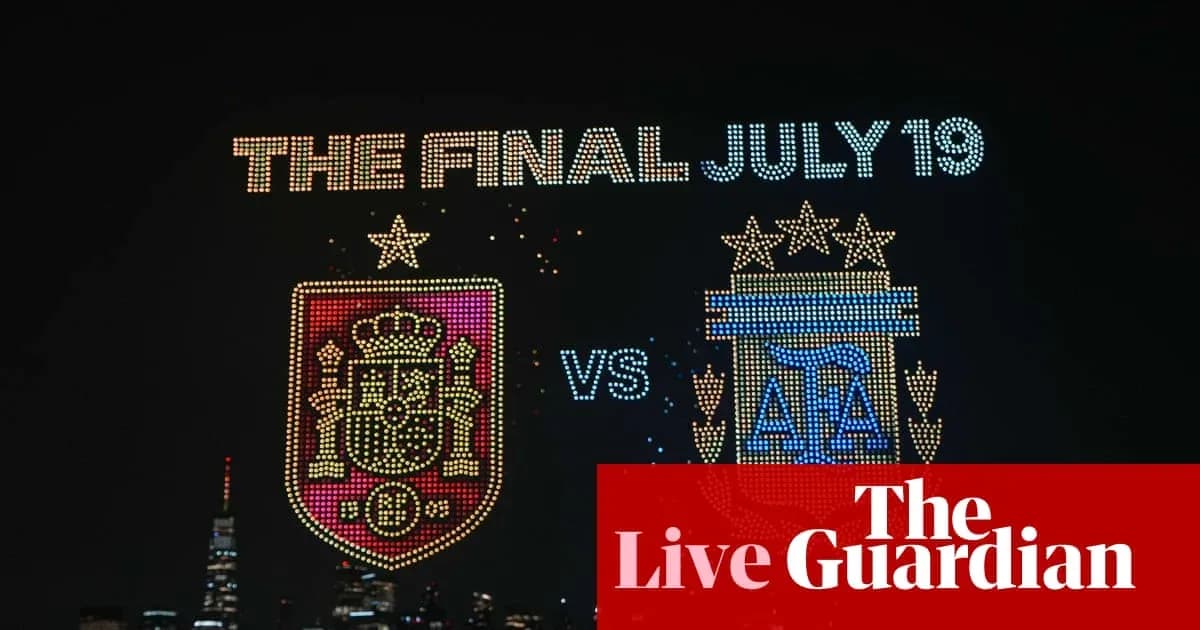
The final itself will be watched from the stands by some of the world’s most powerful political figures. Spanish prime minister Pedro Sánchez will be there to see his country face reigning champions Argentina, before he heads on to Algeria for an official visit.
Donald Trump is also due at the stadium. The White House confirmed the US president will attend what his press secretary described as a fitting conclusion to a tournament that showcased America’s ability to host the world.
The political theatre isn’t limited to the VIP box. In the aftermath of Argentina’s semi-final win over England, several Argentinian players displayed a banner asserting the country’s claim to the Falkland Islands. The gesture has landed on the desks of politicians in London, with Downing Street confirming that Keir Starmer supports the idea of Fifa investigating the incident.
It is a reminder that for all the talk of tactics and xG, the World Cup remains a global stage where old disputes can surface in a matter of seconds.
Argentina’s Edge and Romero’s Steel
On the grass, Argentina look as ferocious as they are emotional. Cristian Romero has embodied that edge. In the white-and-blue of La Albiceleste, he transforms into a defender who seems to take every duel personally. Alongside Lisandro Martínez, he has been the hardman of the back line, often the last barrier before Emiliano Martínez.
Strip away the glamour of Messi and the theatrics of Argentina’s goalkeeper, and Romero’s consistency stands out. Across this run to a third World Cup final in four tournaments, his performances have given Argentina a steel that previous generations sometimes lacked.
Media, Memory and a Game That Outlives Its Villains
Across the Atlantic, Fox’s World Cup coverage is taking its own final bow. Sideline reporter Geoff Shreeves, all chipper energy, signs off. Tom Rinaldi, with his pocket squares and poetic monologues, steps away from the World Cup stage. Chef Nick, once serving up kangaroo corndogs and fufu chicken tikka masala, has had to scale back with the tournament’s quieter final four. Jameis Winston’s hyperactive fan dispatches, equal parts theatre and chaos, also fade with the closing whistle.
These are the oddities that attach themselves to a World Cup: the voices, the food, the fan correspondents who become part of the noise. The tournament will move on without them, just as it has moved on from the administrators who once seemed untouchable.
Football outlived Blatter, Warner, Blazer. It will outlive Infantino. It always does.
The Final Pull
Back in the here and now, the mood is strangely split. Some supporters are already mourning the end of the routine: the midnight kick-offs, the early alarms, the body clocks that finally adjusted just in time for the tournament to end. For them, the answer might be a late-night dive into South American leagues or MLS, anything to replace the nightly rhythm of World Cup football.
Others are staring straight at Sunday. Messi against Lamine Yamal. Spain’s intricate patterns against Argentina’s fury and faith. One outstanding team, one very good one, depending on who you ask.
The Golden Boot may hinge on a single moment. A final sprint from Mbappé. A last flash of genius from Messi. A defender’s lunge, a goalkeeper’s hesitation, a line on a stats sheet that will be argued over for years.
The postmortems, the politics, the power plays will all roll on. But for 90 minutes – or 120, or penalties – everything narrows to one simple question: whose story gets the ending they’ve been chasing all their lives?