.svg&w=384&q=75 "naujapitch logo")
Wojciech Szczęsny: The Unyielding Pain of a Goalkeeper's Comeback
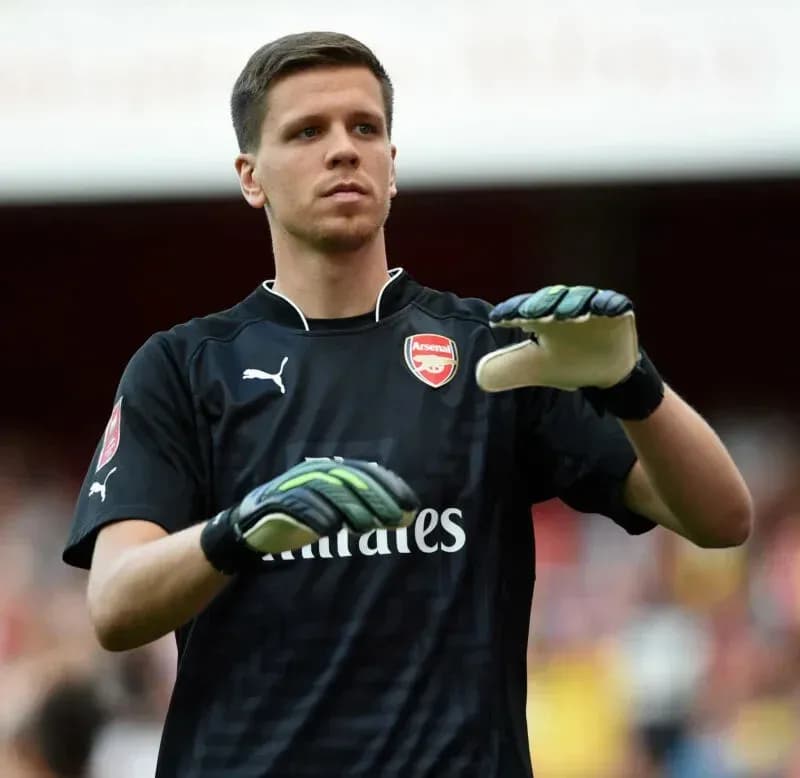
Wojciech Szczęsny still feels it. Every catch, every punch, every shot that thuds into his gloves carries a reminder of a day at London Colney that nearly ended his career before it began.
The former Arsenal goalkeeper has revealed that, almost two decades on from the freak training‑ground accident that shattered both of his forearms, the pain has never really gone.
He was 17 in 2008, a teenager on the brink, trying to muscle his way towards the first team. Then came the bench press. The bar slipped, crashed down onto his arms and, in Arsène Wenger’s stark description at the time, “crushed his forearms.” Both radii fractured. Both arms broken in an instant.
The damage was so severe that there were early fears he might never play professional football. Surgery followed, with metal plates inserted into each forearm, and a long, frustrating spell on the sidelines. Six to seven months gone. A planned loan move scrapped. Momentum halted just as he was beginning to build it.
He came back, of course. He fought through the rehab, reclaimed his path and eventually pulled on the Arsenal No 1 shirt. The story looked like one of those neat footballing comebacks: brutal setback, determined recovery, redemption in goal.
Only it never really ended.
Now 36, Szczęsny has admitted that the injury still shadows every performance.
“It’s not that I can catch the ball without feeling pain,” he said. “There has not been a single shot that I have stopped without feeling anything. I’ve just gotten used to the pain and it’s a very unpleasant feeling.”
That sentence strips away the romance. This is not the occasional twinge of an old wound; it is a constant, ingrained part of his working life. He knows his limit when he trains.
“I can do two workouts, but I already know that the third one will be an ordeal,” he said.
The strain became so intense that, by his own account, it pushed him towards walking away. The daily grind with damaged arms, the knowledge that every dive would hurt, helped drive his decision to retire.
Then the phone rang.
Barcelona came calling a month later, persuading him to step back from the brink, shortly after he had turned down an approach from Arsenal. The club where it all began wanted him again, but it was Barça who drew him back into the arena.
He returned knowing that nothing about the pain had changed. Only his willingness to live with it had.