.svg&w=384&q=75 "naujapitch logo")
Spain v Belgium: A Quarter-Final Clash of Styles
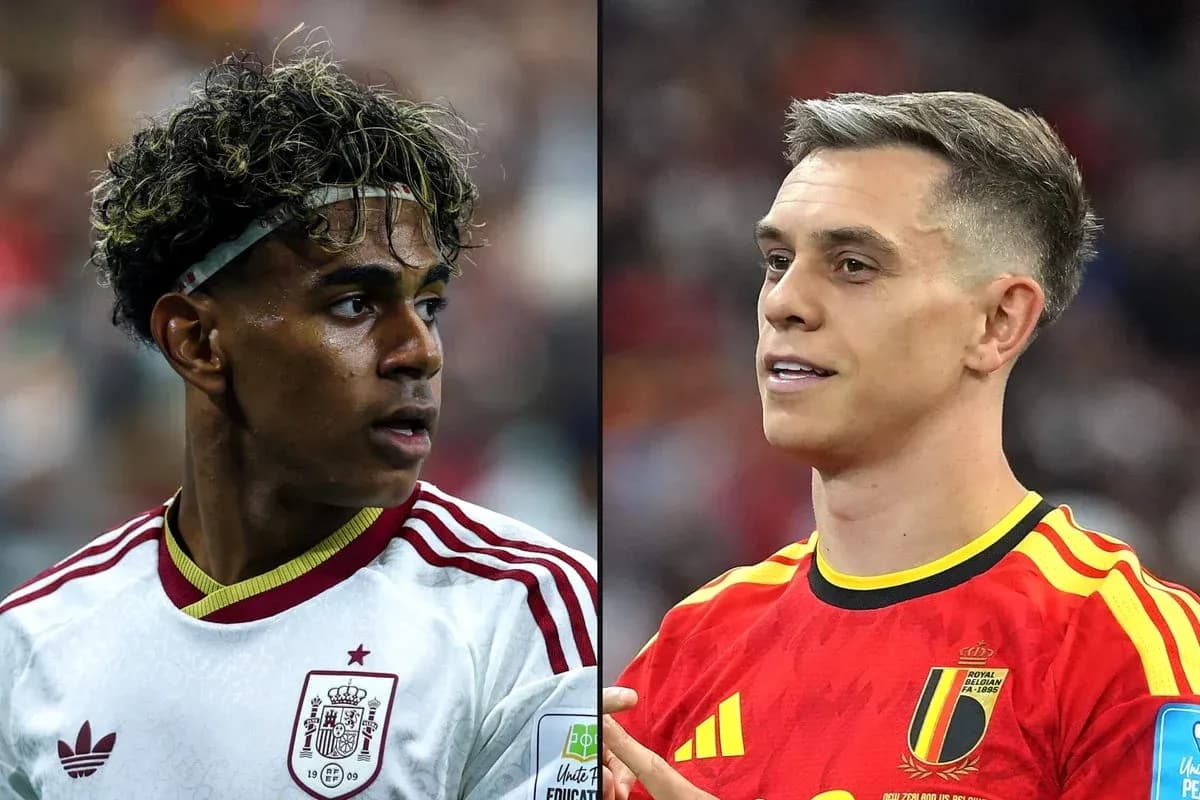
The SoFi Stadium has seen big shows before, but nothing quite like this: Spain, the only team yet to concede a goal at this World Cup, walking into a quarter-final against a Belgium side that has reinvented itself mid-tournament and just dumped out the co-hosts.
One of the favourites against the tournament’s chaos merchants. Order against risk. Defence against drama.
Spain: flawless at the back, flickering up front
Spain arrive in Inglewood with numbers that look almost unreal. Five games, zero goals conceded. Unai Simón has gone 609 World Cup minutes without picking the ball out of his net, a run that stretches back into 2022 and now stands as an all-time tournament record.
That record is not just about the goalkeeper. Aymeric Laporte and Pau Cubarsí have formed a central-defensive partnership that looks built for tournament football: calm on the ball, ruthless without it. Spain squeeze the pitch, press high and suffocate games. No team has won more possessions in the final third (36), and no side has drawn opponents offside more often (18). They do not just control the ball; they control where the match is played.
Yet for all that control, their attacking rhythm has come and gone.
Luis de la Fuente’s team eased through Group H, but not with the swagger of reigning European champions at full tilt. A goalless opener against Cape Verde, then a 4-0 dismantling of Saudi Arabia and a tight 1-0 against Uruguay. Functional, not frightening. In the knockouts, they swept aside Austria 3-0, then needed a 91st-minute header from Mikel Merino to edge Portugal 1-0 in a last-16 match that exposed their lack of cutting edge.
Mikel Oyarzabal has done his part, with sharp doubles against Saudi Arabia and Austria, yet Spain have often looked like a side waiting for the light to come on in the final third. The expectation, almost the demand, is that it will come from Lamine Yamal.
The Barcelona winger turns 19 on Monday and carries the air of a player on the brink of a defining night. So far, he has been kept relatively quiet. Nuno Mendes handled him well for Portugal before injury forced him off, and Nelson Semedo then kept the teenager largely boxed in. Even so, there have been flashes: those quick one-twos with Pedro Porro, the sudden change of pace, the hint that once he finds a weak seam in a defence, he will tear it open.
De la Fuente’s main dilemma sits behind the striker. Dani Olmo has been tidy and influential, one of the few attackers to truly impress against Portugal. Merino, though, has barged into the conversation with that late winner. There is also the question of whether Fabian Ruiz might come in for Pedri, whose tournament has not yet caught fire. On the left, Alex Baena has earned the right to keep his place with industrious, intelligent work that helps Spain overload wide areas.
They have not needed to be spectacular yet. Against Belgium, that might change.
Belgium: from lost to dangerous
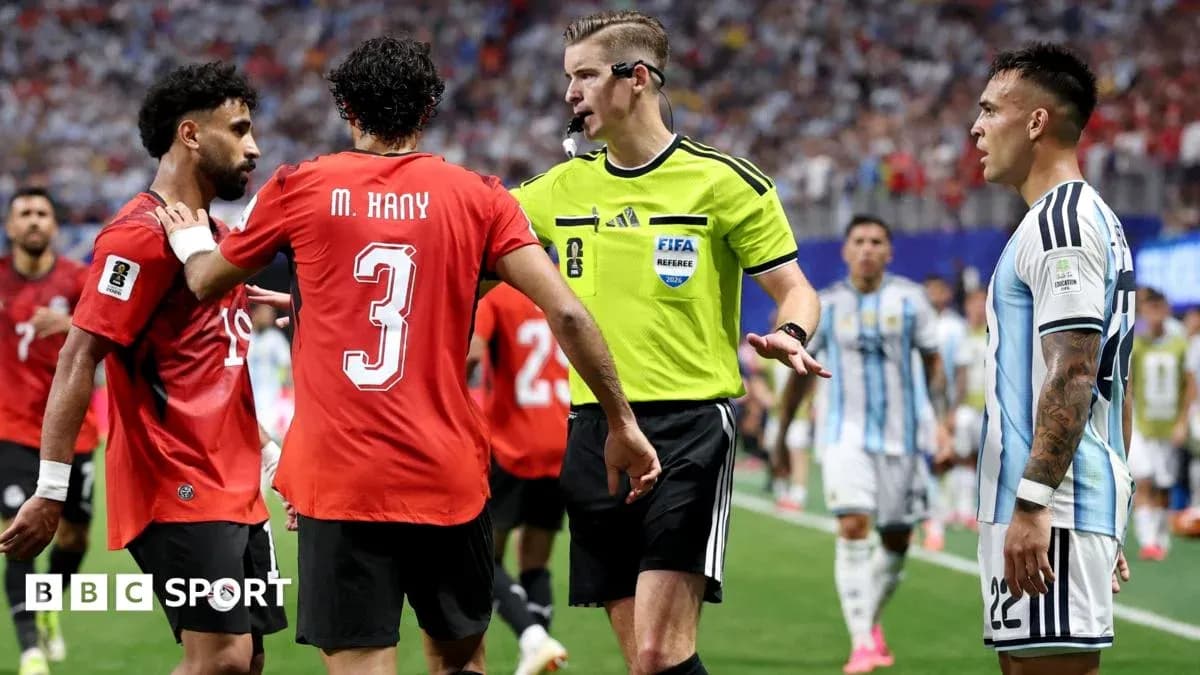
Belgium’s route here has been far less smooth, far more volatile. They topped Group G with five points, but looked like a team still searching for itself: 1-1 with Egypt, 0-0 with Iran, then an emphatic 5-1 against New Zealand that felt more like a release than a statement.
The real turning point came in the round of 32. Two-nil down to Senegal with five minutes of normal time left, they were heading out. Rudi Garcia made the sort of call that reshapes a tournament: he took off Kevin De Bruyne and Jeremy Doku, the two brightest names on the team sheet, and threw on Dodi Lukebakio and Nicolas Raskin.
On paper, it looked conservative. Raskin is a ball-winner, not a playmaker. On the pitch, it changed everything. Belgium became compact, aggressive, and, crucially, a team again. Romelu Lukaku and Youri Tielemans dragged them level, Tielemans then buried a late extra-time penalty for a 3-2 win that felt like a jailbreak.
From that moment, Belgium have looked different.
They carried that new identity into the last 16, where they stunned the United States 4-1 in a match overshadowed by the controversy around FIFA suspending Folarin Balogun’s red-card ban. Even in the noise, Garcia’s blueprint stood out. The big names were not automatically guaranteed a place. De Bruyne and Doku started on the bench and watched as a more balanced XI controlled the game.
Leandro Trossard has become the quiet star of this version of Belgium, leading all players at the tournament with 17 chances created. Tielemans has been the heartbeat: calm in possession, relentless with his late runs into the box. Around them, the structure has tightened. Even when Amadou Onana’s tournament ended cruelly with an ACL injury just 21 minutes into his first start, Hans Vanaken stepped in and the midfield did not crumble.
Belgium’s numbers tell their own story. They have had 107 shots, but 32 have been blocked — more than any other team. Only 14 of those attempts have been “clear shots” with zero or one defender in the way. They have scored 13 of those 14, a conversion rate that outstrips France, England and Spain. When they do find a clean sight of goal, they punish you.
They also live dangerously. Six individual errors have led to shots against them, a total bettered only by the United States and Brazil. They have allowed 53 shots in total, almost double Spain’s 29. Against a side that counter-presses as fiercely as De la Fuente’s, those cracks could widen.
Garcia is expected to stick with the shape and personnel that steadied the ship. That likely means De Bruyne and Doku again starting among the substitutes, with their role shifting from centrepieces to late-game weapons. Lukaku, too, may find himself used more as a finisher than a foundation, with Charles De Ketelaere viewed by some as the better starting option up front.
It is a bold stance. It has also taken Belgium further than many expected.
The battle zones: touchlines and turnovers
This quarter-final feels destined to be decided in the wide channels and in the chaos of transition.
On Spain’s right, Yamal and Pedro Porro offer one of the most intriguing partnerships left in the competition. The teenager’s ability to isolate his full-back and the defender’s underlapping runs give Spain a constant outlet, even when central spaces are blocked. On the left, Marc Cucurella and Baena have excelled at overloading their flank, dragging defences across and then sliding runners in behind — patterns that tore Austria apart.
Belgium have their own wing blueprint. Under Garcia, the full-backs are encouraged to make aggressive off-the-ball runs, not just to overlap but to drag markers away and open lanes for cut-backs and low crosses. It has worked: both teams have created three chances from low crosses, joint-highest at the tournament alongside the Netherlands and Switzerland. Belgium lead the field for first-time shots with 58, with Spain third on 46. If either side starts fizzing balls across the six-yard box, the scoreboard will move.
The other decisive area lies when the ball is lost.
Spain’s counter-press is ferocious. Lose it, swarm it, win it back high. That approach underpins their defensive record and their territorial dominance. Belgium, by contrast, have struggled at times to prevent opponents slicing through their midfield. If they cannot close those lanes, Spain’s midfield — with Rodri anchoring and recycling, Olmo probing, Baena drifting in — will pin them back and chip away.
Yet Belgium’s threat in broken play is real. They have already shown they can survive long spells under pressure, then strike when the game opens up. With Doku, Lukaku and De Bruyne potentially arriving from the bench against a tiring defence, one turnover could flip the night on its head.
History, weight and what comes next
Spain and Belgium know each other well. This will be their 24th meeting, a rivalry that stretches back to the 1920 Olympics in Antwerp, where Belgium won 3-1 on home soil. Their most famous clash came in the 1986 World Cup quarter-finals in Mexico: Jan Ceulemans’ diving header, Juan Señor’s long-range equaliser, and a penalty shoot-out decided by Jean-Marie Pfaff’s save from Eloy Olaya. Spain’s scars from that night fed into a grim record of just one win in five World Cup shoot-outs.
Spain struck back at Italia ’90 with a 2-1 group-stage win that helped them top the group ahead of Belgium. In the 21st century, the balance has shifted decisively. Spain have won all five meetings, including two qualifying victories en route to their 2010 World Cup triumph — one of them a 5-0 demolition in La Coruña that foreshadowed the era to come. Their last encounter, a 2-0 friendly win in Brussels in 2016, featured Thibaut Courtois, Lukaku, Thomas Meunier and De Bruyne in Belgian colours.
Now they meet again with a World Cup semi-final on the line and France waiting at AT&T Stadium in Arlington on Tuesday.
The experts lean heavily towards Spain. Predictions cluster around a 2-0 win, with one call for 3-1 and a more open contest. The logic is simple: Spain’s defence has been close to perfect, their midfield should dictate, and at some point Yamal is expected to ignite. Belgium, the argument goes, have already had their big moment against the United States.
But tournaments have a way of ignoring logic. Belgium have survived a crisis, ripped up their hierarchy and emerged as something tougher, less romantic and more ruthless. Spain have glided through without being forced into a full sprint.
Under the lights in Inglewood, one of them will finally be pushed to their limit. The question is whether Spain’s immaculate structure holds firm, or whether Belgium’s late-blooming, patched-together contender has one more shock in it.