.svg&w=384&q=75 "naujapitch logo")
US Soccer's Proposal to Keep Pochettino Through 2030
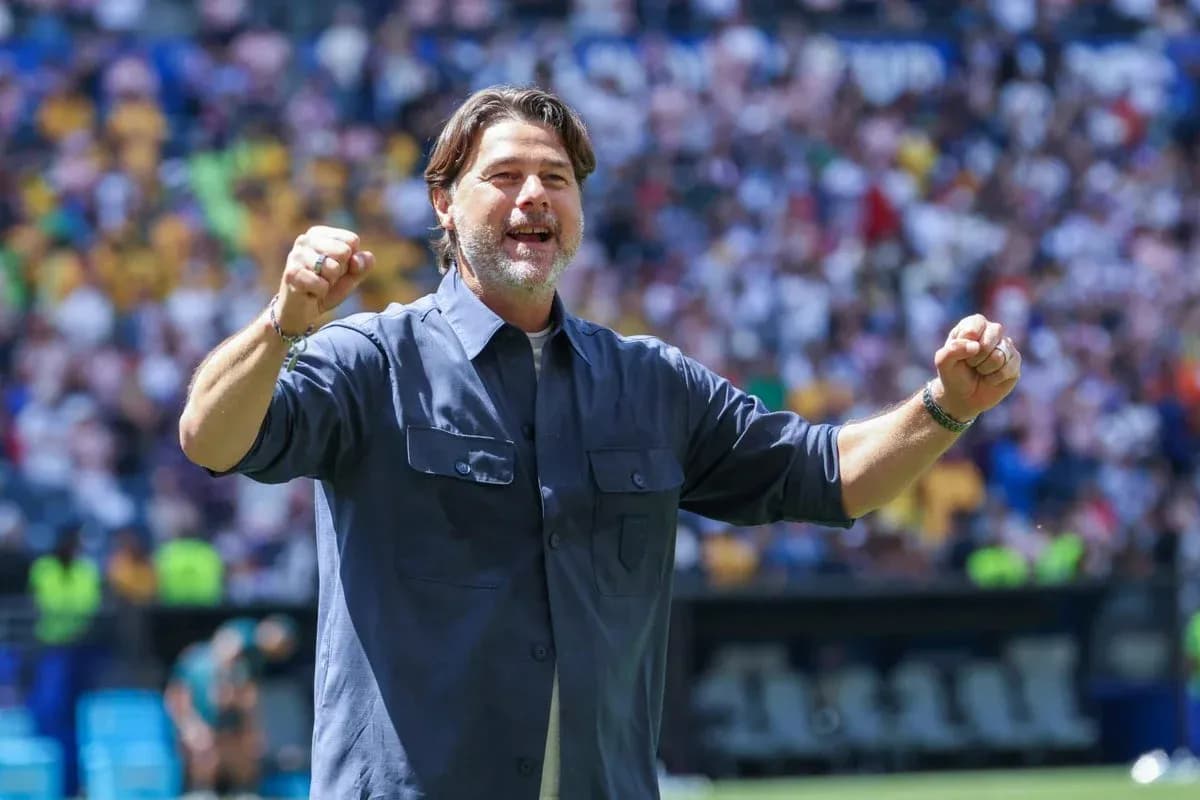
U.S. Soccer has made its move. Mauricio Pochettino has a formal proposal on the table to stay with the USMNT through a second World Cup cycle, running to 2030.
Whether he signs it will not be decided now. Everything waits for 2026.
Pochettino’s current deal runs only through this home World Cup, but talks between the federation and the Argentine have been simmering for months. According to sources with knowledge of the discussions, an offer for another four years has already been presented, with the federation making clear it wants this partnership to last.
They did not want to arrive at the World Cup with uncertainty about their own intentions. Pochettino, 54, could be a free agent in a matter of weeks. US Soccer wanted him to know: if he wants to stay, the door is wide open.
Both sides, though, agreed on one thing. Final decisions wait until the football is finished. Performances and results at this World Cup were always going to shape the future, for coach and federation alike.
A dream start, a rising mood
On the pitch, Pochettino has given the conversation a different tone. The USMNT has burst into this World Cup, beating Paraguay and Australia to book a place in the round of 32 with a game to spare.
Thursday’s defeat to Turkey? A dead rubber. The damage was already done to the group; the job was already finished.
The draw looks manageable, the football is ambitious, and a country is beginning to ask itself how far this can go on home soil. That kind of momentum changes negotiations. It also changes how the coach feels about his work.
There had been an assumption in some corners of the game that Pochettino would treat international management as a short stopover before jumping back into elite club football. That belief hardened when sporting director Matt Crocker — the man who once hired him at Southampton and then again for the USMNT — suddenly walked away in April for a job in Saudi Arabia.
Yet as the team has grown into this tournament, the equation has shifted.
A four-year project few coaches can match
The next cycle is not just another World Cup build-up. For a coach of Pochettino’s profile, it is one of the most attractive international projects anywhere.
Between now and 2030, the U.S. will host a home Olympic Games in Los Angeles and is expected to stage Copa America 2028, with the USMNT again taking part. A new $250 million national training center in Atlanta is on the way, designed as a flagship base for the national teams.
For a manager who likes to shape environments and pathways, not just pick lineups, the pitch is obvious. A renewal would give Pochettino more control over the direction of the youth national teams and a formal role in coach education, an area he has long cared about. It is a chance not just to chase trophies, but to put his fingerprints on an entire footballing culture.
The federation is banking on that appeal. It also knows it must pay at the very top of the market to make the decision a genuine one.
A recent tax filing, covering April 1, 2024 to March 31, 2025, projected Pochettino’s pro-rated base salary at around $4 million, with bonuses and incentives pushing the package toward $5–6 million in a non-World Cup year. An extension would keep him among the highest-paid international coaches in the world, and competitive with what he could command at the upper end of European club football — if still shy of the very richest European salaries.
Big leagues, big suitors
The interest in him has never really gone away. Before this World Cup kicked off, Pochettino held talks with AC Milan in late May. U.S. Soccer chief executive JT Batson publicly shrugged that off as the reality of “the big leagues” when you hire a coach who has led Chelsea, Tottenham Hotspur and Paris Saint-Germain.
Those conversations are unlikely to be the last. If the USMNT keeps impressing on home soil, the queue of clubs will lengthen.
U.S. Soccer, though, has matched that interest with ambition of its own. Before appointing Pochettino in September 2024, the federation held meetings with former Liverpool manager Jurgen Klopp, a clear sign it intends to fish only in the deepest end of the coaching pool.
That strategy is expensive. When Pochettino arrived, the federation said the deal depended “in significant part” on a philanthropic leadership gift from Ken Griffin, the founder and CEO of hedge fund Citadel. Additional backing came from Scott Goodwin of Diameter Capital and several commercial partners.
Those conversations with donors and sponsors have not stopped. The message internally is blunt: if the U.S. wants world-class coaches, it must be permanently resourced like a world-class program.
Pochettino weighs legacy against the lure of Europe
For all the numbers and all the planning, the decision will still come down to one man.
Pochettino has not closed the door on staying. Speaking this week, he admitted the pull of his current life in the United States is strong.
“It’s difficult to describe or know your future,” he said. “But when you are here, I think it’s difficult now to see yourself living in another place, because for sure, we will miss it if one day we don’t stay here in this country.”
“We told the federation we are open,” he added. “But we don’t want to distract when all the energy needs to be with my players.”
In another interview, he went further, framing the question in terms of what might be built rather than what might be won.
“If the American people start to show passion in our sport too, why not be here being part of something that can create a legacy?” he said. “The legacy is not to win the World Cup. Of course, we want to win, but that [connection] is the legacy we need if one day we want to be very successful and be consistent. Why not be part of that?”
That is the crux. Another tilt at club football in Europe, or the chance to be remembered as the coach who helped turn a host nation’s fleeting World Cup moment into something lasting.
US Soccer has already placed its bet. The contract is there. The money is lined up. The infrastructure is coming.
Now the World Cup — and Pochettino’s own ambition — will decide whether this is a brief American chapter, or the foundation of the legacy he keeps talking about.