.svg&w=384&q=75 "naujapitch logo")
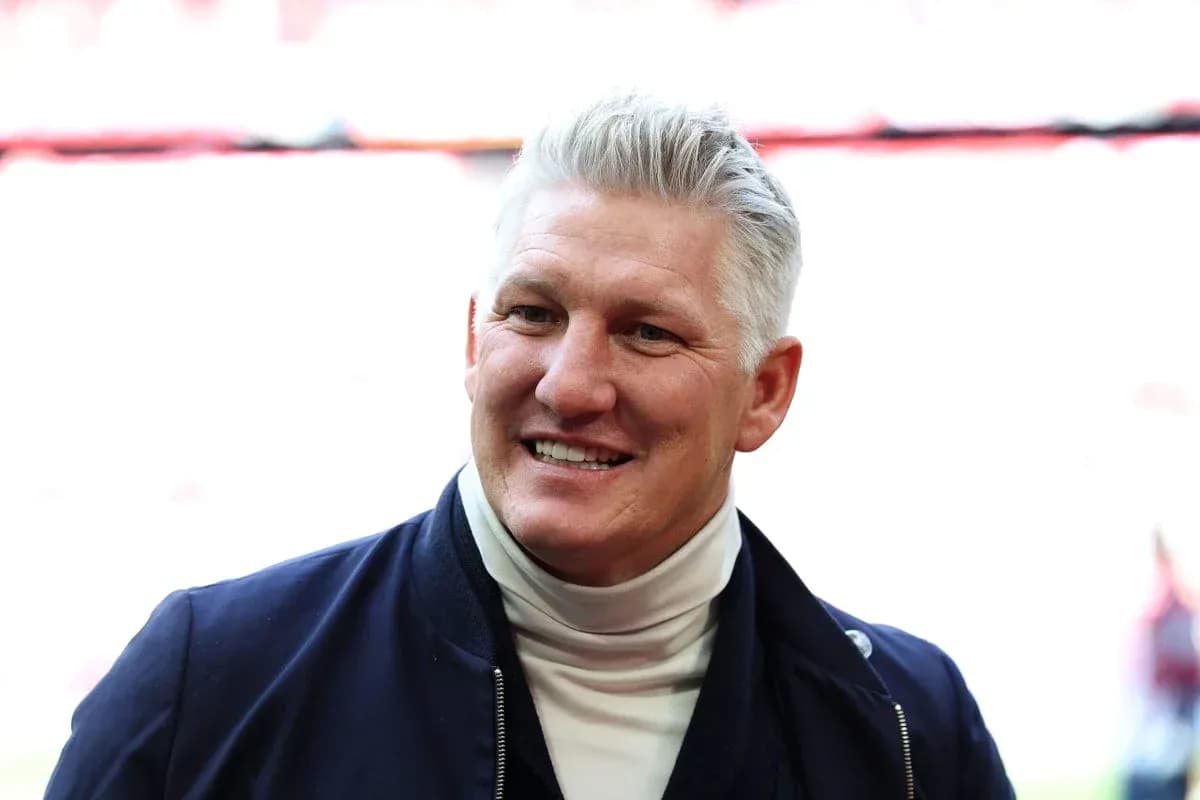
Bastian Schweinsteiger Defends Comments on African Football
Bastian Schweinsteiger has moved to defend himself after a storm over his description of African football during Germany’s World Cup clash with Ivory Coast.
Working as a pundit for German broadcaster ARD, the former Germany midfielder described African football as “wild”, “unorthodox” and “perhaps not tactically driven” in his pre-match analysis before the game in Toronto. The remarks triggered a backlash, with accusations that his language strayed into racist territory.
Faced with the criticism, Schweinsteiger issued a clarification through ARD on Friday, insisting his words were being misinterpreted.
“This is a football analysis. No more and no less,” the 41-year-old World Cup winner said in the statement. “There’s no way I wanted to offend someone. I was talking about football, not about people.”
ARD’s head of sport, Axel Balkausky, stepped in firmly on his pundit’s side, arguing that Schweinsteiger’s assessment was rooted in footballing experience rather than prejudice.
“Bastian Schweinsteiger expressed his expectations regarding the Cote d’Ivoire team’s playing style,” Balkausky said. “In doing so, he summarized his experiences and observations made from recent matches. This wasn’t about the individuals, but rather a footballing assessment.
“I cannot find any form of racism in this, nor in the choice of words.”
The sharpest response came from Ivory Coast head coach Emerse Fae. Fresh from his team’s 2-0 win over Curacao on Thursday, Fae was asked about the comments in his post-match press conference and did not hide his disappointment.
“I think it’s sad,” he said. “He was a very good player, a great player. I’ve always loved him personally. As a midfielder myself, I always liked the way he played and how he understood the game. So much so, in fact, that a friend who used to train with me knew how much I liked him and would call me ‘Bastian’.
“So when I heard this comment, I was disappointed. Disappointed in the man. When you know football as well as he does, it’s odd that he would speak in a way that we could call racist, if we’re calling a spade a spade.”
Fae’s words cut to the heart of the issue: respect between professionals who once shared the same stage, and the weight language carries when it touches on long-standing stereotypes about African teams.
Balkausky, though, believes the tension can be eased face to face. Responding directly to Fae’s criticism, he expressed hope that the two men might sit down together during the tournament.
“If the coach of the Ivory Coast, Emerse Fae, would exchange directly with Bastian, his suspicions would be revised in a very short time — I’m sure of that,” he said in ARD’s statement, distributed to German media on Friday.
“Maybe there will be such an opportunity in the course of the tournament?”
If that meeting happens, it will not just be a conversation between a coach and a pundit. It will be a test of whether the World Cup’s global stage can still be a place where uncomfortable words are challenged, explained and, perhaps, understood.