.svg&w=384&q=75 "naujapitch logo")
U.S. Men's National Team Faces Paraguay in World Cup Opener
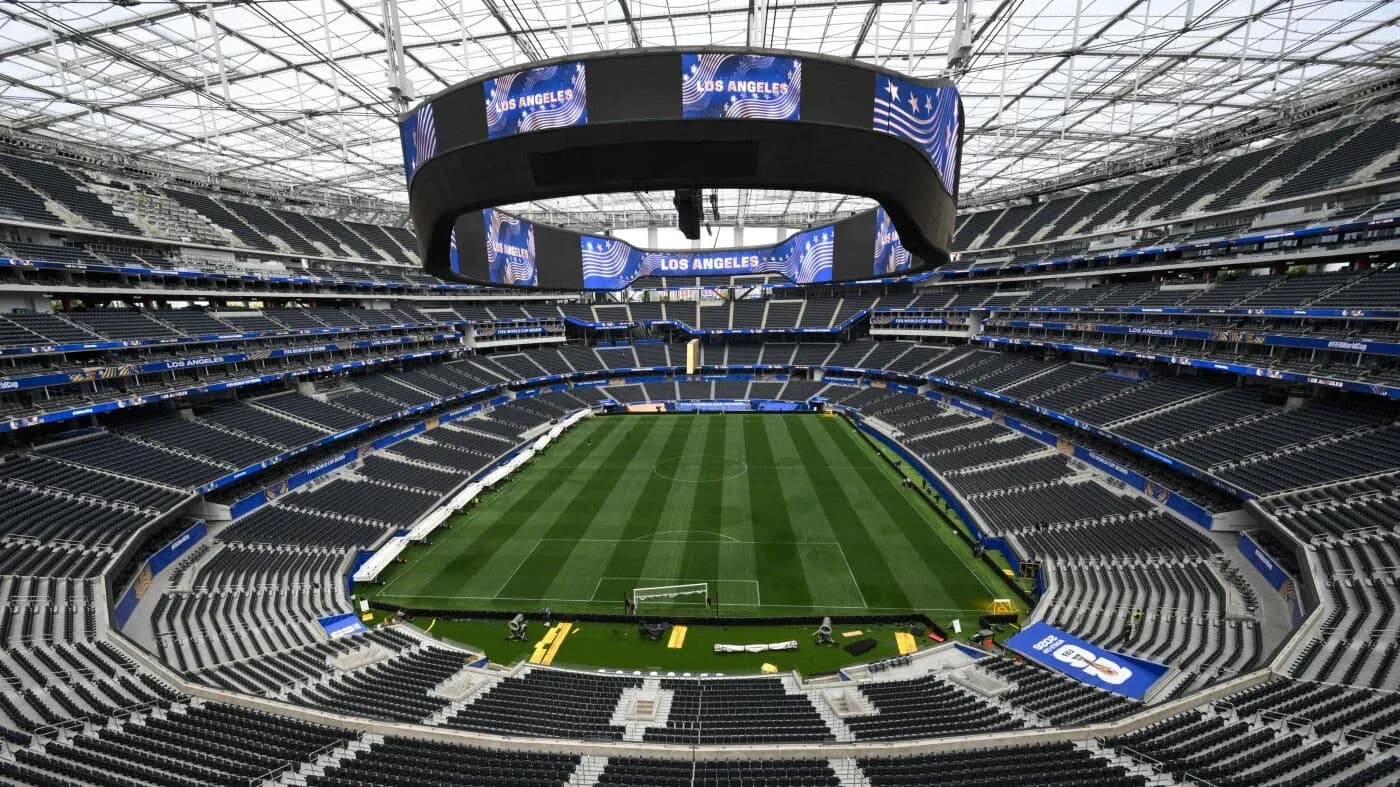
INGLEWOOD, Calif. — The World Cup is back in the United States, and this time there are no excuses.
Under the lights in Southern California on Friday night, the U.S. men’s national team will walk out to face Paraguay in its opening group-stage match of the 2026 FIFA World Cup — the first World Cup game on American soil since 1994, and the one this federation has been waiting on for nearly a decade.
For U.S. Soccer, this tournament has been more than a date on a calendar. It has been a target, a deadline, a reckoning. Thirty-plus years of trying to catch up with the sport’s traditional powers, of measuring themselves against Europe and South America and coming up short, all converge on nights like this.
The record is stark. Since that spirited run to the quarterfinals in 2002, the U.S. has collected just three wins across all World Cup tournaments. The gap in pedigree has been obvious: Brazil, Germany, Argentina, France rolling out generation after generation of stars while the U.S. scrambled to prove it belonged in the same conversation.
This time, the U.S. arrives with something it has rarely had before: a squad that looks, on paper and on television every weekend, like it truly lives in the same neighborhood as those giants.
A Golden Generation Meets Its Moment
For the first time in program history, the spine of the American team comes straight from Europe’s top tiers, not as bit-part hopefuls but as regulars and, in some cases, standouts.
- Tyler Adams, the relentless midfielder who now wears the captain’s armband, anchors a Premier League midfield.
- Chris Richards and Antonee Robinson, both in England’s top flight, bring a level of composure and athleticism at the back that earlier U.S. teams could only envy.
- Weston McKennie, a fan favorite at Juventus, has grown into a rugged, box-to-box presence in Serie A.
- Christian Pulisic, once the teenage poster boy for American ambition, now 27, arrives as a fully formed star at AC Milan, no longer a promise but a proven weapon.
“This is for me the biggest opportunity to grow the game, to inspire people, to show that American players are at the level of the rest of the world,” Adams said Thursday, summing up the weight and the opportunity in a single breath.
That’s the backdrop. A home World Cup. A generation in its prime. A fan base that has waited decades to see whether all the investment — in youth academies, in MLS, in sending kids abroad — can translate into something tangible on the sport’s biggest stage.
Paraguay First, No Warm-Up Act
Standing in the way on opening night is Paraguay, ranked No. 40 in the world by FIFA and never shy about making a game physical. The two sides met as recently as November in a friendly that looked anything but friendly by the end. The U.S. edged that one 2–1, and a scuffle in stoppage time underlined exactly what kind of battle this can become.
“We know that they're gonna be super, super aggressive, so we're going to have to match that. We saw that the last time we played them,” U.S. forward Tim Weah said.
The message is clear: this will not be a ceremonial curtain-raiser. Paraguay presses, fouls, disrupts. They make you earn every pass through midfield, every touch in the box. On a night loaded with emotion for the hosts, discipline will matter as much as adrenaline.
Paraguay may also be forced to cope without its brightest young talent. Julio Enciso, the gifted 22-year-old midfielder, was stretchered off during the first half of Paraguay’s final warm-up match last week. His status remains in serious doubt, a potential blow to a side that leans heavily on his creativity and drive between the lines.
If Enciso cannot go, Paraguay loses a key outlet, but it does not lose its identity. They will still tackle hard. They will still close space. They will still test whether this U.S. team can impose its style in a game that threatens to turn into a scrap.
The Road Through the Group
The stakes of the opener are obvious. Win, and the U.S. immediately seizes control of its group and buys itself a margin for error. Stumble, and the pressure tightens with two tricky fixtures still to come.
After Paraguay, the U.S. meets Australia next week, a team that has made a habit of being awkward and unafraid on the global stage. Then comes Turkey on June 25 to close out the group, a side capable of swinging wildly between brilliance and chaos, sometimes in the space of a single half.
It’s a group that offers no soft landings, but also no untouchable giants. For a host nation with ambitions of finally stepping out of the “plucky underdog” role, it is exactly the kind of path that demands maturity as much as talent.
A Night That Can Change Everything
So it comes down to this: a World Cup opener in Inglewood, a stadium packed with American fans who no longer just hope their team belongs — they expect it.
The U.S. has long talked about closing the gap with the world’s elite. Now the country that fell in love with the sport from a distance gets to judge for itself, in its own backyard, whether this team is truly different from the ones that came before.
On Friday night against Paraguay, the talking stops. The generation that was supposed to change American soccer finally steps into its own World Cup.