.svg&w=384&q=75 "naujapitch logo")
Curaçao's World Cup Journey: Brenet's Redemption Against Germany
On Sunday night in Germany, a small Caribbean island will stare down a football giant – and one of its most complicated sons will be right in the firing line.
Curaçao’s Dutch backbone, island heart
Curaçao is still tied constitutionally to the Kingdom of the Netherlands, but on a football pitch its story feels distinctly its own. Since FIFA recognition in 2010, the national team has grown into a curious hybrid: Dutch in structure, Curaçaoan in soul.
Thousands left the island for the Netherlands over generations. Their children and grandchildren now wear Curaçao’s colours. Of the 26 players in the current World Cup squad, only one was actually born on the island. Fittingly, it is the man who best embodies this tangled footballing identity: Tahith Chong.
Chong, once the great hope of Manchester United’s academy, scraped together just 16 competitive appearances at Old Trafford before drifting through a six‑month spell at Werder Bremen in 2021. He now turns out for Sheffield United and stands as one of six Curaçao internationals with a German chapter on their CV.
There is Gervane Kastaneer, who passed through 1. FC Kaiserslautern. Riechedly Bazoer, once tipped as a Dutch midfield cornerstone, had his stint at VfL Wolfsburg. Roshon van Eijma featured for Preußen Münster. Jürgen Locadia and Joshua Brenet both wore the colours of TSG Hoffenheim.
It is Brenet, though, who brings the sharpest edge to Curaçao’s World Cup story.
From Nagelsmann’s bet to Hoffenheim outcast
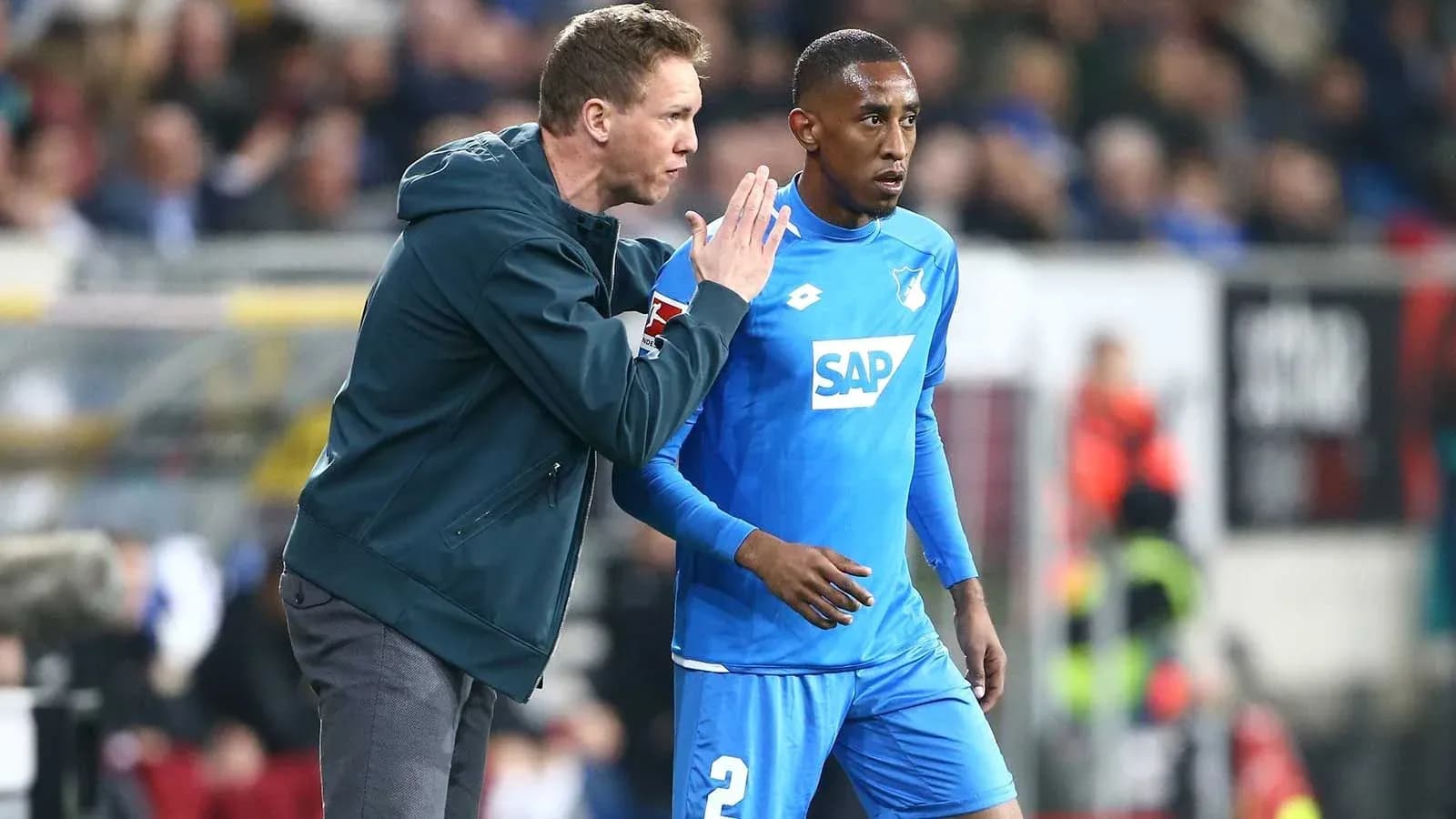
In 2018, Hoffenheim paid €3.5 million to prise Brenet from PSV Eindhoven. At that point, he was a three-time Eredivisie champion and had already broken into the Netherlands senior side with two caps. Julian Nagelsmann, now in charge of Germany, pushed for the deal. On paper, it made sense: an athletic right‑back, tested in Europe, stepping into an ambitious Bundesliga club.
The reality turned ugly fast.
Brenet started his Hoffenheim career on the bench, watching the opening league fixtures instead of shaping them. Then came the moment that defined his time there. Ahead of Hoffenheim’s first-ever Champions League match, against Shakhtar Donetsk, he skipped a video session. Nagelsmann’s response was brutal and immediate: Brenet was dropped from the squad.
He did eventually find his way back into the coach’s plans, but only in flashes. Cameos, not trust. When Nagelsmann left, any remaining credit evaporated. Alfred Schreuder, now Nagelsmann’s assistant with the national team, barely looked his way. Sebastian Hoeneß went further and sent him down to the reserves in the Regionalliga Südwest, Germany’s fourth tier.
The reasons were not just tactical. Repeated disciplinary problems, including chronic lateness, shredded his standing inside the club. Hoffenheim tried to move him on and failed, until Twente Enschede finally took him on a free transfer in 2022.
A career on repeat: promise, then self-destruction
In Enschede, the pattern repeated. On the pitch, Brenet reminded everyone why top clubs once chased him. He impressed, enough to suggest a late-career reset might be possible.
Off it, he imploded again.
In January 2023, Dutch authorities caught him driving without a licence twice in two weeks. He had already lost that licence in 2020 for drink-driving. This was not a lapse; it was a habit.
“He clearly has no regard for authority. It seems to me as though he is continuing to play football after receiving a red card,” the presiding judge said, as Brenet received a one-month prison sentence in 2024. Three years earlier, he had already been handed a suspended sentence, a fine and community service for domestic violence.
The jail term for driving without a licence was later converted on appeal to community service. Twente’s patience did not survive the process. His contract was terminated.
From there, his career scattered. He joined Al-Rayyan in Qatar and played only six matches in the 2024/25 season. Then came a short spell at Livingston FC in Scotland, followed by another move to Kayserispor in Turkey for the second half of the campaign. A once-stable trajectory had turned nomadic.
A new flag, an old stage
Internationally, Brenet’s path is just as tangled. He climbed through the Dutch youth teams and even made his senior debut for Oranje during the 2016 World Cup qualifiers. Years later, FIFA cleared him to switch allegiance to Curaçao, the homeland of his parents.
Since making that change in 2024, he has become a central figure. Six goals in 17 appearances from right-back underline his attacking threat. In Curaçao’s final warm-up match against Aruba, he started on the right of defence and scored again, a reminder of the weapon he can be when his head is clear and his legs are driving forward.
Now comes the stage he once seemed destined to reach only with the Netherlands: a World Cup. On Sunday at 7 pm, the 32-year-old will line up for Curaçao against Germany.
Across the technical area will stand Nagelsmann and Schreuder, the coaches who once froze him out at Hoffenheim. Men who know his weaknesses, his temperament, and his habits perhaps better than most.
Curaçao arrive in this tournament as outsiders, built on Dutch foundations but carrying their own flag, their own anthem, their own pride. Chong offers the glamour of a Premier League résumé. Locadia brings experience from Europe’s top leagues. Yet it is Brenet – flawed, gifted, unpredictable – who gives this opener its edge.
He will not just be facing Germany. He will be confronting his past, his reputation, and the coaches who once decided he was not worth the trouble.
For a player who has spent years living like he is still on the pitch after a red card, this World Cup might be his last clean restart. The question is simple, and brutal: does he finally take it?