.svg&w=384&q=75 "naujapitch logo")
Sunderland vs Manchester United: Premier League Clash Preview
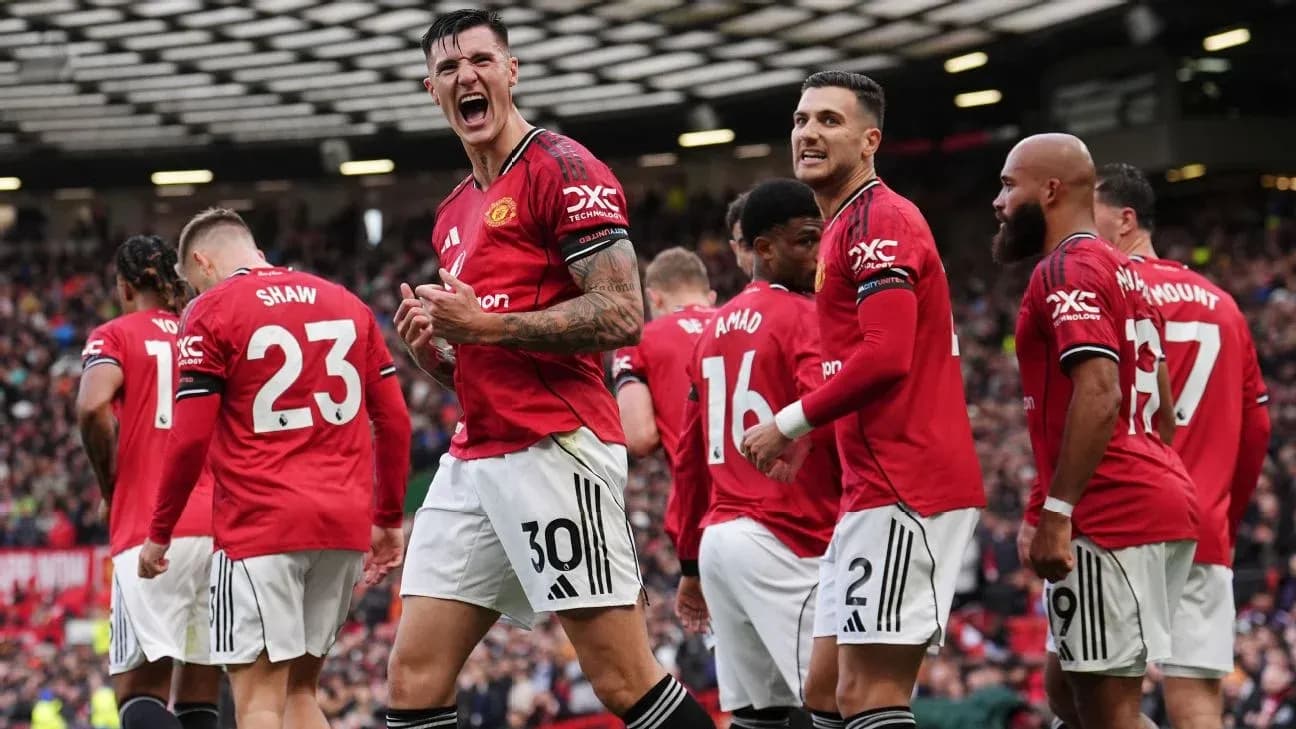
The Stadium of Light stages a classic Premier League clash on 9 May 2026 as mid‑table Sunderland host top‑four chasing Manchester United in Round 36 of the league season. Sunderland come into the weekend 12th in the table on 47 points, relatively safe but still capable of climbing into the top half. United arrive in the North East in 3rd place with 64 points, firmly in the Champions League positions but with no margin for error in a tight race above and below them.
With only three games left, the stakes are clear: Sunderland are playing for status, pride and momentum; Manchester United are playing for Europe and the financial and sporting security that comes with it.
Tactical landscape and form guide
Across all phases this season, Sunderland have been a stubborn, streaky side. Their overall record in the league stands at 12 wins, 11 draws and 12 defeats from 35 games, with a goal difference of -9 (37 scored, 46 conceded). At the Stadium of Light they are notably stronger: 8 wins, 5 draws and just 4 losses from 17 home matches, scoring 23 and conceding 19. In the league they have taken more than two‑thirds of their victories on home soil, and they have recorded 6 home clean sheets.
The recent form line in the standings reads “DLLWW”, underlining an upturn just before this fixture. Sunderland’s season‑long statistical profile reinforces the idea of a team built on organisation more than firepower. They average only 1.1 goals for per game across all phases (1.4 at home) and 1.3 against (1.1 at home). They have failed to score in 12 of 35 matches, but have also kept 10 clean sheets. Their biggest home win is 3-0, and their heaviest home defeat a 0-5, which hints at occasional collapses when the structure breaks.
Tactically, the data points to flexibility. Sunderland’s most used shape is 4-2-3-1 (18 matches), but they have also turned to 4-3-3, 5-4-1, 4-4-2, 4-1-4-1 and even 3-4-3 at times. That suggests a coach willing to tailor the approach to the opponent. Against a high‑quality United attack, the temptation will be to revert to the more conservative 4-2-3-1 or 5-4-1, with a compact mid‑block and emphasis on transitions.
Manchester United, by contrast, are a more expansive, high‑variance side. In the league they have 18 wins, 10 draws and 7 defeats from 35, scoring 63 and conceding 48 for a goal difference of +15. They are excellent at Old Trafford (12 wins in 18) but less dominant away: 6 wins, 7 draws and 4 losses from 17 away games, with 27 scored and 26 conceded. Across all phases they are averaging 1.8 goals for and 1.4 against per match, with 6 clean sheets and only 3 games in which they failed to score.
Their recent form in the standings reads “WWWLD” – four wins and a draw in the last five, with just one defeat – which is title‑contender form even if the season as a whole has been more uneven. United have used primarily a 3-4-2-1 (18 times) and a 4-2-3-1 (17 times), oscillating between back three and back four. That duality is crucial tactically here: a back three can pin Sunderland deep with wing‑backs high and two No.10s between the lines, but it can also leave space wide for Sunderland’s counters if the hosts can break the first press.
Key battles and players
The individual data we have is heavily weighted towards Manchester United’s attacking core. Benjamin Šeško has 11 league goals and 1 assist from 30 appearances, despite starting only 17 times. He averages 51 shots with 34 on target, underlining his volume and accuracy as a finisher. Interestingly, he has yet to score a penalty this season (0 scored, 0 missed), so his threat is entirely from open play and set pieces.
Around him, Bryan Mbeumo, Casemiro and Matheus Cunha each have 9 league goals, giving United a rare spread of scoring across the front and midfield lines. Mbeumo adds 3 assists and a high volume of key passes (46), suggesting he will drift inside from wide areas to create overloads. Casemiro’s 9 goals and 34 key passes from midfield, combined with 88 tackles and 30 interceptions, make him the heartbeat of United’s structure – the player who both breaks up Sunderland counters and arrives late in the box. Cunha, with 9 goals, 2 assists and 41 successful dribbles, offers the ball‑carrying threat between the lines that can unpick a deep block.
Sunderland’s individual scoring data is not provided, but their team profile implies a more collective approach. Their 37 goals across 35 games, combined with a biggest home win of 3-0 and biggest away win of 1-2, suggest they rarely blow teams away but can punish lapses. One area of quiet strength is from the spot: Sunderland have converted all 4 penalties awarded this season (4/4, 100%), with no misses recorded at team level.
Injuries and suspensions
Team news tilts the defensive balance on both sides. Sunderland are definitely without D. Ballard due to a red card suspension, and R. Mundle is out with a hamstring injury. Ballard’s absence removes a key defensive option, particularly important against United’s aerial threat from Šeško and Casemiro. There are also three questionable players for Sunderland: N. Angulo (muscle injury), S. Moore (wrist injury) and B. Traore (knee injury). If any of these miss out, it further limits rotation and late‑game options from the bench.
Manchester United will be missing M. de Ligt with a back injury, a significant blow to their back line whether they use a three or a four. His aerial dominance and leadership will be hard to replace in a hostile away environment. B. Šeško is listed as questionable with a leg injury; given his status as United’s top scorer, his availability could fundamentally change the attacking plan. If he is not fit to start, Cunha may lead the line with Mbeumo and a second creator underneath, reducing United’s penalty‑box presence but perhaps increasing mobility.
Discipline could also play a role. Sunderland’s yellow‑card distribution spikes between 46-60 minutes and 76-90 minutes, while United pick up a lot of cautions late (20.69% between 76-90) and have had 3 red cards, mostly in the 46-60 range. In a tense late‑season game, managing those emotional phases will be critical.
Head‑to‑head narrative
The recent competitive head‑to‑head record is heavily in Manchester United’s favour. The last five league meetings, all in the Premier League, read:
- In October 2025 at Old Trafford: Manchester United 2-0 Sunderland
- In April 2017 at the Stadium of Light: Sunderland 0-3 Manchester United
- In December 2016 at Old Trafford: Manchester United 3-1 Sunderland
- In February 2016 at the Stadium of Light: Sunderland 2-1 Manchester United
- In September 2015 at Old Trafford: Manchester United 3-0 Sunderland
Across these five, United have 4 wins, Sunderland have 1, and there have been 0 draws. Sunderland’s sole success in this run came in that 2-1 home win in February 2016, but the broader pattern is of United scoring freely: 11 goals in the five matches, at least two goals in four of them.
The psychological edge therefore sits with United, but Sunderland can point to that 2016 home victory and their strong 2025‑26 home record as reasons to believe.
Tactical expectations
Given the numbers, Sunderland are likely to prioritise compactness and set pieces. Their home defensive record (19 conceded in 17) and 6 clean sheets suggest they can frustrate high‑quality opponents if they get their structure right. Without Ballard, they may lean more on a back four with a double pivot shielding the centre‑backs, trying to funnel United wide and defend crosses.
United’s away profile – 27 scored and 26 conceded in 17 – suggests a game with chances at both ends. Their dual‑system flexibility means they can start in a 3-4-2-1 to pin Sunderland back, then shift to 4-2-3-1 if chasing the game. The key tactical questions: can Sunderland’s first line of pressure disrupt Casemiro’s build‑up, and can their full‑backs handle the wide rotations of Mbeumo and Cunha without being dragged out of shape?
The verdict
All the underlying data points towards Manchester United carrying the greater attacking threat and overall quality, even with de Ligt out and Šeško doubtful. Their recent “WWWLD” form, 63 league goals and spread of scorers make them deserved favourites.
However, Sunderland’s strong home record, disciplined defensive numbers at the Stadium of Light, and a head‑to‑head history that includes a relatively recent home win mean this is unlikely to be a procession. If Sunderland can keep the game tight for an hour and exploit United’s occasional away looseness at the back (26 conceded in 17 away games), a draw or narrow home win is not out of the question.
On balance, though, the most logical expectation is a competitive match in which Manchester United eventually find enough quality between the lines to edge it, especially given their need to protect a Champions League place. A high‑intensity, tactically nuanced encounter looks in store on Wearside.