.svg&w=384&q=75 "naujapitch logo")
Senegal's World Cup 2026 Journey: Can They Build on AFCON Success?
Senegal arrive at the 2026 World Cup with a medal-laden past and a looming question: can this generation turn AFCON dominance into a genuine global run?
The Lions of Teranga have built their recent success on a back line that barely gives an inch. At the last AFCON, they conceded just two goals on their way to the title, a run that underlined their defensive discipline and collective steel. This time, though, the challenge is sharper. Two of the hottest strikers in world football lie in wait in the group stage. The margin for error shrinks.
Koulibaly’s last stand?
At the heart of it all remains Kalidou Koulibaly. The captain is still the reference point, still the voice that organises everything in front of Edouard Mendy. But he is 34 now, and the miles are starting to show. He missed the AFCON final through suspension and injury, and his red card in the group stage against Benin was another reminder that the old certainty has been replaced by something a touch more fragile.
Senegal will still lean heavily on him. When Koulibaly plays, the line looks taller, braver, more assured. Yet this World Cup may be his final major tournament at the highest level, and how he copes with quick, ruthless forwards over three high-intensity group games could define Senegal’s ceiling.
Around him, the cast is changing but the pedigree remains. Ligue 1 should leave a heavy imprint on the back four, with Lyon’s Moussa Niakhate expected to slot in alongside Koulibaly and Monaco’s Krepin Diatta operating down one flank. On the other side, West Ham United’s El Hadji Malick Diouf offers Premier League power and athleticism, while Chelsea’s Mamadou Sarr adds depth and competition.
Nice full-back Antoine Mendy and Maccabi Haifa defender Abdoulaye Seck give coach Aliou Cissé (or his successor Thiaw, as referenced) further options, but one name has started to push itself into the conversation. Nobel Mendy, of Rayo Vallecano, earned his first international call-up for the March friendlies against Peru and Gambia and has quickly positioned himself as a genuine contender for a World Cup spot.
Behind them, there is no debate. Edouard Mendy, now 34 and a two-time AFCON winner, will start in goal. His calm, his reach, his big-tournament experience – all of it remains central to Senegal’s identity.
Midfield muscle and Premier League polish
If the back line brings the platform, the midfield brings the engine. And it is stacked with top-flight experience.
Pape Matar Sarr and Habib Diarra missed the AFCON triumph through injury, but both are on course to return in time for the World Cup. Their comeback changes the dynamic. Sarr, from Tottenham, offers energy and vertical passing; Diarra, now at Sunderland, brings drive and a willingness to break lines. Together, they freshen up an area that already had bite.
Idrissa Gueye, still patrolling midfields for Everton, remains the anchor. He screens, snaps into tackles and sets the tone without the ball. Alongside him, Villarreal’s Pape Gueye adds a different rhythm, more measured in possession but with the same physical presence that has long been a hallmark of Senegalese midfields.
Then comes Iliman Ndiaye. Officially an Everton player, he has grown into one of the Premier League’s most watchable attackers. On the ball, he glides; off it, he harries and presses. His form in England has already sparked talk of a summer move to Manchester United, and a strong World Cup would only fan that speculation.
Ismaila Sarr, now at Crystal Palace, offers width and direct running, while Rayo Vallecano’s Pathe Ciss and Monaco’s Lamine Camara deepen the pool of options. This is a midfield group that can be functional and rugged when required, but also inventive when the game opens up.
The likely set-up is a three-man unit: Gueye as the shield, with Diarra and Pape Gueye shuttling either side. It is not a romantic trio, but it is built for tournament football – strong in duels, hard to play through, relentless over 90 minutes.
Mane’s last dance
Up front, there is no shortage of firepower. There is also a sense of finality.
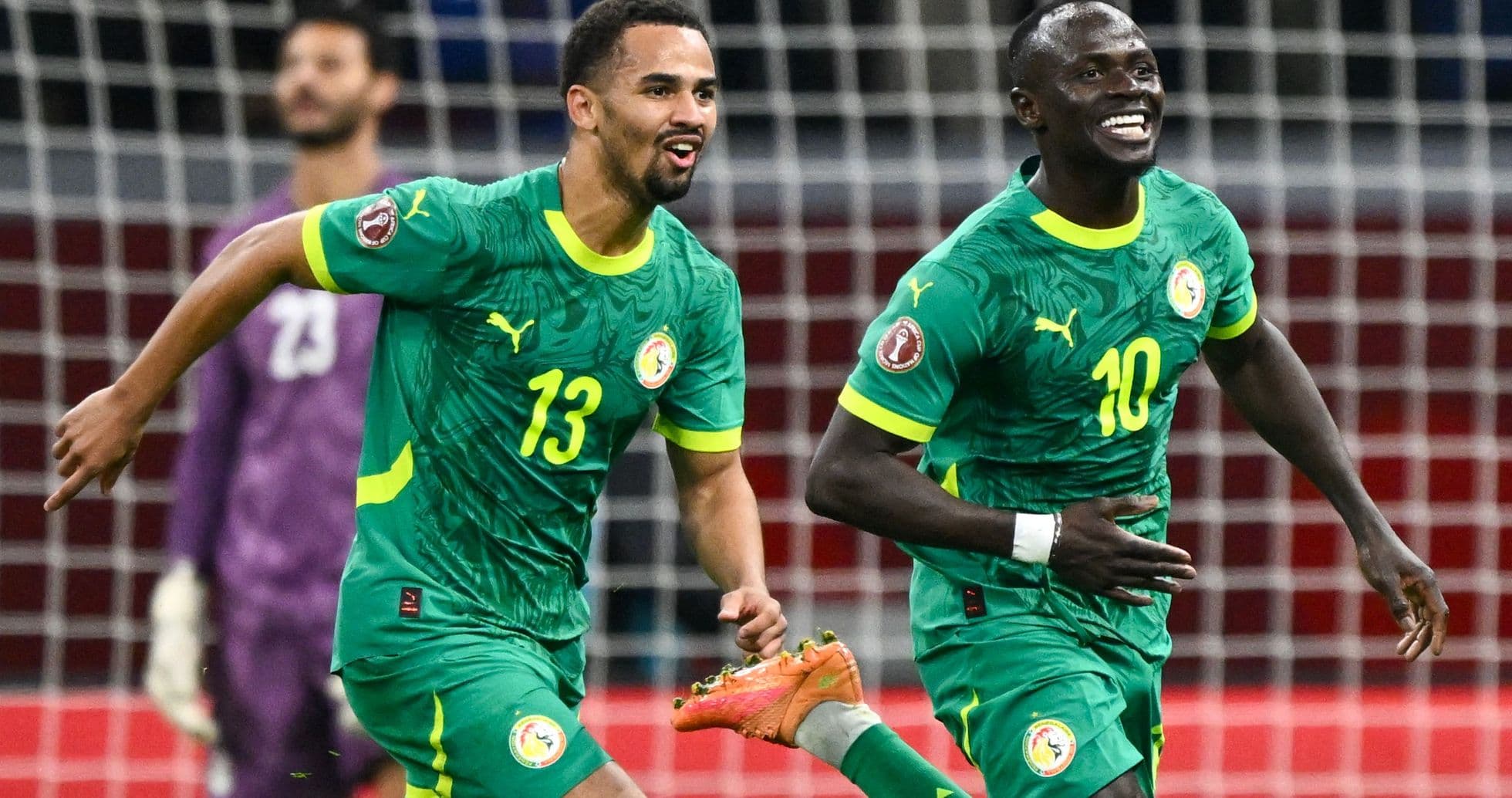
Sadio Mane, now at Al-Nassr and already a legend in Senegalese football, has confirmed he will retire from international duty after this World Cup. He goes into the tournament as the country’s all-time leading scorer, with 51 goals, and as one of its most decorated exports, a Premier League and Champions League winner with Liverpool. This is his last shot in green.
He will start from the left, as always, drifting inside, driving at defenders, carrying the emotional weight of a nation that has celebrated and suffered with him. For all the tactical tweaks and data-driven planning, Senegal still look to Mane when it matters.
Through the middle, Bayern Munich’s Nicolas Jackson has a point to prove. His loan move from Chelsea has not been straightforward, with Harry Kane and Luis Diaz ahead of him in the pecking order, but his ceiling remains high. At his best, he runs channels, presses aggressively and finishes with conviction. The World Cup offers him something he has not always had in Bavaria: the guarantee of responsibility.
On the right, Iliman Ndiaye is expected to complete a front three that blends work rate with craft. It is a line that can interchange, rotate and press, but also one that carries genuine goals.
Behind them, the competition is fierce. PSG youngster Ibrahim Mbaye is an exciting option off the bench, raw but fearless. Cherif Ndiaye of Samsunspor, Lazio forward Boulaye Dia and Metz striker Habib Diallo will all feel they have done enough to warrant inclusion. Mamadou Diakhon, now at Club Brugge and fresh from a first call-up in March, lurks as a dark horse.
Then there is Bamba Dieng. The Lorient striker has forced his way back into the picture with strong Ligue 1 performances and offers something slightly different: sharp movement in the box and an instinctive nose for rebounds and loose balls. Assane Diao of Como adds yet another attacking profile to a group that will not be short of options if games become stretched.
The shape of a contender
Strip away the names and the story becomes simple: Senegal have a core that knows how to win, a spine that has been through finals and penalty shootouts, and a forward line that can hurt anyone.
On paper, the likely XI for a 4-3-3 looks settled:
Edouard Mendy in goal; a back four of Krepin Diatta, Kalidou Koulibaly, Moussa Niakhate and El Hadji Malick Diouf; a midfield three of Habib Diarra, Idrissa Gueye and Pape Gueye; a front line of Iliman Ndiaye, Nicolas Jackson and Sadio Mane.
It is a team built for big stages: experience at the back, power and balance in midfield, stardust up front. The AFCON title proved they can manage the pressure of expectation in Africa. The World Cup will ask a different question.
Can this group, led by a legendary forward in his final act and a veteran centre-back edging towards the twilight, carry Senegal beyond the role of dangerous outsider and into the realm of genuine contender?