.svg&w=384&q=75 "naujapitch logo")
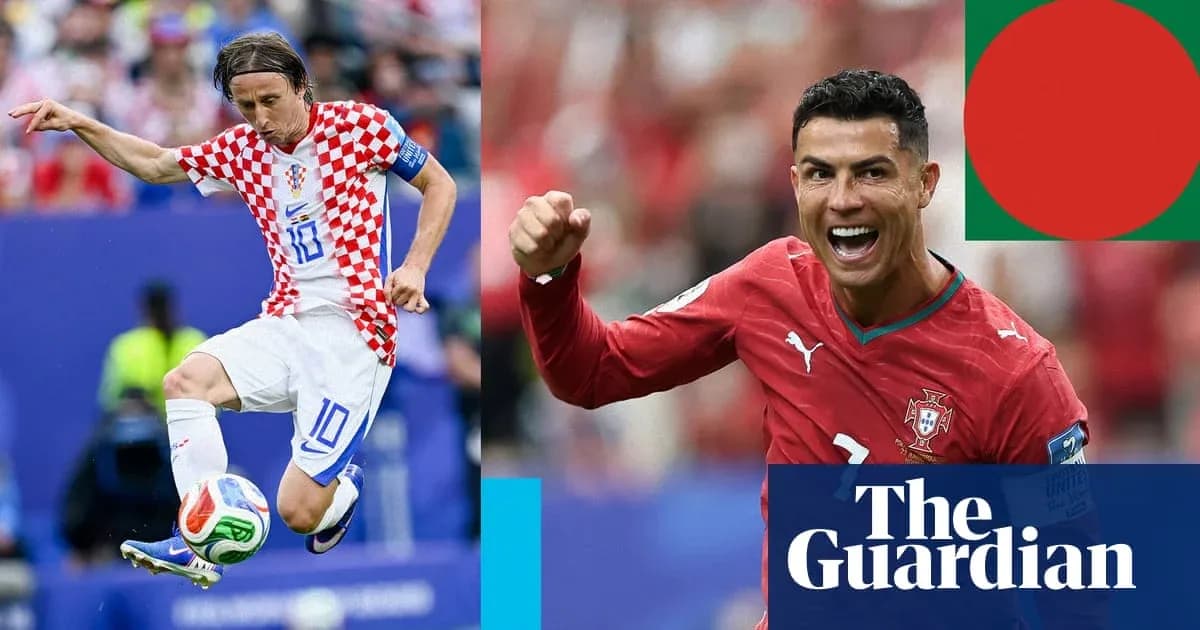
Ronaldo and Modric: A Legacy of International Football
Can you remember what you were doing on 1 March 2006?
You might have been at Anfield, watching England edge Uruguay 2-1. Maybe you were at Hampden Park as Switzerland put three past Scotland. Or perhaps you were in front of a television somewhere, seeing a slight, long‑haired midfielder called Luka Modric pull on the Croatia shirt for the first time.
That night in Basel, Croatia beat Argentina 3-2. Lionel Messi scored his first international goal. In Riyadh, Cristiano Ronaldo struck twice in a 3-0 win for Portugal over Saudi Arabia, already carrying the swagger of a man who expected to own the stage for years to come.
He did. So did Messi. And in a quieter, more relentless way, so did Modric.
Ronaldo, Messi and Modric have framed an era. Two forwards who turned goalscoring into a private arms race, and a playmaker who stitched everything together in the background, passing when others chased headlines, dictating when others chased records. Less show, more control. But always there.
They now belong to one of football’s rarest clubs: the four men who have reached at least 200 international caps. Ronaldo. Modric. Messi. And one more name for the purists’ quiz sheets.
This week, that longevity takes on one more chapter. Ronaldo, now 41, and Modric, 40, are set for their 232nd and 202nd appearances respectively when Portugal meet Croatia in the last 32 of the World Cup. It may be the last time these two giants of 21st‑century football share a pitch, after careers that have overlapped, collided and, for a golden stretch in Madrid, fused into one of the most ruthless machines the club game has seen.
Their dedication to the national shirt has never really dipped. When Modric made his Croatia debut back in 2006, Ronaldo already had 29 caps. Two decades later, the gap has grown by only one. The numbers tell a story of parallel careers: different roles, different countries, but the same instinct to pick up the phone whenever it rang from Lisbon or Zagreb.
Their paths first crossed in English rain. The 2008‑09 Carling Cup final, Manchester United v Tottenham Hotspur. Ronaldo on one side, Modric on the other, both on the pitch for the full 120 minutes, both given a 7 in the ratings, both watching as United won on penalties. It felt like a domestic subplot at the time. In hindsight, it was the opening act of a much bigger saga.
They met again with higher stakes in the 2010‑11 Champions League quarter-finals, by then on opposite sides of the continental divide. Ronaldo had already swapped Old Trafford for the Bernabéu. Real Madrid went through, as they so often would in the years to come.
Because soon enough, they were no longer opponents. They were the spine of the same team.
Across six seasons together at Real Madrid, Ronaldo and Modric turned European nights into something close to a routine. Four Champions League titles. Semi-finals in the other two campaigns. A dynasty built on Ronaldo’s ruthless finishing and Modric’s cold, precise orchestration from midfield.
If there was a single moment that captured that partnership at its peak, it came in Cardiff in 2017. Juventus were threatening a comeback in the Champions League final. Madrid needed clarity. Modric found it first, gliding to the byline on the right, head up, and cutting the ball back. Ronaldo arrived, as he always seemed to, and swept Madrid 3-1 up. Game over. Era confirmed.
That goal was one scene in a much longer film. Across 222 matches, club and country combined, they shared the pitch. No central midfielder has played alongside Ronaldo more often than Modric. That statistic feels less like a quirk and more like a verdict on trust.
Now they meet again, stripped of the white shirts and the floodlights of the Bernabéu, back where it all started: carrying their countries’ hopes into a knockout tie.
Two men, 40 and 41, still answering the call. How many more times can they do it?