.svg&w=384&q=75 "naujapitch logo")
Real Madrid Loses CAS Appeal Over Homophobic Chants
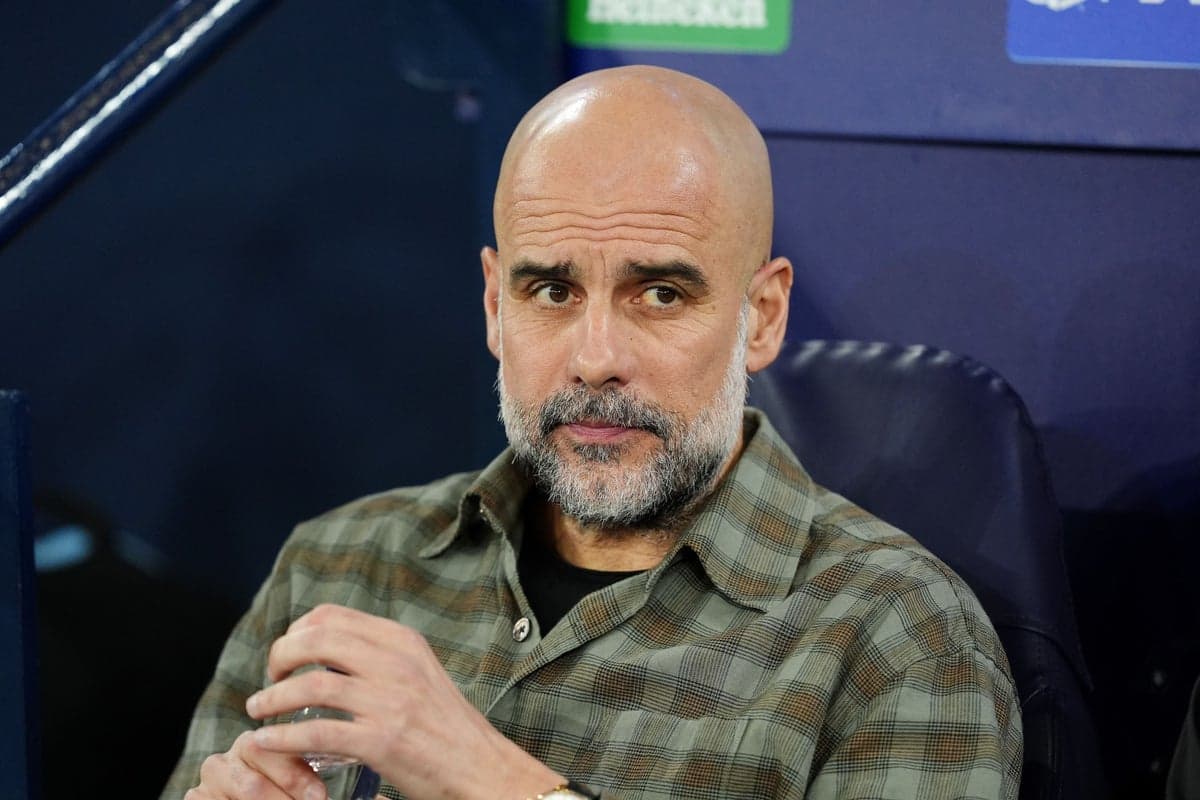
Real Madrid has lost its battle at the Court of Arbitration for Sport after trying to overturn a Uefa sanction for homophobic chants aimed at Pep Guardiola during a Champions League tie against Manchester City.
CAS has backed Uefa’s punishment in full, describing the chanting as “of a severe discriminatory nature … far more serious and damaging than acceptable satire and banter.” In the eyes of sport’s highest court, this was not terrace humour that strayed a little too far. It was abuse.
CAS backs Uefa on “severe” homophobic abuse
The ruling, dated 14 April and published in full this week, dismisses Madrid’s appeal against a €30,000 (£25,000) fine and a two-year probationary order that includes the closure of a small section of the Bernabéu for one Champions League home game if there is a repeat offence.
The incident dates back to February last year, when Madrid hosted City in the knockout play-offs and won 3-1 in the second leg. During the second half, a group of home supporters chanted that Guardiola was thin, took drugs and would be seen in Madrid’s most gay‑friendly neighbourhood.
An expert witness at CAS went further, telling the panel that the chant carried the insinuation that the former Barcelona coach was “infected with HIV/AIDS,” a detail the judges referenced in underlining the gravity of the abuse.
The chants were filmed in the stadium, the footage later shared on social media and then submitted to Uefa by the Fare Network, which works with Fifa to monitor discriminatory behaviour at international competitions. The video became central evidence.
Madrid’s defence rejected
Madrid’s legal team tried to frame the episode as something different. Their argument: expressions that are “humorous, exaggerated or aimed at powerful institutions or public figures” should be read in their specific cultural and matchday context, not treated as outright discrimination.
They also floated doubt over who was actually singing. When Uefa first ruled on the case in February 2025, Madrid’s lawyers suggested the chant might have come from Manchester City supporters rather than the home end, and they attacked the Fare report as having “very serious formal and substantive defects.”
CAS did not agree. The panel sided with Uefa’s interpretation of both the content and the impact of the chant, and left the original sanctions intact.
Uefa pushes back against “machismo” culture
Inside the hearing room in Lausanne last September, Uefa’s lawyers went on the front foot. They placed the case within a wider, bruising history of homophobia in football.
Homophobia, they argued, has “cast a long and deeply troubling shadow” over the sport. For decades, they said, football has been scarred by “a culture of machismo, exclusion, prejudice, and hostility towards individuals based on their sexual orientation.”
That culture, Uefa’s legal team added, has shaped “the personal and professional lives of countless players, coaches and fans” and has “led to tragic outcomes in the past.” In that light, they insisted, there could be no room for indulgence of chants like those aimed at Guardiola.
They also made a pointed remark about Madrid’s priorities. A club of that size and reach, Uefa argued, “should be the first fighting against those chants, instead of hiring high profile lawyers to file an appeal with the CAS.”
The financial hit, they noted, was negligible: the €30,000 fine represents just 0.03% of the more than €100 million (£85 million) Madrid earned in Champions League prize money that season.
A legal feud within a bigger feud
The appeal unfolded against a fraught backdrop. When the case was heard in Switzerland, Madrid and Uefa were still locked in a separate, years-long legal war over the failed Super League project, a conflict that had strained relations between the club and European football’s governing body.
That Super League dispute was finally settled three months ago, just as CAS judges were putting the finishing touches to their written verdict on the homophobic chanting case. The timing underlined how many fronts the relationship between Madrid and Uefa has occupied in recent years.
On this front, at least, the matter is now clear. Uefa’s disciplinary decision stands, CAS has drawn a hard line, and Madrid must live with both the fine and the probationary threat of a partial stadium closure.
Madrid moves to head off repeat
There has been a response inside the club. Before Madrid hosted City again in the Champions League in March, officials met with fan groups to stress that Guardiola must not be targeted with abuse.
It was a quieter, more pragmatic move than the courtroom fight that preceded it, but it may prove more important. In a sport still wrestling with its own prejudices, the real test for a club of Madrid’s stature is no longer what it can argue in Lausanne, but what it chooses to tolerate in its own stands.