.svg&w=384&q=75 "naujapitch logo")
Pep Guardiola's Influence on Premier League Tactics
When the next generation of Premier League managers are asked who shaped the way they see the game, most of them will land on the same name: Pep Guardiola.
Not just because of the trophies. Because he changed the way English football thinks.
He will leave Manchester City with a stack of medals and records, but his real legacy is scattered across the division – in goalkeepers asked to play like midfielders, full-backs who drift inside like No 10s, and centre-backs who suddenly look comfortable on the touchline. His ideas have seeped from the Etihad to non-league pitches and Sunday mornings.
And crucially, they weren’t all drawn up on a whiteboard years in advance. Guardiola arrived with clear principles, but the details have always been shaped by the players in front of him and the problems thrown at him. That blend of stubborn belief and ruthless flexibility is what transformed the Premier League.
The revolution started in goal
One of his first acts at City set the tone.
Joe Hart, a title-winning, fan-favourite goalkeeper, was pushed aside. Claudio Bravo came in. Then Ederson. Both were chosen not for their shot-stopping first, but for what they could do with the ball at their feet.
At the time, it felt radical. Risky. Un-English.
Guardiola was hammered for it when Bravo struggled. Pundits scoffed at the idea of a “ball-playing goalkeeper” in a league built on crosses, chaos and penalty-box scrambles.
A decade on, the argument has flipped. Suggest now that a top-flight side can thrive with a keeper who’s uncomfortable in possession and you’re the one swimming against the tide.
By the early 2020s, almost everyone had followed. Manchester United moved from David de Gea to Andre Onana. Arsenal shifted Aaron Ramsdale out for David Raya. Chelsea cycled through Edouard Mendy, Kepa Arrizabalaga and Robert Sanchez in search of the right blend of feet and hands. Across the league, traditional shot-stoppers gave way to quarterbacks in gloves – with mixed results, but the direction of travel was clear.
Then, almost inevitably with Guardiola, came the twist.
As man-to-man high pressing from goal-kicks spread, the risk of playing short ramped up. Opponents hunted in packs. Mistakes were punished higher and quicker. The space to exploit moved further up the pitch.
City responded by signing Gianluigi Donnarumma. On paper, a move away from the archetypal Guardiola goalkeeper. Ederson, the symbol of the build-from-the-back era, made way for a less polished passer but a supreme one-on-one specialist.
Donnarumma’s heroics in Paris St-Germain’s Champions League triumph had underlined his value in tight, high-stakes games. Guardiola judged that the marginal gains of an elite shot-stopper now outweighed the marginal gains of an extra playmaker in gloves.
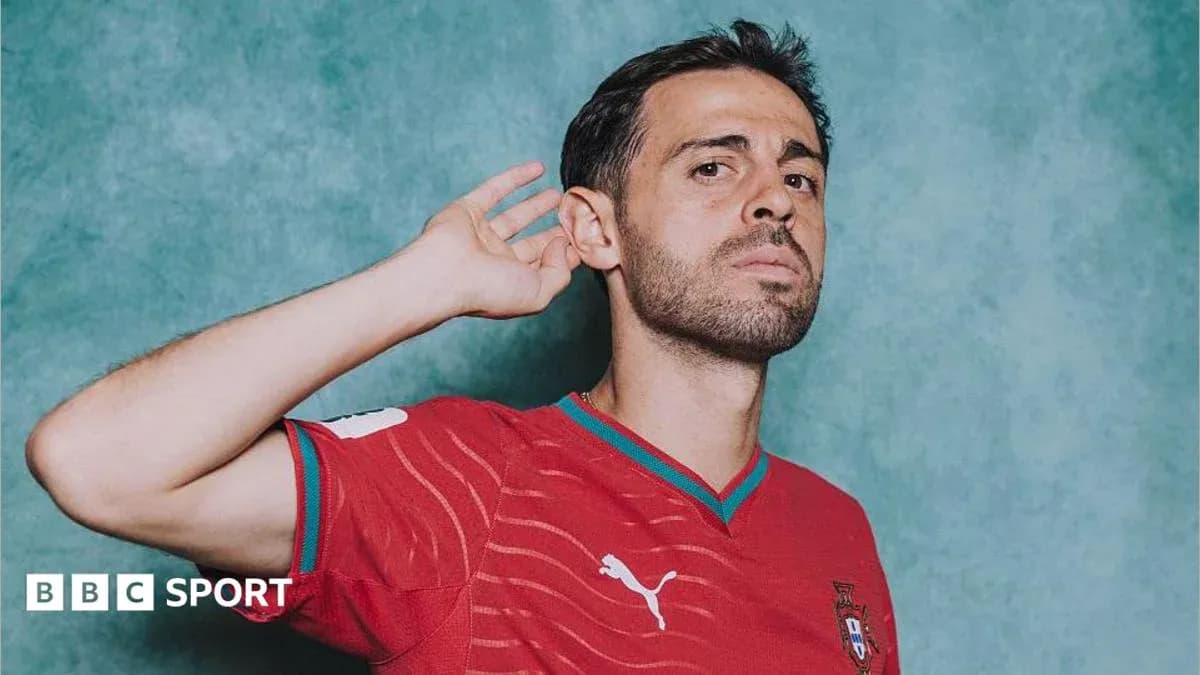
City still play short at times, even against the press, but with a twist of their own. Midfielders like Bernardo Silva and Rodri drop right onto the goalkeeper’s toes to receive the first pass, almost five-a-side style. It’s risky, it’s tight, and it drags markers into uncomfortable zones. Expect others to copy it soon enough.
The shift has rippled out. United, having gone all-in on Onana’s distribution, pivoted again, replacing him with Senne Lammens – a more orthodox keeper. Ten years on from Hart’s exit, the league has almost come full circle, only now the debate is framed by Guardiola’s experiments.
From full-backs to everything-backs
Guardiola’s first title-winning City side, the 100-point machine of 2017-18, didn’t just overwhelm teams with talent. They bent the shape of the game.
Injuries hammered his full-back options early that season. For many coaches, that would mean a stopgap, a square peg at left-back and a hope for the best. Guardiola saw an opportunity.
He scanned his squad for left-footers with the right technical profile and landed on Oleksandr Zinchenko and Fabian Delph. Neither was a natural full-back, but both were comfortable receiving infield, both could pass in tight spaces.
So he inverted his left-back.
Instead of hugging the touchline, the left-back stepped inside, next to the defensive midfielder. That extra body in the middle gave City control, security and a cleaner build-up. It freed the left-winger to stay wide and stretch the pitch, knowing the inside channel was covered.
The effect was devastating. Opponents struggled to work out where to press, who to follow, and when to jump. City’s structure looked new, but it was built out of necessity.
When Mikel Arteta took Zinchenko to Arsenal, he imported the idea wholesale. Arsenal’s most fluid spells under him have come with inverted full-backs stepping into midfield, tilting the pitch in their favour.
Ange Postecoglou, another Guardiola disciple, used a similar template at Tottenham. Pedro Porro and Destiny Udogie narrowed up in possession, tucking alongside the holding midfielder. Spurs built attacks with a box of four in the middle, not a flat back four behind.
Go back to 2018-19 and the improvisation continued. With Zinchenko injured, Aymeric Laporte – a left-footed centre-back – filled in at left-back, again stepping inside rather than bombing on.
By the Treble-winning season of 2022-23, the boundaries between positions were almost gone. Manuel Akanji and Nathan Ake, both centre-backs by trade, operated as nominal right-back and left-back. Ruben Dias anchored, John Stones drifted into midfield, and City morphed between back four, back three and box midfield within the same move.
It did more than just confuse opponents. It opened the door for a new type of full-back across the league.
Newcastle’s 6ft 7in Dan Burn now regularly plays at left-back, sliding in to form a back three on the ball and defending wide out of possession. A few years earlier, that would have been dismissed as a desperate patch-up job. Now it feels like a legitimate blueprint.
Guardiola has also pushed the attacking side of the role. Joao Cancelo, and more recently Nico O’Reilly, have been used as full-backs who move not just inside but higher, arriving in the box, contributing to goals and assists rather than simply recycling possession.
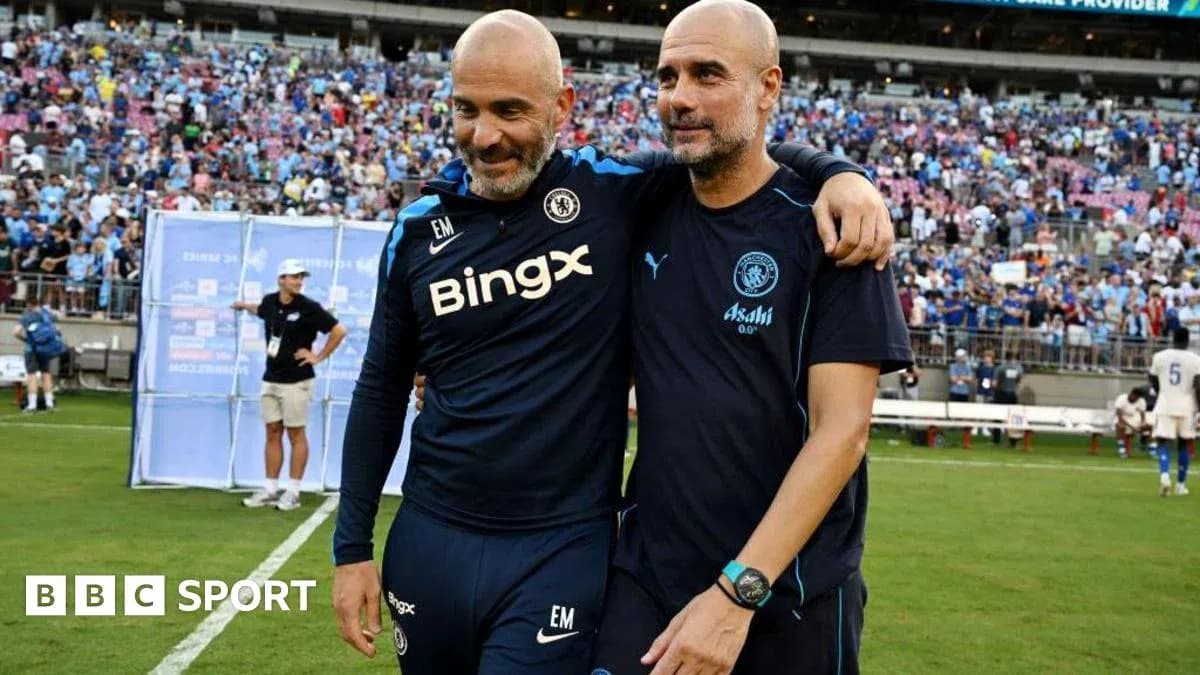
Arteta has followed suit with Jurrien Timber and Riccardo Calafiori, hybrid defenders comfortable stepping into midfield or beyond. At Chelsea, Malo Gusto and Marc Cucurella have been deployed in similar fashion under Enzo Maresca, another coach who learned under Guardiola’s eye.
The job description of a full-back in England used to be simple. Not any more.
Possession as a weapon, not a comfort blanket
At the heart of all this sits Guardiola’s oldest conviction: the ball is your best defender.
During his Barcelona days, he walked away from a Champions League tie against Inter Milan feeling he had betrayed himself. Zlatan Ibrahimovic started up front, the game plan tilted towards quicker attacks, and Barcelona ceded more of the ball than he liked. They lost. The lesson stuck.
He resolved that if he was going to fail, he would do it on his own terms – with possession, control and positional play as non-negotiables.
City under Guardiola have lived that out. In 2017-18, they averaged 71.9% possession across the league season. Since then, they have never dipped below 60%. Six Premier League titles in seven years have turned what was once “continental” into the new English orthodoxy.
Look around.
Liverpool, under Arne Slot, won the Premier League in his first season playing a more controlled, ball-dominant style than Jurgen Klopp’s heavy-metal blueprint. The pressing remained, but the rhythm of the team shifted closer to Guardiola’s principles.
Arsenal, under Arteta, have built one of the division’s most miserly defences while still insisting on long spells with the ball. They suffocate opponents not just by pressing, but by starving them.
Brighton’s entire model is built on coaches who want to impose themselves through possession. Roberto De Zerbi and Fabian Hürzeler have both embraced that idea, turning the south coast club into a laboratory for high-precision, high-risk football.
Scott Parker, Vincent Kompany and Russell Martin have tried to live in that world too. Their teams stuck rigidly to a passing philosophy even when the player quality wasn’t there, even when results slid. They paid a price for that stubbornness, but their commitment underlines how deep Guardiola’s influence runs. They weren’t copying a fad; they were following a doctrine.
Out of Ferguson’s shadow
Before Guardiola landed, the Premier League’s identity was clear. High tempo. Direct. Emotional. Sir Alex Ferguson’s Manchester United sides embodied it: rapid transitions, wide players flying forward, games decided in end-to-end surges.
Those fingerprints were still on the league when Guardiola arrived. They haven’t vanished. Under Michael Carrick, United have leaned back into their counter-attacking heritage, sitting deeper and springing forward quickly.
Yet one of Guardiola’s most striking achievements is that he walked into that environment and bent the tactical centre of gravity towards his own ideas. Not by demanding others copy him, but by winning so relentlessly that they felt they had to.
He has been painted at times as a coach who simply imposes a fixed style on every league he enters, forcing everyone else to fall into line. The reality is more nuanced.
Yes, his fundamentals are constant: dominate the ball, control the spaces, overload the middle of the pitch, value technical security. But around that core, he has adapted repeatedly – to injuries, to new signings, to shifts in how opponents try to hurt him.
Traditional wingers or inverted ones. Full-backs on the outside or stepping into midfield. False nines drifting into pockets or classic centre-forwards pinning centre-backs. Guardiola has used all of them, often within the same season, because he is relentlessly pragmatic within his principles.
That is why he keeps winning. And that is why, every time rivals think they have decoded “the Guardiola way” and start to mimic it, he is already somewhere else.
Managers across the league have spent a decade chasing his shadow. The irony is that the shadow keeps moving.