.svg&w=384&q=75 "naujapitch logo")
Osasuna vs Espanyol: Tactical Analysis of a 1-2 Defeat
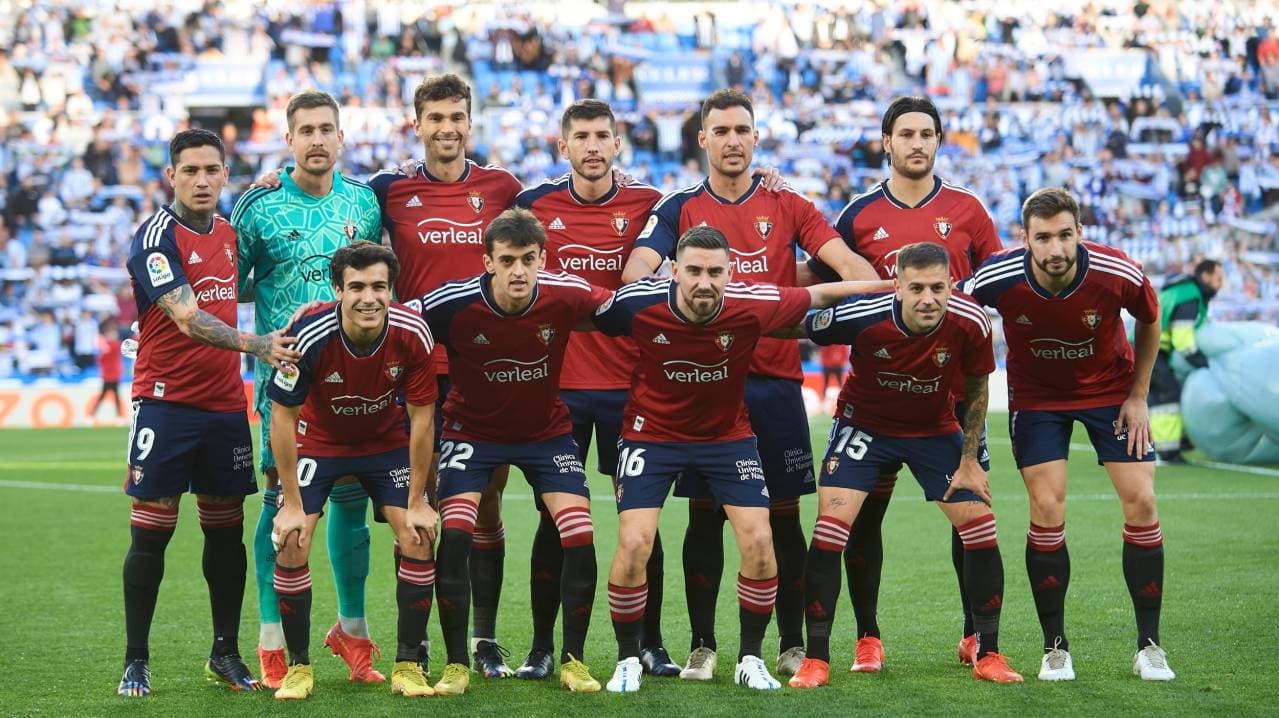
Osasuna’s 1-2 defeat to Espanyol at Estadio El Sadar was a classic case of territorial dominance losing out to structural clarity and penalty-box efficiency. In a La Liga match where the hosts controlled 68% of the ball and generated 24 shots to Espanyol’s 7, Manolo Gonzalez’s 4-4-2 outperformed Alessio Lisci’s 4-2-3-1 in both penalty areas, especially in the game’s key transitional moments.
Executive Summary
Osasuna built their game around high possession and territorial pressure, circulating through the double pivot of Lucas Torro and Jon Moncayola and using wide rotations from Alejandro Berrocal Bretones and Vincent Munoz to pin Espanyol back. Yet Espanyol’s compact 4-4-2, with Martin Dmitrovic as the last line, absorbed long phases without being structurally dislodged. Two well-timed strikes from Carlos Romero and Keidi Garcia, both from controlled attacking patterns rather than chaos, turned a defensive posture into three points. The half-time score of 0-1 framed the tactical story: Osasuna as the protagonists with the ball, Espanyol as the side dictating where the game was actually played.
Scoring Sequence & Disciplinary Log
The match’s rhythm was defined early by Espanyol’s defensive aggression. At 11', Pol Lozano received a yellow card for Foul, signalling Espanyol’s readiness to disrupt Osasuna’s midfield circulation with timely interventions rather than passive retreat.
Espanyol struck first at 27', when left-back Carlos Romero advanced from the defensive line to finish a move for 0-1. The goal underlined Espanyol’s plan: invite Osasuna forward, then use full-back surges and quick combinations to exploit the spaces behind Osasuna’s advanced wide players.
Osasuna’s territorial control was finally rewarded at 49'. Vincent Munoz, operating from the left half-space, equalised for 1-1, assisted by centre-back Flavien Boyomo. Boyomo’s involvement highlighted Osasuna’s use of their central defenders in advanced zones, stepping into midfield to create overloads and second-phase pressure around the box.
Espanyol responded almost immediately. At 53', Keidi Garcia restored the lead to 1-2, finishing a move orchestrated by right midfielder Tyrhys Dolan. The pattern fit Espanyol’s blueprint: regain, progress quickly into the channels, and attack a disorganised back line before Osasuna could reset their 4-2-3-1 block.
Substitutions then reshaped the midfield battle. At 55', C. Pickel (IN) came on for Pol Lozano (OUT), adding more defensive ballast and legs to Espanyol’s central screen. Osasuna replied with a triple change at 58': Raul Garcia (IN) came on for Aimar Oroz (OUT), Iker Munoz (IN) came on for Lucas Torro (OUT), and Maximiliano Gomez (IN) came on for Jon Moncayola (OUT), signalling a shift toward more vertical, risk-taking football.
Further changes followed: at 64', F. Calero (IN) came on for Exposito (OUT) and R. Fernandez Jaen (IN) came on for Keidi Garcia (OUT), tightening Espanyol’s structure and freshening the front line for pressing and outlet runs. At 67', J. Galan (IN) came on for Alejandro Bretones (OUT), and at 76' Espanyol made a double switch: A. Roca (IN) for Tyrhys Dolan (OUT) and R. Sanchez (IN) for P. Milla (OUT), reinforcing wide work-rate and defensive coverage. At 78', Kike Barja (IN) came on for V. Rosier (OUT), giving Osasuna a more aggressive right flank.
The late stages brought rising tension. At 83', Iker Munoz (Osasuna) was booked — Yellow Card, Foul — as Osasuna pushed higher and risked more duels in advanced zones. At 90', Antoniu Roca (Espanyol) received a Yellow Card (additionalInfo null), completing a disciplined but combative Espanyol performance.
Card summary (chronological, with reasons):
- 11' Pol Lozano (Espanyol) — Foul
- 83' Iker Munoz (Osasuna) — Foul
- 90' Antoniu Roca (Espanyol) — additionalInfo null
Totals: Osasuna: 1, Espanyol: 2, Total: 3.
Tactical Breakdown & Personnel
Osasuna’s 4-2-3-1 was built to dominate the ball and compress Espanyol into their own third. Sergio Herrera, despite facing only 7 total shots and 3 on target, had limited scope to influence the game, registering 1 save. The defensive line of V. Rosier, Alejandro Bretones, A. Catena and Flavien Boyomo played aggressively, pushing high to keep Espanyol pinned and contributing to 9 corner kicks and 18 shots inside the box. Boyomo’s assist for Munoz’s goal was emblematic of Osasuna’s approach: centre-backs stepping into midfield to create extra passing lanes and second-ball pressure.
The double pivot of Lucas Torro and Jon Moncayola provided circulation and rest defence, but Espanyol repeatedly found ways to exploit the spaces either side of them in transition. With 515 passes, 442 accurate (86%), Osasuna had the structure to progress, yet their 1.61 xG suggests that many of their 24 shots were either rushed or from suboptimal angles, especially as Espanyol’s block retreated deeper. The introduction of Iker Munoz and Maximiliano Gomez shifted the profile from control to directness, with Raul Garcia adding penalty-box presence, but Espanyol’s back four held their line and defended crosses and cut-backs effectively.
Espanyol’s 4-4-2 was a model of compactness and role clarity. Martin Dmitrovic made 6 saves, an important but not spectacular workload, supported by a back line of O. El Hilali, C. Riedel, Leandro Cabrera and Carlos Romero. Their primary task was to narrow the central corridor, forcing Osasuna wide and trusting their box defending. The midfield quartet — Tyrhys Dolan, U. Gonzalez, Pol Lozano (later C. Pickel) and P. Milla — shifted laterally as a unit, with the central pair screening the half-spaces and blocking access into A. Budimir’s feet.
Up front, Exposito and Keidi Garcia worked as a first defensive line, curving their presses to steer Osasuna’s build-up toward the flanks. In attack, they were crucial in transitions, occupying centre-backs and opening channels for Romero’s and Dolan’s forward runs. After the interval, Gonzalez’s substitutions — especially Pickel and Calero — tilted the side further toward solidity, effectively transforming the 4-4-2 into a deeper, situational 4-5-1 out of possession, with fresh legs maintaining intensity in the final 30 minutes.
The Statistical Verdict
The numbers underline the tactical contrast. Osasuna: 68% possession, 24 total shots (9 on goal), 9 corners, 515 passes, 442 accurate (86%), xG 1.61, goals prevented -0.23. Espanyol: 32% possession, 7 total shots (3 on goal), 2 corners, 252 passes, 174 accurate (69%), xG 0.79, goals prevented -0.23.
Osasuna’s overall form in this match was that of a high-possession side able to reach the final third consistently but lacking the final precision and variety to turn volume into goals. Their defensive index was weakened by vulnerability in transition; conceding twice from a side that produced only 0.79 xG reflects structural exposure rather than sheer bad luck.
Espanyol’s statistical profile fits a low-possession, high-impact strategy. Despite fewer passes and a lower completion rate, they generated enough quality to outscore their xG and Osasuna’s volume. Dmitrovic’s 6 saves, combined with disciplined card management (2 yellows, both in controllable moments), underline a team comfortable suffering without the ball. In pure tactical terms, Espanyol’s compact 4-4-2 and sharp transitions proved more efficient than Osasuna’s territorial dominance, deciding a tight late-season fixture at Estadio El Sadar.