.svg&w=384&q=75 "naujapitch logo")
Osasuna vs Espanyol: Mid-Table Clash in La Liga 2026
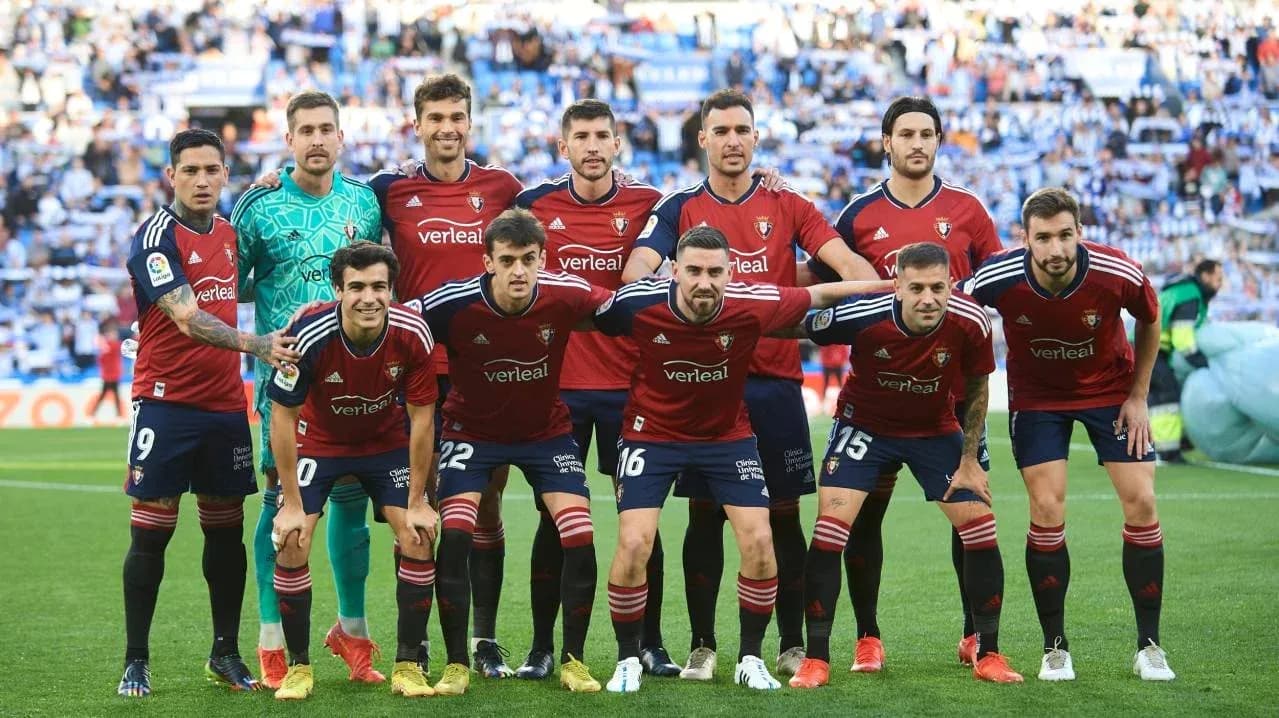
Osasuna host Espanyol at Estadio El Sadar in a late-season La Liga fixture in 2026 that is more about securing mid-table stability than chasing Europe or avoiding relegation. In the league phase, both sides arrive locked on 42 points after 36 matches, with Osasuna 12th and Espanyol 14th on goal difference, so this Round 37 meeting primarily shapes final ranking, prize money, and momentum heading into the final weekend rather than defining survival.
Head-to-Head Tactical Summary
The recent head-to-head record between these clubs has been finely balanced, with venue playing a clear role. On 31 August 2025 at RCDE Stadium in Cornella, Espanyol beat Osasuna 1-0 after a 0-0 HT, underlining Espanyol’s ability to edge tight home games. A few months earlier, on 18 May 2025 at Estadio El Sadar in Iruñea, Osasuna won 2-0, having led 1-0 at HT, showing how strong they can be in Pamplona. Earlier in that La Liga cycle, on 14 December 2024 at RCDE Stadium in Cornella de Llobregat, the sides played out a 0-0 draw, again with a 0-0 HT, reflecting a cautious pattern when Espanyol hosted.
Going back to 4 February 2023 at RCDE Stadium in Cornella de Llobregat, Espanyol and Osasuna drew 1-1, with Osasuna leading 1-0 at HT before being pegged back. On 20 October 2022 at Estadio El Sadar in Iruñea, Osasuna claimed a 1-0 home win after a 0-0 HT. Overall, Osasuna have taken two wins at El Sadar (2-0 in May 2025, 1-0 in October 2022), Espanyol have one home win (1-0 in August 2025), and there are two draws at RCDE Stadium (1-1 in February 2023, 0-0 in December 2024). The pattern is of low-scoring, tight encounters, with Osasuna slightly more effective at home and Espanyol competitive but rarely dominant.
Global Season Picture
- League Phase Performance: In the league phase, Osasuna sit 12th with 42 points from 36 matches, scoring 43 and conceding 47 (goal difference -4). Their home record is a clear strength: 9 wins, 5 draws, 4 losses, with 30 goals for and 22 against at Estadio El Sadar. Espanyol are 14th, also on 42 points, with 40 goals scored and 53 conceded (goal difference -13). Away from home they have 4 wins, 5 draws, 9 defeats, with 20 goals for and 30 against, indicating a more fragile defensive structure on the road.
- Season Metrics: In the league phase, Osasuna’s statistical profile from the team data mirrors the standings: 36 games played, 11 wins, 9 draws, 16 defeats, and the same 43:47 goal tally. They average 1.2 goals scored and 1.3 conceded per match, with a strong home attack (1.7 goals per home game) and a much blunter away output (0.7). Defensively, they concede 1.2 at home and 1.4 away. Their clean sheet count is 7, and they have failed to score 11 times, heavily skewed to away fixtures (11 away blanks, none at home), underlining how aggressive and productive they are in Pamplona versus their conservative road approach. Their disciplinary profile is heavy on yellows late in games (notably 18 yellow cards between minutes 76-90 and 13 between 91-105), and they have multiple reds concentrated around the 31-45, 76-90, and 91-105 minute ranges, suggesting risk of late-game disruption.
- Season Metrics (Espanyol): In the league phase, Espanyol also show perfect alignment between standings and statistics: 36 games, 11 wins, 9 draws, 16 losses, 40 goals for and 53 against, averaging 1.1 scored and 1.5 conceded per match. Their attack is consistent home and away (1.1 goals per game in both contexts), but their defense deteriorates on the road (1.7 conceded away vs 1.3 at home). They have kept 10 clean sheets, a solid figure, but failed to score 9 times, indicating a streaky attack that can be shut down. Their card profile shows a spike in yellow cards late (26 yellows from 76-90 and 15 from 91-105), and red cards cluster between 46-60 and 76-90 plus 91-105, pointing to possible late-game discipline issues, especially under pressure away from home.
- Form Trajectory: In the league phase, Osasuna’s form string “LLLWL” indicates a sharp downturn: three consecutive losses, a brief recovery win, then another defeat. This suggests a team that has slipped from mid-table comfort into a poor run, risking a slide down the standings if it continues. Espanyol’s “WLLDL” shows more volatility: a win followed by two defeats, then a draw and another loss. They are not in sustained free fall, but the pattern is negative, with only one win in the last five and defensive issues still present. Both sides come into this game needing a result to arrest downward momentum rather than to chase an immediate major objective.
Tactical Efficiency
In the league phase, Osasuna’s attacking efficiency is strongly venue-dependent. Their 43 goals from 36 matches (1.2 per game) are driven by a high home output (30 goals in 18 games, 1.7 per match) and a limited away threat (13 in 18). This points to a side that can be described as home-clinical (1.7 goals per home game) but overall only moderately efficient when averaged across the campaign. Defensively, conceding 47 (1.3 per match) is mid-table: they are not structurally solid but not fully porous either, with home numbers (22 conceded in 18) significantly better than away (25 in 18). Their clean sheets (7) and complete lack of home blanks in attack underline that at El Sadar they convert territory and pressure into goals reliably, even if they still allow chances at the other end.
Espanyol’s tactical efficiency profile is different. Their attack is flat but consistent: 40 goals in 36 matches, 1.1 per game, both home and away. This suggests a system that produces a steady but unspectacular stream of chances rather than explosive bursts. Defensively, however, they are more vulnerable, with 53 conceded (1.5 per match), and the away figure of 30 goals against in 18 games (1.7 per match) indicates a defense that can be exposed when pushed back. The 10 clean sheets show they can execute a compact block effectively when game state suits them, but the high goals-against total implies that when their structure breaks, it tends to break heavily.
Without explicit numerical “Attack/Defense Index” values in the comparison data, the relative picture is clear from the season metrics: Osasuna’s home attack and balanced defensive record give them a slightly stronger underlying efficiency profile at Estadio El Sadar, while Espanyol’s overall defensive leakage away from home offsets their consistent but modest attack. In a probabilistic framework, this would tilt any efficiency index marginally toward Osasuna at home, with Espanyol relying on disciplined low-block execution and set pieces to compensate for their weaker defensive averages.
The Verdict: Seasonal Impact
With both teams on 42 points in the league phase and sitting 12th (Osasuna) and 14th (Espanyol), this Round 37 clash is unlikely to decide the title race or directly determine relegation, but it is pivotal for final positioning and the perception of each club’s 2026 trajectory. A home win would likely cement Osasuna in the top half of the lower mid-table, validating their strong home metrics (30 goals for, 22 against) and masking their away frailties. It would also halt their current “LLLWL” slide, easing pressure and giving them a platform to recalibrate squad building with a clear identity: aggressive and productive at El Sadar, needing targeted upgrades away from home.
For Espanyol, an away victory would be more symbolically significant. Turning a 4-5-9 away record with 20 goals for and 30 against into a late-season statement win would suggest that their structural issues on the road are fixable and that their 10 clean sheets can be translated into more consistent away resilience. It could move them above Osasuna and potentially into a more respectable mid-table slot, reframing a campaign currently defined by a negative goal difference (-13) and patchy form (“WLLDL”).
A draw would broadly preserve the status quo: both teams safely mid-table, with Osasuna’s home strength and Espanyol’s away vulnerabilities unchanged in narrative terms. The larger seasonal impact, then, lies not in survival or European qualification but in momentum and perception. Osasuna are defending their status as a strong home-side benchmark in La Liga’s middle tier; Espanyol are chasing proof that they can travel without collapsing defensively. The result will feed directly into off-season decision-making: whether each club can fine-tune an existing model or must consider deeper tactical and personnel resets for the next campaign.