.svg&w=384&q=75 "naujapitch logo")
Netherlands vs Japan: Tactical Analysis of World Cup Draw
Netherlands and Japan opened their World Cup Group Stage campaigns at AT&T Stadium with a tactically rich 2-2 draw that showcased contrasting structures and a late momentum swing. Ronald Koeman’s Netherlands imposed themselves for long stretches through a 4-3-3 possession game, while Hajime Moriyasu’s Japan, in a 3-4-2-1, leaned on compactness, transitional sharpness, and late bench impact. The Dutch twice led the shot-quality battle (0.79 xG to Japan’s 0.54) and controlled 60% of the ball, yet Japan’s structural tweaks and substitutions in the final quarter wrestled back control and produced a deserved equaliser.
Netherlands’ Tactical Setup
Netherlands’ 4-3-3 was built on a high technical baseline and strong circulation from the back. With Virgil van Dijk and Jan Paul van Hecke as the central pairing and Micky van de Ven at left-back, Koeman had three comfortable ball progressors in the first line. Denzel Dumfries provided the advanced width on the right, allowing Crysencio Summerville to operate more as an inside forward in the right half-space, while Cody Gakpo held the left channel and Donyell Malen threatened depth centrally.
The midfield trio of Frenkie de Jong, Ryan Gravenberch and Tijjani Reijnders underpinned the dominance of possession. Netherlands completed 464 accurate passes from 525 attempts (88%), repeatedly recycling through De Jong as the tempo-setter and using Gravenberch as the main vertical connector. The 10 shots they generated all came from inside the box, underlining how the positional play successfully collapsed Japan’s block into dangerous central areas, even if the final xG remained moderate at 0.79.
Japan’s Tactical Setup
Japan’s 3-4-2-1 had clear defensive and transitional intentions. Shogo Taniguchi anchored a back three with Tsuyoshi Watanabe and Hiroki Itō either side, giving Moriyasu a solid platform to hold a mid-block and protect central zones. The wing-backs and wide midfielders – with Keito Nakamura and Ritsu Doan starting nominally in midfield roles – were tasked with jumping onto Dutch full-backs and screening passes into De Jong. In possession, the structure flexed towards a 3-2-5, with Takefusa Kubo and Daizen Maeda joining Ayase Ueda to form a narrow front three, looking to exploit spaces behind the Dutch full-backs once possession was turned over.
Despite having only 40% of the ball and completing 287 of 342 passes (84%), Japan matched Netherlands for total shots (10-10) and created a more varied shot map, splitting their attempts between 6 inside the box and 4 from range. Their 0.54 xG reflects fewer high-value entries but also a capacity to threaten in moments rather than through sustained pressure.
Key Tactical Inflections
The game’s key tactical inflection came around the hour mark. At 51’, Virgil van Dijk converted for Netherlands after a Ryan Gravenberch assist, a sequence that rewarded the Dutch emphasis on set patterns and delivery from deeper midfield. Japan responded at 57’ through Keito Nakamura, assisted by Takefusa Kubo, illustrating how their 3-4-2-1 could spring quickly into attack once they broke the first Dutch press.
Koeman’s right-sided overload paid off again at 64’, when Summerville, already heavily involved between the lines, scored from another Gravenberch assist. The pattern was consistent: Netherlands used Dumfries’ high position to pin Japan’s left side, then exploited the interior lane for Summerville to receive and combine. Japan’s initial shape struggled to close that right half-space, and the 2-1 scoreline at that stage mirrored the territorial and structural superiority of the Dutch.
Substitutions and Tactical Adjustments
From 66’ onwards, Moriyasu’s substitutions shifted the tactical balance. Junya Ito (IN) came on for Daizen Maeda (OUT) at 66’, adding direct running and width. At 75’, a triple change reconfigured the back line and front options: Koki Ogawa (IN) for Takefusa Kubo (OUT), Takehiro Tomiyasu (IN) for Ritsu Doan (OUT), and Yukinari Sugawara (IN) for Tsuyoshi Watanabe (OUT). The introduction of Tomiyasu and Sugawara gave Japan fresher legs and more progressive passing from the back, while Ogawa offered a more penalty-box oriented presence alongside Ueda.
Koeman responded at 70’ with a triple substitution of his own, all within the same minute: Teun Koopmeiners (IN) came on for Tijjani Reijnders (OUT), Quinten Timber (IN) came on for Crysencio Summerville (OUT), and Memphis Depay (IN) came on for Donyell Malen (OUT). Later, at 81’, Nathan Aké (IN) came on for Ryan Gravenberch (OUT), and at 85’ Brian Brobbey (IN) came on for Cody Gakpo (OUT). These changes nudged Netherlands towards a more conservative, game-management posture: extra defensive stability with Aké, more direct outlets with Depay and Brobbey, and a less creative midfield after Gravenberch’s withdrawal.
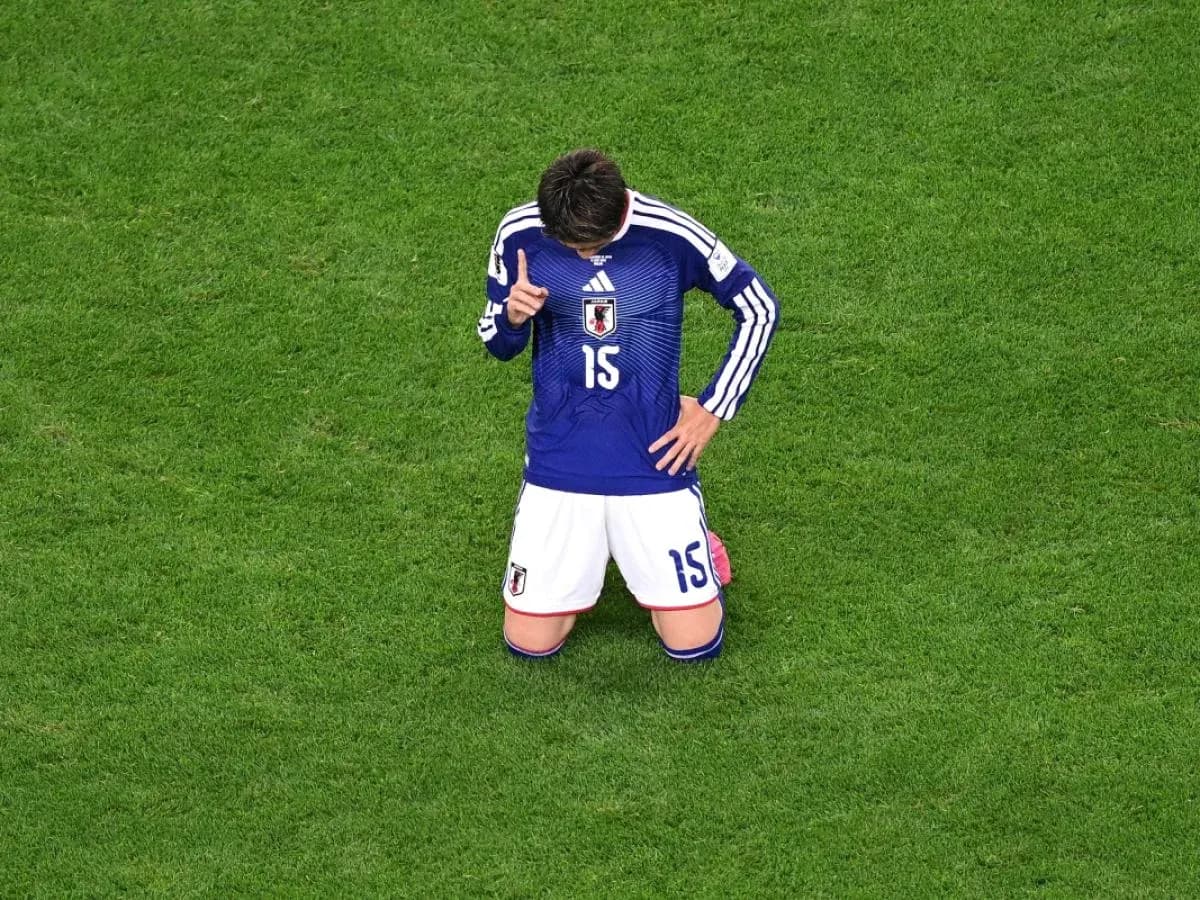
Japan’s final attacking reshuffle at 84’ – Kento Shiogai (IN) coming on for Ayase Ueda (OUT) – coincided with their strongest spell. The structure morphed into a more aggressive, fluid attacking line with multiple players rotating across the front. The late 89’ equaliser by Daichi Kamada, assisted by Koki Ogawa, was the logical outcome of that territorial push and the fresh energy in the Japanese attack.
Discipline and Goalkeeping
Discipline subtly shaped the game’s rhythm. Netherlands collected three yellow cards: at 61’, Crysencio Summerville (Netherlands) — Foul; at 83’, Memphis Depay (Netherlands) — Foul; and at 90+1’, Micky van de Ven (Netherlands) — Professional foul. Japan received no cards. The Dutch bookings, particularly the late one for Van de Ven, reflected moments where their defensive line was stretched by Japan’s increasingly direct and vertical attacks.
In goal, Bart Verbruggen (Netherlands) was credited with 1 save, while Zion Suzuki (Japan) made 4 saves. That distribution aligns with the Dutch territorial dominance and higher shot quality: Japan’s goalkeeper had to intervene more often to keep the scoreline level, while Verbruggen’s lower save count mirrors Japan’s more selective chance creation.
Statistical Summary
Statistically, Netherlands’ 5-4 edge in corners, their 60% possession, and their superior passing volume and accuracy underline a game they largely controlled between the boxes. Japan, however, matched their shot volume, committed the same number of fouls (7-7), and used their bench and structural flexibility to tilt the final phase of the match. From a tactical standpoint, this 2-2 draw reads as Netherlands’ controlled, pattern-based football against Japan’s adaptive, transition-savvy approach – with Moriyasu’s in-game adjustments ultimately neutralising Koeman’s early superiority.