.svg&w=384&q=75 "naujapitch logo")
The Netherlands: Dark Horse of the Tournament
The Netherlands arrive as they so often do: talked about, respected, but kept just outside the velvet rope of the true favourites. They sit in that familiar space between menace and mystery, the team nobody wants to face but few are brave enough to back outright. A dark horse in bright orange.
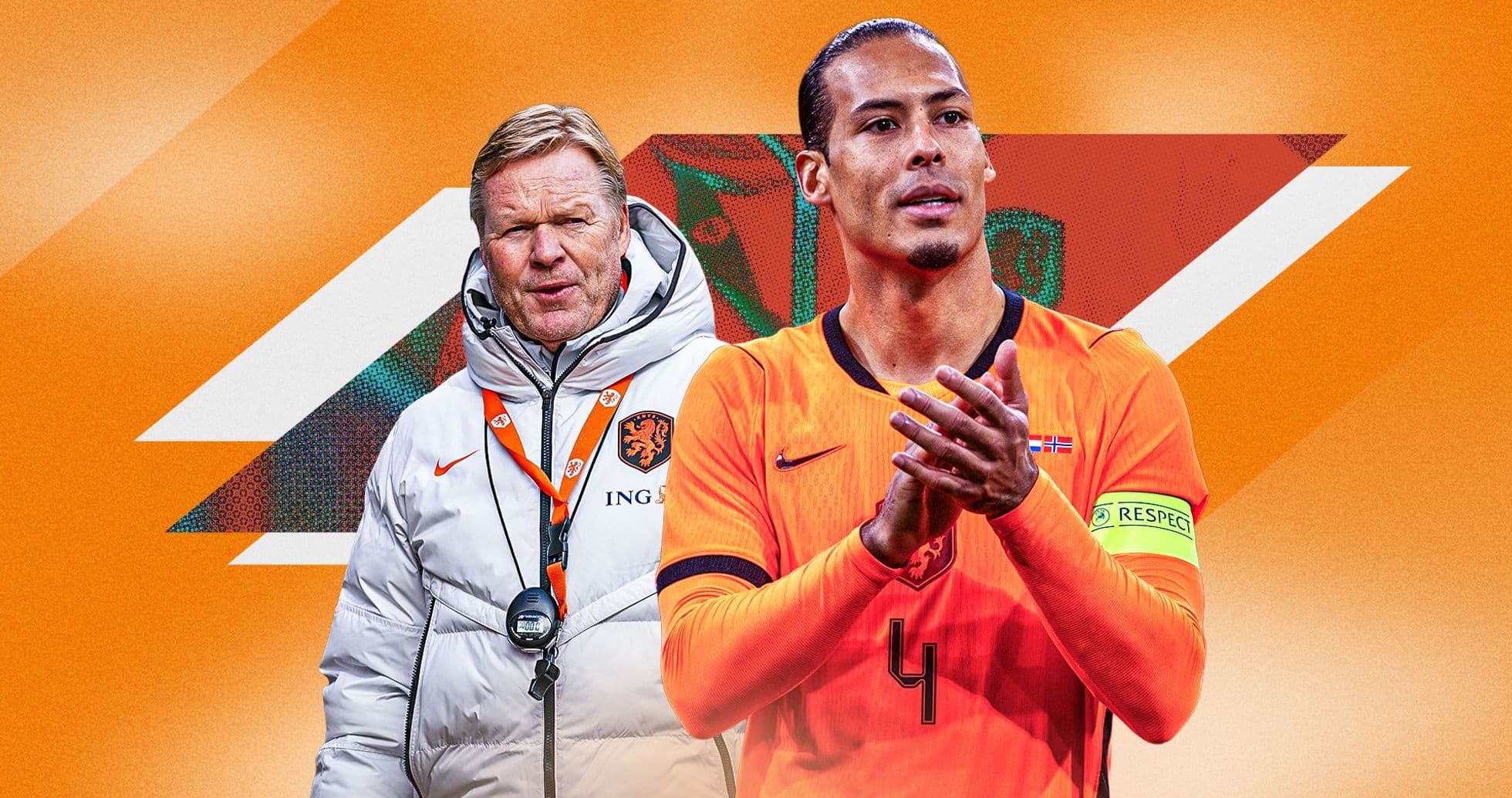
Their group offers no comfort. Japan, Sweden, Tunisia – a draw with no soft centre. It is the kind of pool that exposes flaws quickly, the kind that punishes slow starts. Yet the Dutch still carry the tag of favourites to finish top, and with good reason. Virgil van Dijk anchors a defence that rarely panics. Frenkie de Jong stitches the game together in midfield. Up front, Memphis Depay and Cody Gakpo give Ronald Koeman the kind of attacking variety most coaches crave.
The squad, though, is not untouched. The absentees sting. Xavi Simons, Jurrien Timber and Matthijs de Ligt have all been ruled out through injury before a ball is kicked. Jeremie Frimpong, one of Europe’s most explosive wide threats, did not make the final cut. Nor did gifted midfielder Kees Smit, whose omission raised more than a few eyebrows. Those decisions will follow Koeman into every press conference if results turn.
The warning signs have already flickered. A shock defeat to Algeria in their first warm-up game rattled the mood. The narrow win over Uzbekistan that followed did little to restore full confidence. The Netherlands still won, but the performance lacked the authority of a side ready to dominate a tournament. For a nation raised on attacking swagger, those flat notes are hard to ignore.
Koeman knows the weight of that heritage better than most. He first took the reins in 2018 after Dick Advocaat stepped aside, signing a four-year deal and quickly restoring a sense of direction. He led the team to the 2019 UEFA Nations League final and secured qualification for Euro 2020, only to be tempted away by Barcelona. The pull of Camp Nou proved too strong, and the Oranje project was abruptly paused.
Two and a half years later, he was back. In 2023, Koeman returned to replace Louis van Gaal and immediately steered the Dutch to two more semi-finals – in the Nations League and at Euro 2024. On paper, it is a solid record. Deep runs, big stages, the Netherlands once again a presence when it matters.
Yet the debate at home has never really quietened. Koeman has been applauded for blooding a new generation, for trusting emerging talents and refreshing an ageing core. At the same time, he stands accused of steering too far away from the adventurous, front-foot football that defined the Dutch school under Rinus Michels and Johan Cruyff. The question lingers over every tactical tweak: are the Oranje still the Oranje if they win without the old romance?
At the heart of this version of the Netherlands, as ever, stands Memphis Depay. He may no longer play in Europe and he is likely approaching his last major tournament in orange, but he remains the face of this side and its most decisive figure. His numbers are now etched into national-team history: 55 goals, more than Robin van Persie, Dennis Bergkamp, Arjen Robben and Ruud van Nistelrooy. That is not a supporting cast; it is a monument.
The context matters. Dutch football currently lacks a classic, world-class No. 9 in the traditional mould. So the responsibility falls again on Depay’s shoulders. From his new base at Corinthians, he drove the qualification campaign, scoring at a rate of almost a goal every two games for his country. Only six of those strikes have arrived at major tournaments, though, and that statistic hangs over him. This feels like his last big chance to change that narrative.
Behind him, a different kind of centre-forward is pushing for his own moment. Brian Brobbey’s journey has already taken in hype, doubt and revival. A product of Ajax’s famed academy, he moved to RB Leipzig with heavy expectations and left with a reputation bruised by the “flop” label. The move came too early, the adaptation too harsh, and his development stalled.
England has given him a second act. At Sunderland, the 24-year-old has grown into the nickname ‘Brobbeast’. Seven goals in 31 Premier League appearances might not leap off the page, but those numbers only tell part of the story. He became a central figure in the Black Cats’ remarkable charge to Europa League qualification, a presence defenders felt long after full-time.
Brobbey offers far more than raw power. He runs channels, stretches back lines, and can lead the attack on his own. His blend of strength and pace gives the Netherlands a different attacking profile, something less predictable than the classic Dutch No. 9. A few years ago, people lazily tagged him as “the new Romelu Lukaku”. Now, young forwards look up to him in his own right.
For Koeman, that evolution could be crucial. In a squad searching for a cutting edge to match its defensive steel, Brobbey’s rise offers another path to goals if Depay finds himself crowded, kicked or simply out of rhythm. One is the record-breaker, the other the emerging force. Between them lies a chance to drag the Oranje deep into the knockout rounds once more.
The Netherlands may not sit at the very front of the favourites’ queue. They rarely do. But with Van Dijk’s authority, De Jong’s control, Depay’s history and Brobbey’s hunger, they carry a familiar threat. The only real question is whether this version of the Oranje wants to be remembered for how it played, or how far it went.