.svg&w=384&q=75 "naujapitch logo")
France's Golden Generation Faces Expectations in North America
France arrive in North America with history on their shoulders and a target on their backs. World champions in 2018, finalists again in 2022 – that kind of pedigree doesn’t just command respect, it breeds expectation. Anything short of another charge deep into the tournament will feel like a failure.
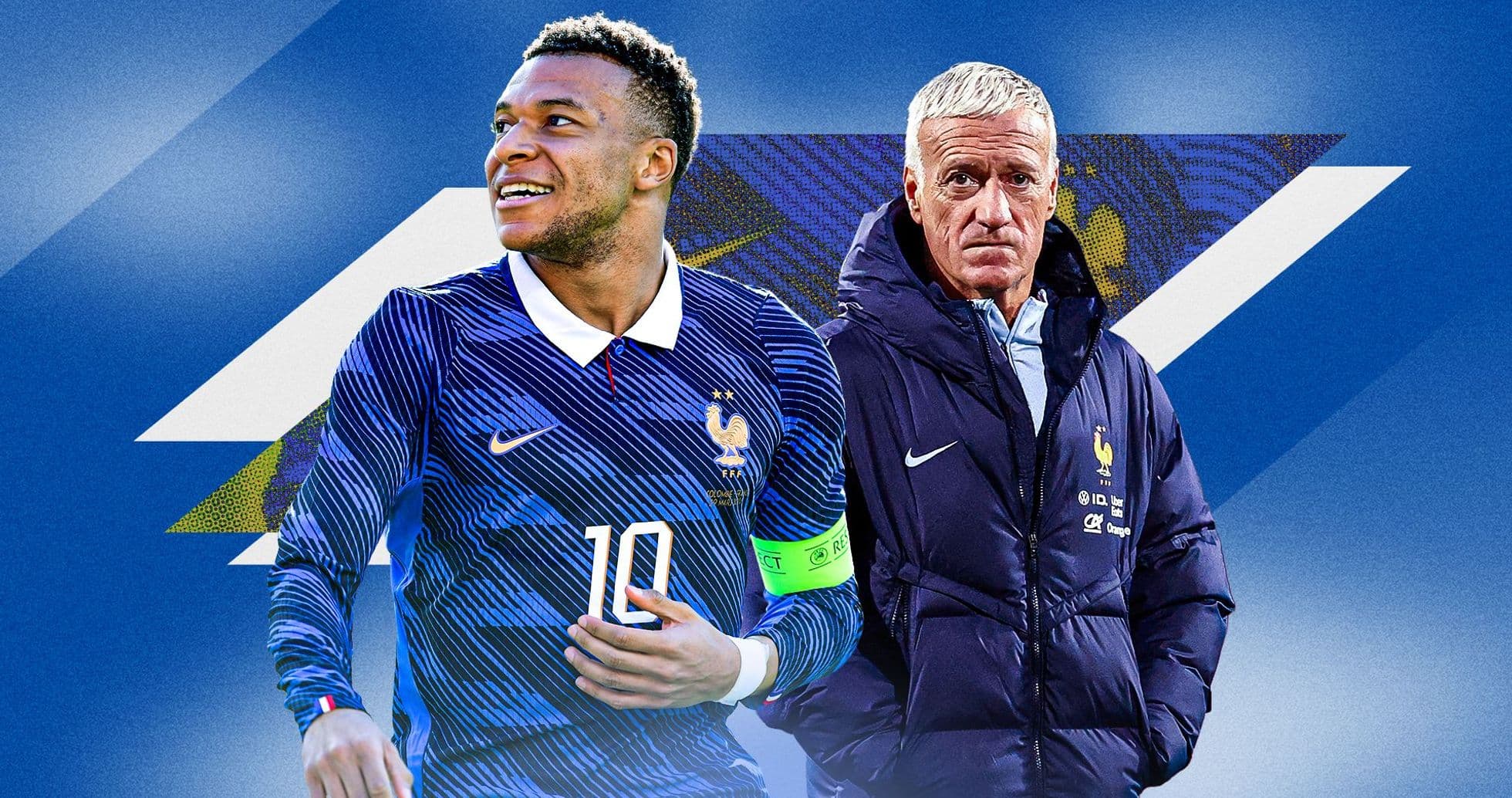
Look at the front of this team and you see why the bookmakers are nervous. Kylian Mbappe remains the headline act, the captain, the No.10, the face of the era. Around him, though, Deschamps has assembled an attacking cast that would make most national coaches envious.
Michael Olise, fresh from a breakout season at Bayern Munich, arrives in the United States as the man most likely to share – or even steal – the spotlight. Desire Doue and Ousmane Dembele, pillars of Luis Enrique’s vibrant Paris Saint-Germain side, add yet more speed, invention and chaos to an already loaded forward line. Measured against the world’s elite, no national team can quite match France for sheer attacking depth and variety. They can hurt you in every way, from every angle, at any moment.
The questions start at the other end of the pitch. France’s defence has wobbled too often for comfort, and the fitness of William Saliba hangs over the camp like a storm cloud. When the back line has creaked, it has done so in ways that will encourage the continent’s best. This is not the iron curtain of old; it is a unit still searching for certainty.
Then there is the dressing room, always volatile, always a story in itself. Keeping harmony in a squad loaded with egos, ambitions and emerging stars has never been straightforward for any France coach. The talent is undeniable, the chemistry less so. If Deschamps can keep the group aligned and the noise outside the camp, France will be brutally hard to stop. If old fractures reappear, the journey could end abruptly.
For Deschamps, this is the final chapter. Appointed in 2012 to rebuild a side that looked spent after Laurent Blanc’s tenure, he has done more than restore order; he has redefined an era. Under his watch, Les Bleus lifted the World Cup in Russia in 2018, dismantling Croatia in the final, and added the UEFA Nations League in 2021 with a win over Spain in Milan. They reached the Euro 2016 final on home soil, only to be stunned by Eder’s extra-time strike for Portugal, and then pushed Argentina to penalties in a breathless 2022 World Cup final that will live long in the game’s memory.
His contract expires in July. It will not be renewed. After almost 15 years in charge, this is his last dance with France. Every decision, every selection, every substitution in North America will be viewed through that lens: the end of an era, written in real time.
Amid all of that, the eye is naturally drawn to Mbappe. Yet the player who could tilt the tournament is Olise. At Bayern, he has grown from promising wide man into a fully fledged attacking force. For the second straight Bundesliga season, he hit double figures for both goals and assists, and his Champions League numbers belonged in the company of Europe’s best.
One night in Bergamo underlined his evolution. Bayern shredded Atalanta 6-1, and Olise ran the show – two goals, one assist, and a performance that crackled with authority. It wasn’t just the output, it was the control, the constant threat, the sense that every attack flowed through him. That same cutting edge carried into France’s final warm-up match, where his hat-trick against Northern Ireland confirmed a player operating at a frightening level of confidence and consistency.
At 24, this feels like a hinge in his career. Dominate here, and he doesn’t just become France’s most valuable player; he becomes one of the defining figures of the tournament.
Behind the headliners, another 24-year-old waits for his moment. Maghnes Akliouche, a product of Monaco’s famed academy, has forced his way into the conversation with a season that turned potential into production. Deschamps gave him his first senior call-up during qualifying, and Akliouche responded instantly: a goal against Azerbaijan, an assist against Iceland, the kind of immediate impact that sticks in a manager’s mind.
His club numbers back it up. Seven goals and twelve assists across Ligue 1 and the Champions League last season marked a genuine breakthrough. Operating primarily as a right-sided attacking midfielder in a 4-2-3-1, he can also slide inside and dictate as a central playmaker. He is not the slight, jinking winger of cliché; he brings physical presence to go with sharp technique, a blend that modern football increasingly prizes.
He will not start often, at least not at the outset. But tournaments are rarely won by the first XI alone. They are decided by the players who come off the bench and change the rhythm of a game, who can unlock a packed defence or punish a tiring back line. Akliouche looks built for that role – a weapon Deschamps can unleash when the clock is ticking and the breakthrough won’t come.
France arrive with a glittering attack, a vulnerable defence, a combustible dressing room and a coach on his farewell tour. It is a mix that promises drama. The only real unknown is whether this golden generation signs off Deschamps’ reign with one last trophy, or leaves North America wondering how a team this gifted let the chance slip away.