.svg&w=384&q=75 "naujapitch logo")
MLS Takes the Spotlight After World Cup Success
“Thanks world, we’ll take it from here.”
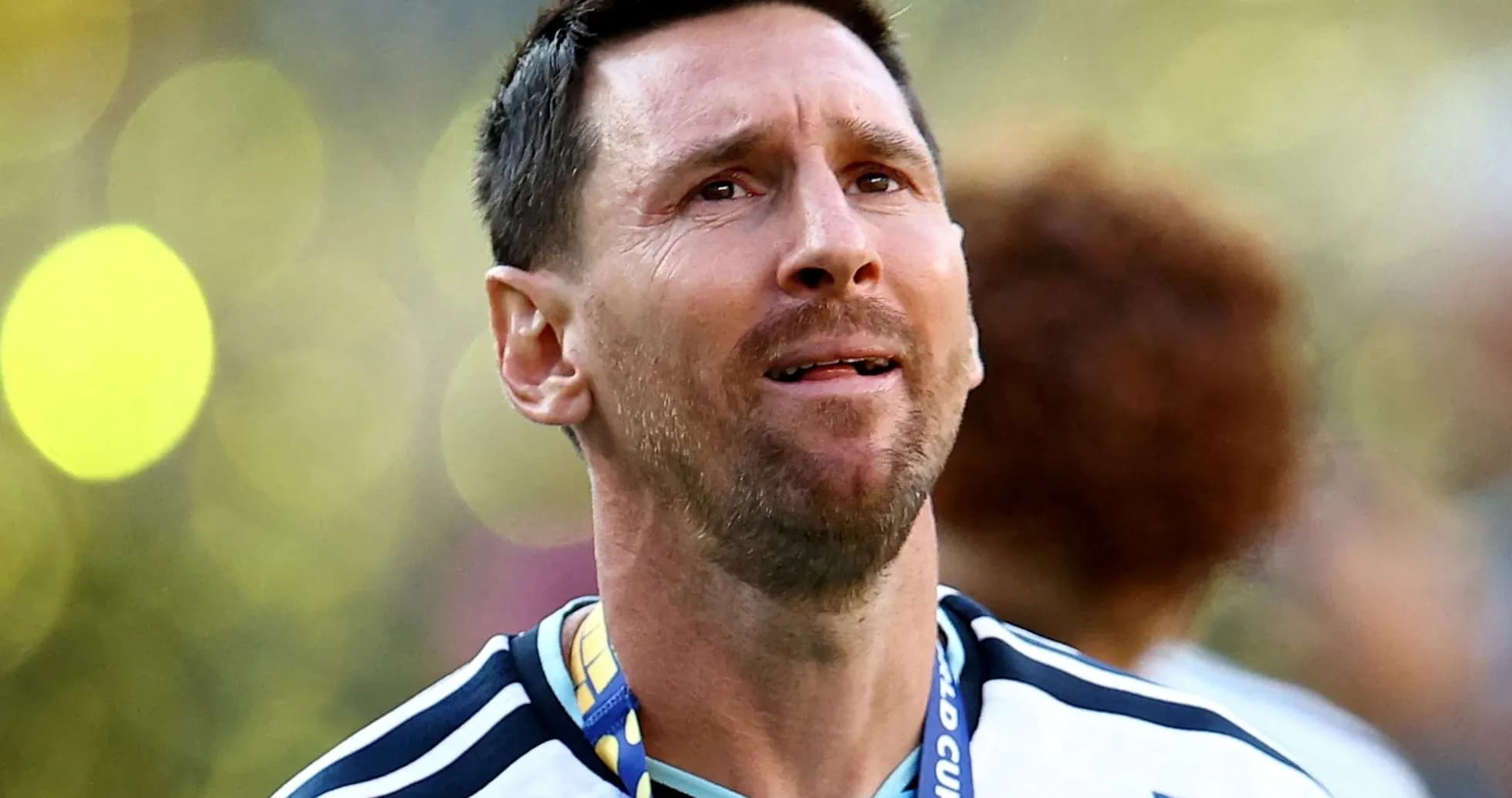
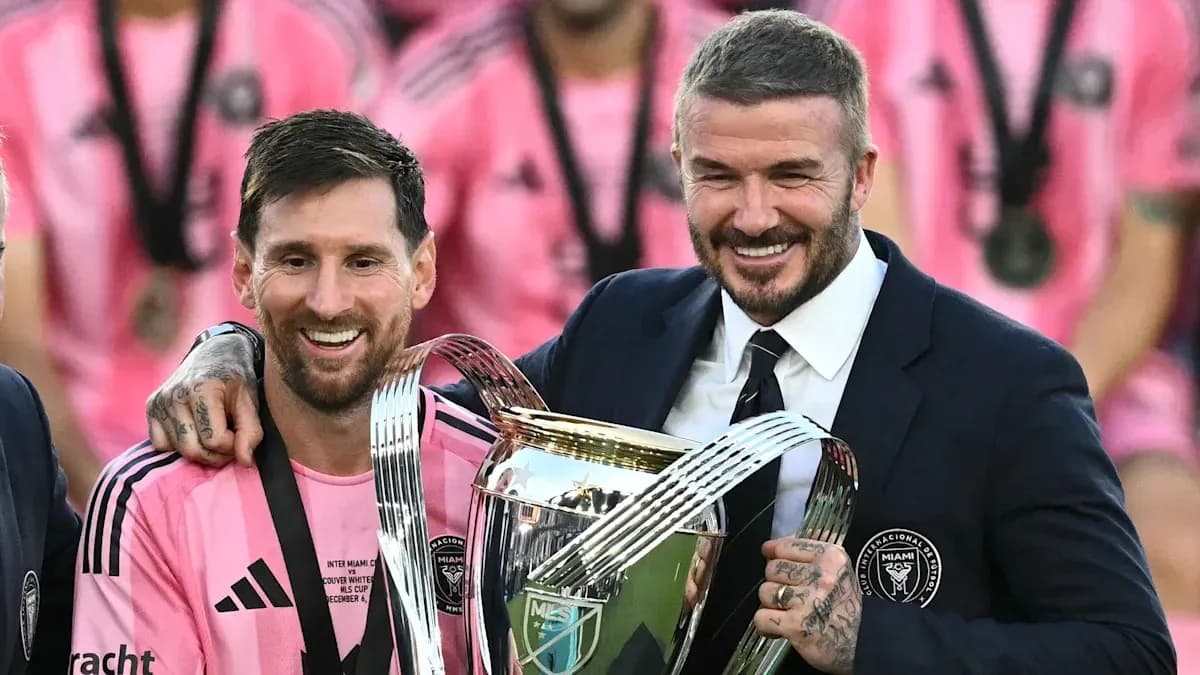
The line flashes across the screen, carried by Lionel Messi, Son Heung-min, David Beckham and a parade of MLS faces who, not so long ago, would have been unthinkable headliners for a US domestic league. The message is blunt: the World Cup has done its job. Now it’s Major League Soccer’s turn.
The campaign is slick, unapologetically ambitious and backed by a striking offer – free tickets for new fans. The league wants those millions who spent a month glued to the World Cup to stick around for the grind of a regular season. This isn’t a polite invitation. It’s a grab for attention.
“The World Cup has now exposed millions of people to Major League Soccer,” says MLS executive vice-president Dan Courtemanche, who has been with the league since before its first ball was kicked in 1996. “We’re going to continue to capitalise on that momentum.”
The question hangs over everything: is this the moment MLS finally muscles into football’s elite?
From World Cup experiment to 30-club behemoth
MLS was born out of a promise. When the United States won the right to host the 1994 World Cup, Fifa insisted the country build a professional league. What followed in 1996 was modest: 10 teams, no purpose-built stadiums, plenty of scepticism.
Three decades on, the landscape is barely recognisable. The league has grown to 30 clubs, with almost as many football-specific stadiums carved into the fabric of American cities. Steel and concrete monuments to a sport once dismissed as a passing fad.
The World Cup just gone only deepened that shift. Fears of half-empty venues because of soaring ticket prices never materialised. Stadiums filled. Television numbers spiked. The United States fell in the last 16 to Belgium, but the appetite barely dipped.
That defeat delivered one of the most remarkable numbers in US football history: more than 33 million people watched the USA-Belgium match on Fox alone. England’s last-16 win over Mexico went even bigger – a combined 45 million viewers across Fox and Telemundo, the most-watched football game in US history.
Those are NFL-sized figures. Not quite Super Bowl territory, but no longer in a different universe.
The Super Bowl still rules the American screen. In 2025, it drew 127.7 million viewers across English and Spanish broadcasts and streaming in the US, many tuning in as much for Kendrick Lamar’s half-time show as for the game itself. Yet football – the global kind – is no longer just background noise between commercials.
MLS, which has quietly stacked year-on-year growth since 1996, now speaks openly about its next step: joining Europe’s top leagues at the top table.
“I think we’re looked at as the top, one of the top leagues commercially,” says commissioner Don Garber, speaking at an event on the league’s future and its World Cup legacy. “We’ve cracked that code. Now we’ve got to crack the rest of it.”
Beyond the ‘retirement league’ tag
On the pitch, MLS already has a foothold among the game’s heavyweights. Forty-five MLS players took part in the 2026 World Cup, including two in Argentina’s victorious squad: Messi and Rodrigo de Paul.
For years, the league wore an uncomfortable label: a retirement home for ageing superstars. Beckham. Zlatan Ibrahimovic. Andrea Pirlo. Then Messi. The pay was good, the lifestyle even better, the intensity a step down from Europe’s furnace.
Courtemanche insists that image no longer reflects reality. The numbers back him up. The average age of new international signings in MLS is now 23.8 years. These are players still climbing, not winding down. Many dream of Europe, see MLS as a launchpad rather than a final paycheque, but they are arriving earlier and in greater numbers.
The league is reshaping itself to match those ambitions. In 2027, MLS will switch to a summer-to-spring calendar, aligning more closely with Europe. Transfers will become cleaner, loan moves easier, scouting pathways more direct. The idea is simple: if MLS wants to trade players with Europe, it has to live on the same clock.
Behind that, there is a deeper, slower project: youth.
The kids on the sidelines – and on the pitches
Every MLS club now runs a youth academy. The scenes at an LA Galaxy viewing party for the US win over Bosnia-Herzegovina tell you why the league leans so heavily into this.
On a big screen, the national team grind out a result. In front of it, dozens of children barely look up. They’re too busy playing their own matches on three small pitches, darting in and out of tackles, only glancing at the screen when the roar of a goal ripples through the crowd.
In a country where childhood is often scheduled down to the minute, these pick-up games feel almost subversive. The standard is high. Some of these kids already wear MLS badges on their training kits.
One of them, eight-year-old Landon – named after US legend Landon Donovan – steals the eye. He bounces from goalkeeper to forward, all energy and fearlessness. His mother, Jen Wing, coaches and sends her children to MLS camps and travel teams back home in New Jersey. Landon doesn’t hesitate when asked about his dream.
“LAFC,” he says.
That is the future MLS wants: American kids dreaming of domestic clubs with the same intensity others reserve for Real Madrid or Liverpool.
Yet there is a catch, and critics circle it relentlessly: pay-to-play.
The pay-to-play problem
At the top, MLS academies mirror their European counterparts. Once a teenager is in, the training and development are free. Coaches, facilities, travel – all covered.
The problem is getting there.
Across the US, families routinely pay thousands of dollars for private coaching, travel teams and elite youth leagues. It is the norm in American sport. Soccer is no exception. The path to an MLS academy often runs through expensive programmes many families simply cannot afford.
Those inside the league insist the system is changing. MLS officials point to evolving development leagues and scholarships designed to pull in talented players regardless of background. Garber talks about constant improvement, about building a pipeline that feeds both the league and the US men’s national team with players who are “better, bigger, stronger, faster”.
The ambition is clear. The question is whether the structure will let them find the next Messi in a public park rather than a private academy.
Celebrity owners, soaring valuations
If there were doubts about the league’s commercial pull, the ownership groups answer them.
Hollywood and American sport royalty are embedded across MLS. Will Ferrell and Magic Johnson at LAFC. Reese Witherspoon in Nashville SC’s ownership group. Matthew McConaughey in Austin, banging his drum – literally and figuratively – for the club.
The money has followed the star power.
When Seattle Sounders joined MLS in 2009, Drew Carey bought in as an original owner for a $30m expansion fee. Today, the club is valued at more than $900m. Beckham’s 2007 LA Galaxy contract included an option to buy an expansion team for $25m. That option became Inter Miami CF, now valued by experts at more than a billion dollars.
Messi’s arrival in Miami turned that valuation from theory into spectacle. His presence remains the league’s biggest magnet, a weekly event that drags cameras, sponsors and casual fans into MLS’s orbit.
The league has never been more fashionable. It has rarely been more lucrative.
Friday night lights vs Saturday mornings
Yet one opponent refuses to budge: American football.
Brian Udovich watches the tug-of-war up close. His 12-year-old son Croil plays in an MLS Next Level league in Southern California, right at the sharp end of elite youth development. Udovich has seen too many promising players walk away from soccer in their teenage years, seduced by the theatre of Friday nights.
Under the lights, American football still rules the school. Names on the scoreboard. Marching bands. Cheerleaders. Packed stands. A weekly ritual that sits at the heart of countless US communities.
Soccer? That’s often a Saturday morning affair. Parents in folding chairs. No bands. No lights. No marching drums to announce a rising star.
“It just means so much more to other cultures than us,” Udovich says.
The cultural gap is real. Yet it is narrowing.
Michael Bradley, now coaching the New York Red Bulls after a long playing career, sees a different country emerging. The United States does not have the deep, generational football history of Europe or South America. For years, that absence fed an inferiority complex – a sense that the sport would never truly belong here.
The World Cup, and the response to it, shifted that mood.
Bradley believes the legacy of this tournament will be a more prominent, more confident place for football in American life. He talks about pride, about a fanbase that no longer feels the need to apologise for loving the sport.
“I think we can all unequivocally say in 2026, football is not going anywhere,” he says.
The billboards, the packed stadiums, the celebrity owners and the eight-year-old in an LAFC shirt all point in the same direction. The world has handed the ball over. Now MLS has to prove it knows what to do with it.