.svg&w=384&q=75 "naujapitch logo")
Lionel Messi Reflects on World Cup Heartbreak and Legacy
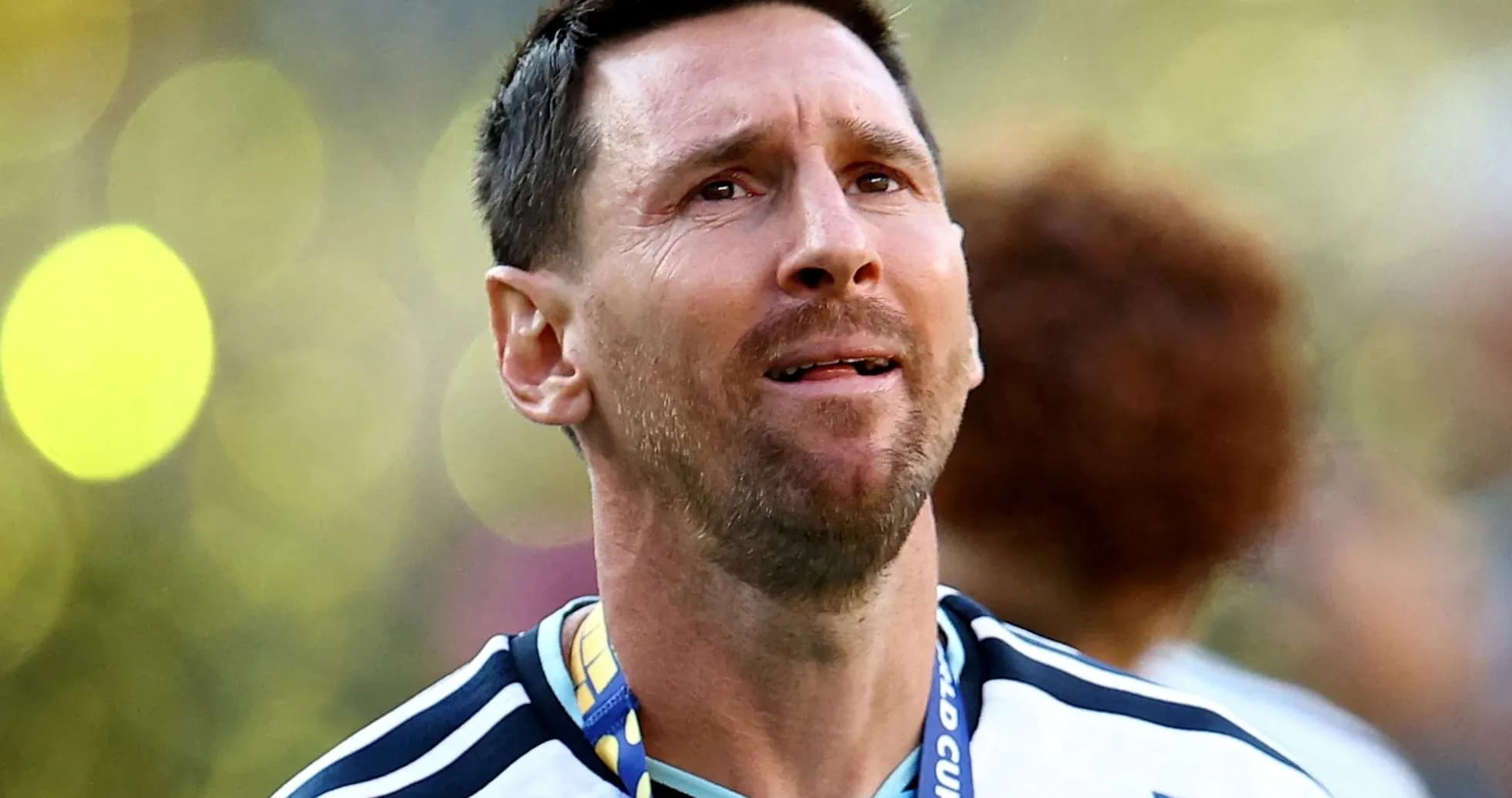
Lionel Messi stood alone in the rain of East Rutherford, silver medal around his neck, eyes red, fighting a reality he never quite named.
If this was the end of his World Cup story, it closed not with a coronation, but with a 1-0 defeat to Spain and a night of what-ifs for Argentina.
Tears, silence, and a message to Spain
On Sunday, there were no grand declarations. No farewell speech. Just Messi, 39 years old, staring into the distance as Spain celebrated their title on American soil.
A day later, the words came instead on a screen.
“The pain is immense, and this wound will take time to heal,” he wrote on Instagram, posting a photo of himself with the runner-up medal. He did not confirm that his World Cup career is over, but the tone felt heavy, final, like someone closing a chapter even if he refuses to say the word “goodbye.”
He made sure to salute the new champions.
“I also want to congratulate Spain on winning the championship,” he added, a nod to the team that had just shut Argentina down so completely they failed to record a single shot on goal in the final.
From glory in Qatar to heartbreak in North America
The contrast with 2022 could not be sharper.
In Qatar, Argentina survived one of the greatest World Cup finals in history, a 3-3 epic against France settled on penalties. Messi lifted the trophy that had eluded him for so long, completing his collection and, for many, sealing his case as the greatest of all time.
Four years later, in North America, they came within one match of going back-to-back.
Argentina were again among the tournament’s elite. They clawed past England in the semifinal, rallying in the kind of tense, emotional contest that has become their trademark in the Messi era. The team’s resilience, their ability to drag themselves back from the brink, felt like a continuation of the spirit that carried them through Qatar.
This time, the wall they hit was Spanish red.
Spain’s defence smothered them in the final. Passing lanes closed, spaces vanished, and Argentina’s attack never found rhythm. For a side that had made a habit of bending matches to its will, the impotence of that 90 minutes cut deep.
“It is hard to fully appreciate our achievement right now,” Messi admitted, “but this group reached two consecutive World Cup finals.”
A nation united, again
Defeat did not erase what came before it.
Messi lingered on the journey more than the ending. He wrote of “the matches we turned around by giving it our all – moments that will remain in our memories forever – and the support of an entire country which, combined with this group’s hard work and effort, brought us back among the world’s elite once again.”
Once more, Argentina had moved as one behind their captain.
“Thank you from the bottom of my heart for every greeting and message,” he wrote. “Once again, we managed to unite as a country and stand together, sharing the immense pride of being Argentine.”
The wound is fresh. The pride is not going anywhere.
Records, rivals and a race at the top
Even in heartbreak, the numbers tell a staggering story.
Early in the tournament, Messi passed Miroslav Klose’s long-standing record of 16 World Cup goals. He did not stop there. He finished on 21, a mark that would have seemed untouchable a decade ago.
Then Kylian Mbappé happened.
The French forward, already the face of the next generation, surged past him, ending the tournament on 22 goals to take the all-time World Cup scoring record. He also edged Messi for the Golden Boot in this edition, finishing with 10 goals to Messi’s eight.
Messi may have lost the statistical race, but the duel between them has defined two straight World Cups. One man at the height of his powers in 2026, the other stretching the limits of longevity on the biggest stage football offers.
The clock, and the question
Messi turned 39 during this World Cup. By the time the 2030 edition kicks off in Spain, Portugal and Morocco, he will be 43.
He has not closed the door publicly. He has not opened it either. The numbers alone, though, speak loudly. A third straight World Cup run would demand another four years of physical sacrifice at an age when almost every outfield player has long since stepped aside.
For now, he is stepping away from the grind, at least briefly.
ESPN reported that Messi and his Argentina and Inter Miami teammate Rodrigo De Paul will miss Inter Miami’s next two regular-season matches and the MLS All-Star Game as they rest and recover from the World Cup.
The club game will go on. The World Cup, for the moment, is over.
What remains is the image of a 39-year-old legend in East Rutherford, medal in hand, tears on his face, caught between the pain of a final lost and the weight of a career that has already redrawn the limits of what a footballer can be.
If that was the last time Lionel Messi walked off a World Cup pitch, it ended not with a trophy in his hands, but with a nation behind him and a question hanging over the sport: how do you replace a presence like that?