.svg&w=384&q=75 "naujapitch logo")
Marcus Rashford's World Cup Journey: Balancing Career and Team Success
Marcus Rashford arrives at this World Cup with his career parked at a crossroads and his boots still warm from Spain.
A season-long loan at Barcelona in 2025-26 dragged the Manchester United academy graduate back towards the level that once made him English football’s great hope. La Liga title in his pocket, Spanish Super Cup medal to match, 14 goals alongside Lamine Yamal and Robert Lewandowski. The stage, the pressure, the scrutiny – all back where he likes it.
Barcelona had the chance to make it permanent. £26 million on the table, a relatively modest fee in a market that has long since lost its grip on reality. They walked away, choosing instead to throw serious money at former Everton and Newcastle winger Anthony Gordon. One jet-heeled England forward in, another left hovering in limbo.
So Rashford returns to a parent club that no longer feels like home. Michael Carrick, upgraded from interim to permanent United manager, is understood to be open to a reset, a clean slate for a player he knows well. Rashford, though, appears to be leaning towards a clean break. New roots, new city, new dressing room. Premier League suitors watch. So do clubs across Europe. No firm answers yet, only options and whispers.
In the middle of that noise sits a World Cup.
Barnes’ warning: country before career
For John Barnes, the tournament is no shop window, no personal audition. It cannot be – not if England are serious.
Speaking to GOAL in association with viagogo’s “World Cuts” campaign, the former Three Lions playmaker cut straight through the narrative that Rashford needs to light up the World Cup to sort out his club future.
“England needs to do well as a team,” he said. “If he feels he wants to do well by himself, that's not going to help England.”
Barnes painted the picture of the wrong Rashford, the one who treats the World Cup as a personal marketing campaign.
“If he wants to make this a market or a shop window for himself, where he's going to say, ‘I'm going to get the ball, I'm going to dribble around players because I want to look good individually’ - that is not what's going to win the World Cup. So him needing to do well for himself is not important. He needs to do well for England.”
The message is blunt. The badge comes first.
Barnes extended that logic to Thomas Tuchel, the England manager tasked with solving the Rashford riddle.
“And if Thomas Tuchel feels that he's going to be a bit-part player in the squad, he can do nothing about that,” Barnes said. “So it's not a question of individual players feeling I'm going to take this mantle upon myself to do things, to put myself in the shop window. That's not going to help England. Helping the team play is more important than him looking good for himself.”
For Barnes, the World Cup is not a transfer fair. It is a test of temperament.
“It depends on his attitude and his commitment. That has always been the issue with Marcus Rashford. I know he's got the talent, but in terms of his attitude, his commitment is the most important thing.
“Thomas Tuchel isn’t worried about Marcus Rashford putting himself in the shop window. He's worried about Marcus Rashford playing well for England, which means he just holds the position, passes it simple, plays a simple game, which maybe will help the team but not help him individually. That's the decision Thomas Tuchel will take. So this has got nothing to do with Marcus Rashford. It has nothing to do with Marcus Rashford trying to find himself a club. It's to do with England trying to win the World Cup.”
Croatia swept aside, but Barnes keeps the brakes on
On the pitch, England’s opening statement was loud enough.
A 4-2 win over Croatia to launch their campaign, the kind of scoreline that sends a jolt through a tournament. Harry Kane, the captain who long ago stopped paying attention to records and just kept breaking them, scored twice to move to 81 international goals. Jude Bellingham, entrusted with the No.10 role ahead of Morgan Rogers, justified the decision with a goal early in the second half.
Then came Rashford.
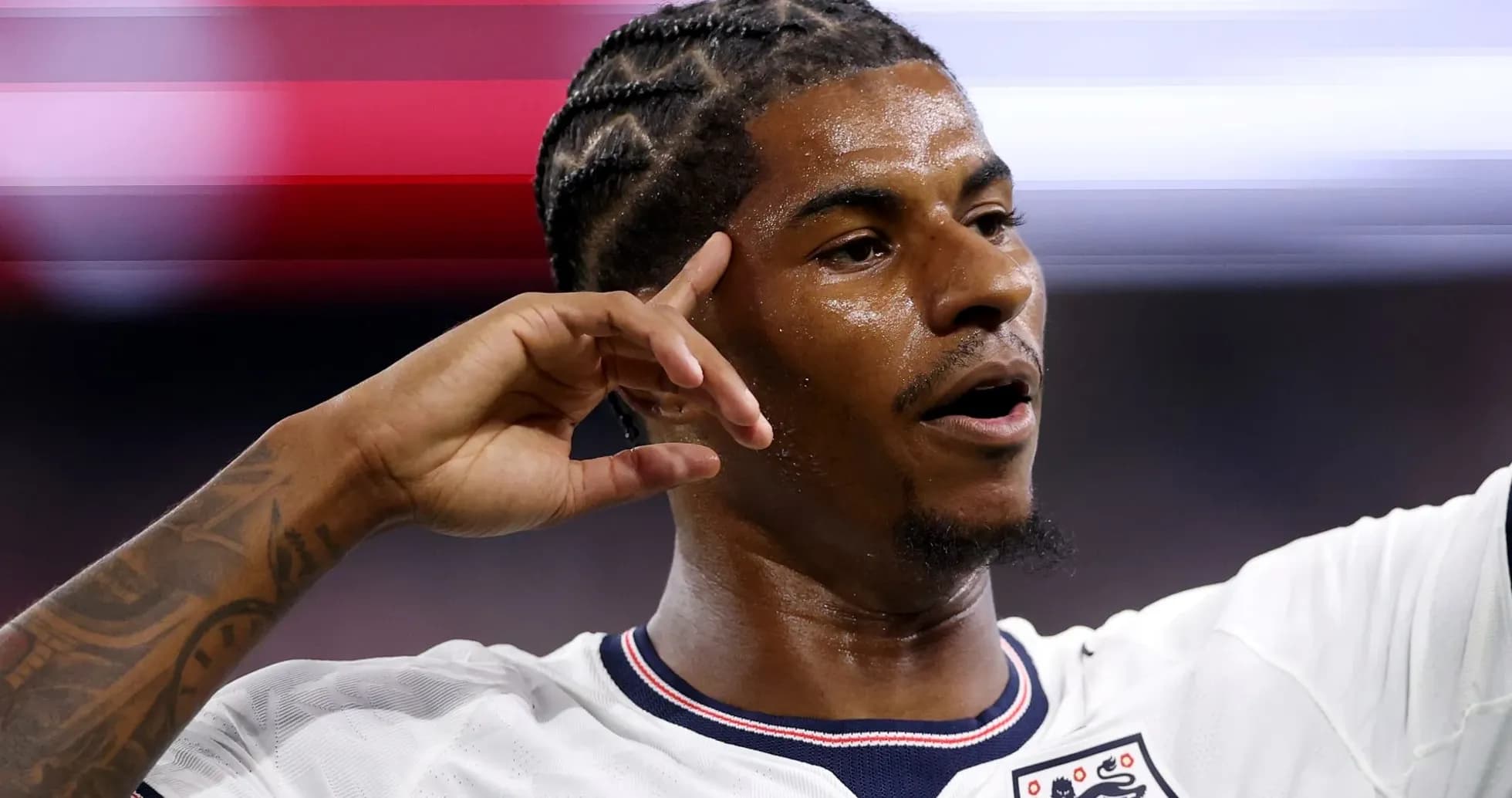
Bukayo Saka surged, Croatia’s back line retreated, and the ball broke to Rashford on the edge of the box. One touch to shift it onto his right foot, one clean strike into the bottom corner. The finish of a player who trusts his technique again.
Was that the old Rashford? The one who played on instinct, not doubt?
Barnes refused to get carried away.
“Watching Marcus Rashford for 15 minutes isn't going to lead us to know whether he's back to his old self or not,” he said. “We can't get carried away because he came on and did what he did to say, ‘OK, he's back to his old self, let's play him’. Very much like we can't get carried away that we've beaten Croatia 4-2 and thinking we're going to win the World Cup.”
He does not deal in emotional swings.
“I don't go from minute to minute or from game to game to make a decision as to who I think is going to do well, either individually or collectively.
“Marcus Rashford, I always felt that he'd do better for England than he does for his club. I think international football, particularly from an attacking perspective, you get more room, you get more space. It's easier for him. I remember Darius Vassell at Villa always did better for England than he did for Villa. But I don't think that that's necessarily going to mean that Thomas Tuchel is going to put him in to start when the big games come along.”
The praise is measured, the caveat heavy. Rashford has lit up moments before. Sustaining it is the real examination.
Confidence rebuilt in Spain, questions waiting at home
What is clear is that Spain has done something for him. The numbers, the trophies, the responsibility at Barcelona – they have put some steel back into his game. The shoulders sit a little higher. The first touch looks less rushed. The shot against Croatia belonged to a player who believes again.
He now carries that confidence into a tournament where the stakes for England could hardly be higher. Sixty years without a major international trophy. Generations of near-misses, penalty shootouts, and what-ifs. This group, headlined by Kane, Bellingham, Saka and Rashford, is expected not just to compete, but to finally finish the job.
The kids watching at home know the names. They copy the celebrations in school playgrounds, argue about who should start, dream about lifting a trophy in an England shirt. They will have flags, shirts, face paint. They once had haircuts, too.
“Those days are over”
Ask Barnes if the World Cup will spark another wave of football-inspired hairstyles – David Beckham’s mohawk, Paul Gascoigne and Phil Foden’s bleached blonde look – and he shuts the door on the idea.
“No, those days are over,” he said. “Footballers are sensible now. You don't let anything get in the way of football. Marcus Rashford, he has some kind braids, but haircuts don't mean much anymore. So no, I think they'll be concentrating on the football this World Cup, not the hairstyles.”
The focus, in his eyes, is narrower, sharper. Less image, more substance. Less noise, more work.
That suits Rashford’s situation. The next few weeks are not about a fresh trim or a flashy celebration. They are about whether he can convince Tuchel he is reliable when the knockout games arrive, and whether he can show potential suitors that the Barcelona version is the one they would be signing.
England chase an end to six decades of frustration. Rashford chases clarity over the next chapter of his career. The only way both stories move in the right direction is if he does exactly what Barnes demands: forget the shop window, and play for the shirt.