.svg&w=384&q=75 "naujapitch logo")
Lionel Messi Faces Adversity Ahead of Austria Match
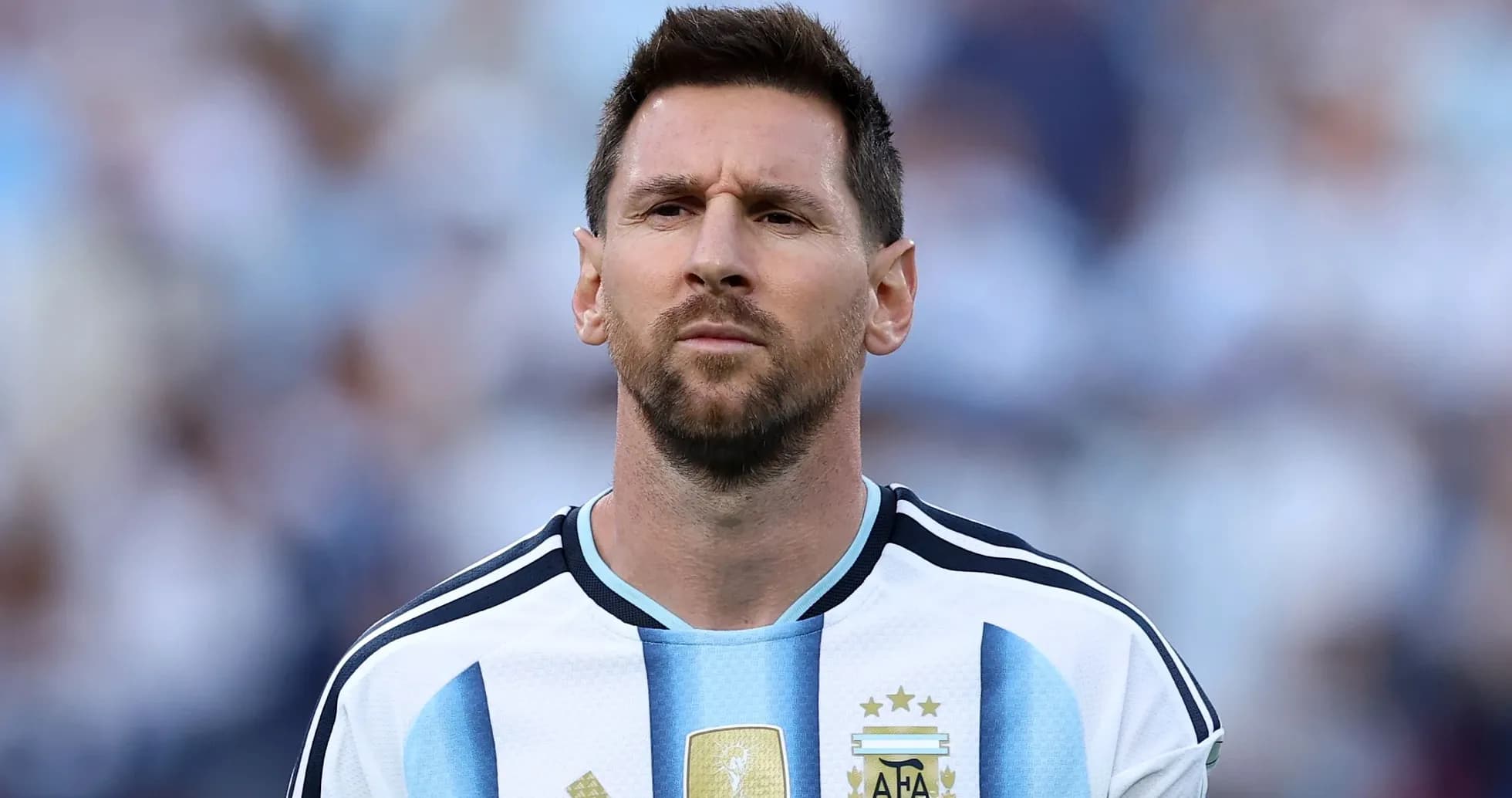
In the days before Argentina’s meeting with Austria in Arlington, Texas, Lionel Messi found himself at the centre of a storm he never asked for.
A false report claiming the death of his father, Jorge, flashed across social media, bounced around group chats, and cut through the usual World Cup noise with a cruelty that stunned even a sport hardened to rumour. The Messi family moved quickly to correct it: Jorge is undergoing medical treatment and is recovering well. The damage, though, had already been done.
The source of the chaos was a live stream on Luzu TV. Presenter Florencia Peña relayed the fake news on air, triggering a wave of panic at the very moment Messi was beginning his sixth World Cup campaign. Within hours, the clip had gone viral, the speculation had spiralled, and a private family battle had been dragged into the most public of arenas.
Peña has since resigned, insisting she was misled by her own production team via earpiece. Behind the cameras, the response was swift and unforgiving. Producer Nicolas Occhiato confirmed that several staff members were dismissed after the blunder, as the broadcasting company tried to draw a hard line under an episode that exposed the worst instincts of the modern information race: be first, ask later.
Amid the noise, Lionel Scaloni had a different job: keep Argentina’s focus on the pitch.
Facing the media ahead of the Austria match, the coach cut through the speculation with the same clarity he demands from his midfield.
“We're fine. We're ready to face tomorrow's match,” Scaloni said, speaking to ESPN. He went straight to the heart of his message: the collective above everything. “We firmly believe that it's the group that overcomes both good and bad situations. We know that it's always better to be with a friend. That's what we all feel, and he must feel it too. I don't want to add anything more on this subject; we're prepared for the match.”
No diversions. No drama. Just a reminder that this Argentina side, built on togetherness and resilience, intends to close ranks when the outside world turns hostile.
On the field, they have started like a team intent on defending both their crown and their identity. A 3-0 win over Algeria in the opening group game, powered by a Messi hat-trick, sent an early message: the captain is still the difference-maker, the team still knows exactly how to play around him.
Now comes Austria, and with it a different kind of test.
Scaloni knows what awaits. An aggressive, direct, well-drilled opponent, dangerous without the ball and ruthless when they win it. The kind of side that forces you to suffer, to chase, to think your way through long stretches without possession.
“Austria is a tough opponent, with very good players,” he admitted. “They press well, they're a direct team, and they had a great qualifying campaign. A team to be reckoned with. It will be a complicated match. We've both won, and that can make for a great spectacle. It will be difficult, tough.”
The equation is simple enough: beat Austria and Argentina move into the round of 32, momentum intact, the early turbulence parked behind them. But the context gives the fixture an edge. This is not just about points or progression. It is about how a champion group responds when the game collides with life in the harshest way.
For Messi, the focus now narrows to the grass in Arlington, to the next ninety minutes, to the next pass, the next run, the next finish. For Argentina, it is another chance to prove that, whatever swirls outside, the bond inside the dressing room still holds.
The noise will not disappear overnight. The questions around media responsibility will linger far beyond this tournament. But when the whistle blows against Austria, only one thing will matter: can this team, forged in adversity and defined by its unity, turn a week of unwanted headlines into another statement on the pitch?