.svg&w=384&q=75 "naujapitch logo")
Egypt's Historic Comeback Victory Over New Zealand
For 90 years, Egypt came to World Cups to participate, not to win. Vancouver changed that.
Mohamed Salah scored one, created another and dragged his country to a first-ever World Cup victory, a 3-1 comeback over New Zealand that felt bigger than three points. It felt like a door finally kicked open.
Flat, fragile, and a familiar fear
For 45 minutes, the old story threatened to repeat itself.
Egypt, goalless in 1934, winless in 1990 and 2018, started as if weighed down by all of it. The tempo was low, the passing safe, the movement predictable. New Zealand, sharper and braver, sensed vulnerability and went after it.
Mostafa Shobeir had already been forced into action on 14 minutes, reacting sharply at his near post to deny Elijah Just. Egypt didn’t wake up. From the resulting corner they simply went to sleep.
Finn Surman wandered free, unchallenged, and powered his header in. One set piece, one lapse, 1-0. The defending was as questionable as the stakes were high.
Salah, carrying the expectations of a nation yet again, barely flickered in that first half. His one clear sight of goal came on 35 minutes, when Omar Marmoush rolled a free-kick short. From the edge of the area, the former Liverpool forward curled his effort wide of the left-hand post. Close, but not close enough. Symbolic of Egypt’s half: almost, never quite.
New Zealand, under Darren Bazeley, looked composed and confident. They dominated long spells of possession, stitched together good moves, and always seemed to have an extra man in midfield. Egypt trudged off at the break looking like a side about to let another World Cup slip by.
A different Egypt after the break
Whatever Hossam Hassan said in that dressing room, it worked.
Egypt came out with a completely different edge. They pressed higher, moved the ball quicker, and started to play with the urgency of a team that understood what was at stake. Salah began to drift into pockets of space, demanding the ball, turning, driving. The Pharaohs suddenly carried menace.
New Zealand still carried a threat of their own. On 52 minutes, Shobeir had to stay sharp, backpedalling to tip a looping header from Callum McCowatt over the bar. It felt like a warning: waste this spell, and Egypt might pay.
The response was ruthless.
On 58 minutes, Mohamed Hany finally had time and space on the right. His cross was precise, the New Zealand marking anything but. Mostafa Ziko, unmarked and grateful, rose and buried his header. Simple finish. Huge goal. Egypt were level and, for the first time, looked like the team in control.
The stadium changed with it. The noise, the belief, the sense that this might actually be their night.
Salah’s moment, Salah’s stage
Once Egypt had parity, the game tilted towards one man.
Salah had already started to knit moves together when, on 67 minutes, the chance he had been waiting for arrived. Egypt broke with pace, Ziko and Salah interchanging passes at speed. One touch, return ball, angle opened.
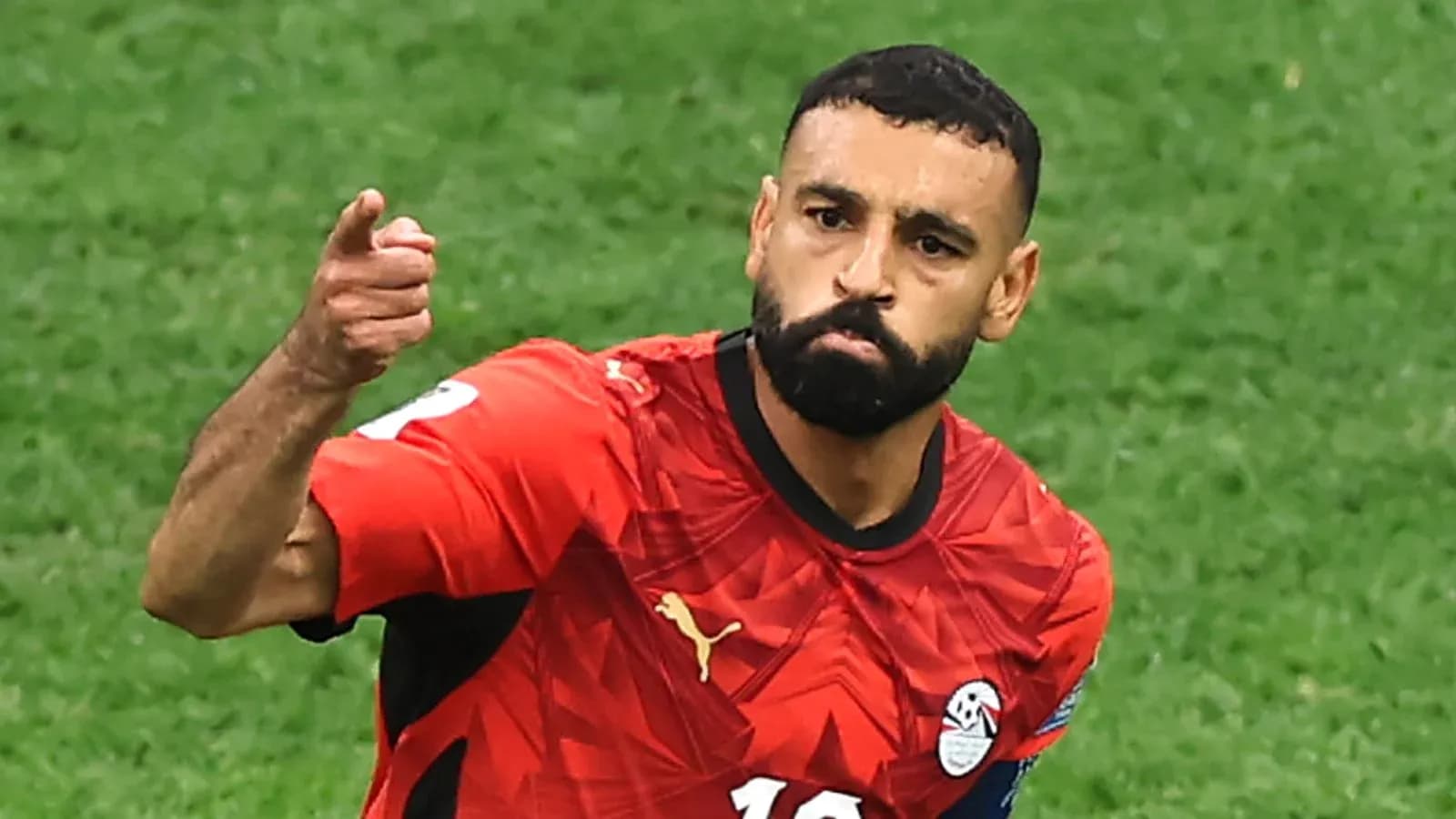
The finish was pure Salah. A cool, sweeping shot, the kind he repeated so often in the Premier League, guided into the corner. No fuss, no panic. Just a familiar, clinical motion on a very different stage.
Egypt in front. History within reach.
That goal did more than flip the scoreline. It etched Salah deeper into the record books. At 34, he became Egypt’s oldest World Cup goalscorer and the oldest African player on record to both score and assist in a World Cup match. Another layer to a career already stacked with milestones.
He has now either scored or assisted in every World Cup game he has played. Two in 2018 – against Russia and Saudi Arabia – and now two more contributions in 2026, after setting up Mohamed Hany against Belgium and then orchestrating this turnaround against New Zealand.
The World Cup of the superstar? Salah is making sure his name still belongs in that conversation.
Trezeguet seals it, Egypt dares to dream
New Zealand tried to respond, but the intensity they had shown in the first half had gone. Bazeley admitted as much later: his side could not match the tempo once Egypt raised theirs. The All Whites were suddenly the ones pinned back, forced to defend deeper and deeper.
The pressure told again on 82 minutes, from another dead ball.
This time Salah went to the corner flag on the right. His delivery was wicked, whipped into the danger zone with purpose. Substitute Trezeguet attacked it, diving in front of his marker to plant his header past Max Crocombe.
3-1. The noise was deafening. The game, effectively, done.
There was still time for one more chance, a reminder of how brutal the scoreline might have been. Deep into stoppage time, substitute Zizo rounded Crocombe and seemed certain to add a fourth, only to hesitate and see his shot blocked. It didn’t matter. The damage had been done long before.
New Zealand left with a must-win
For New Zealand, the evening ended in frustration. Bazeley called the result “disappointing” and he was right to. His team had been “so good in the first half”, as he put it, dominating the ball and creating chances. They simply could not “replicate what we were doing so well” once Egypt raised the stakes.
Now their path is brutally clear: they “have to beat Belgium” to stay alive. One game away from making history themselves, but with the margin for error gone.
A night that shifts a nation
For Egypt, this was more than a comeback. It was a psychological break from a past of near-misses and group-stage exits. Salah called it “a great achievement for all the players, for the staff,” and spoke of writing history and making this run one of the “best achievements in the history of Egyptian football.”
He also sounded a note of calm: enjoy today, enjoy tomorrow, then move on to the next game.
The knockout stages now sit within touching distance. The drought is over. The question is no longer whether Egypt can win at a World Cup.
It’s how far this team, still led by a 34-year-old superstar who refuses to fade, can go.