.svg&w=384&q=75 "naujapitch logo")
Louth's Dream and Kerry's Depth: A Croke Park Showdown
The summer air around Croke Park crackles a little differently this week. Not with the swagger of familiar giants, but with the raw, nervous energy of counties who suddenly find the door to history standing half-open.
Paul Flynn, four-time All-Ireland winner and sharp-eyed analyst, has nailed his colours to the mast: Louth, Kerry and Down to prevail. The routes there, though, are anything but straightforward.
Louth’s dream, Mayo’s revival
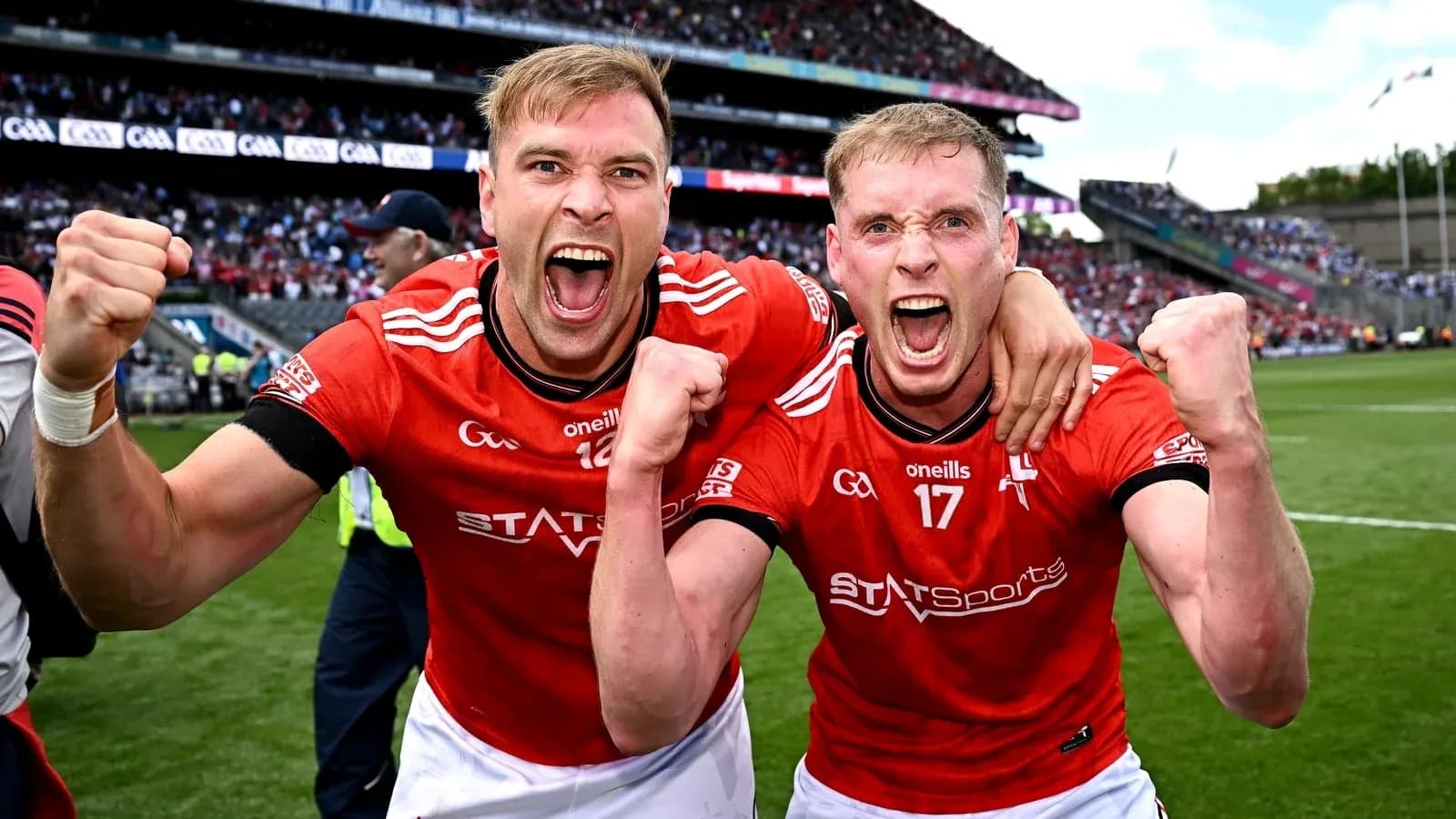
Start with Louth. For this group, an All-Ireland final was once the stuff of pub talk and daydreams, not dressing-room reality. Yet here they are, one game from the promised land. This is uncharted territory, and that’s exactly what makes it dangerous – and thrilling.
Mayo, by contrast, know this road all too well. Their season looked to be veering off a cliff after limp defeats to Roscommon and Tyrone. The mood was flat, the questions loud. Now they stand within touching distance of another All-Ireland final. A season that felt like it was slipping away has been yanked back into focus.
Flynn’s warning to both camps is simple: let the fans lose the run of themselves; the players can’t. The margins, he insists, will be tiny. The temptation to get swept up in the noise will be huge.
Louth’s surge this year has been fuelled by a new wave. Dara McDonnell, James Maguire, Kieran McArdle – names that have shifted the county from plucky outsiders to genuine contenders. Sean Callaghan belongs in that bracket too, which is why his absence hurts. They’ve brought energy and pace, but the spine of the team is still defined by the class of Sam Mulroy, Ciaran Downey and Craig Lennon. That trio gives Louth direction, composure, and a cutting edge.
For Flynn, the game lives and dies in the middle eight. He saw it against Monaghan: Louth dominated that sector even when reduced to 14 men. Win that strip of turf again, and the Wee County give themselves a serious shot at the upset.
That’s also where the doubts linger around Mayo. The questions haven’t fully gone away. But something has changed up front. For years, Mayo were accused of lacking true marquee forwards. Not now. Flynn points to Beirne, Ryan O’Donoghue and Kobe McDonald as three genuine headline attackers – the type of forwards his own Dublin generation never had to face in green and red.
Throw in Tommy Conroy’s resurgence, and suddenly Mayo carry real menace. Louth’s full-back line has plenty of miles on the clock and plenty of know-how, but if Mayo’s inside line catches fire, that could tilt the entire contest.
Both managers, though, will glance at their benches with quiet satisfaction. This is a semi-final weekend built for finishers as much as starters. When the game swings, when momentum needs to be wrestled back, the timing and choice of substitutions could decide everything.
What Flynn admires most about Louth is not a system or a stat. It’s their refusal to bow. They’ve gone toe-to-toe with Dublin and Armagh already this summer and simply would not disappear. They hang on, they bite back, they stay alive.
He finds it almost impossible to split them from Mayo. Almost. In the end, he leans into the feeling that something rare is stirring in the Wee County. He’s buying into the idea that Louth’s story has another chapter yet.
His call: Louth to edge it.
Tailteann Cup: Down’s hunger, Wicklow’s moment
The Tailteann Cup final carries a different tone but no less intrigue. Down arrive as justified favourites, their power and pace at Croke Park catching the eye. They look like a county intent on muscling their way back into Sam Maguire territory.
Wicklow, though, are the embodiment of what this competition was designed to do. For a developing county, a victory here would be seismic. Epic, in Flynn’s words.
Oisín McConville has reshaped Wicklow’s outlook, instilling belief and structure. Mark Jackson and Dean Healy have led the charge on the pitch, turning a hopeful season into an unforgettable one. Whether they lift the cup or not, they’ve already rewritten expectations.
Flynn still leans towards Down’s greater heft and momentum. But he doesn’t dismiss Wicklow for a second. They’ve already had a campaign that will live long in local memory. A win on Saturday would push it into folklore.
His call: Down to finish the job.
Dublin walk into the Kerry furnace
And then there is the heavyweight collision: Dublin v Kerry. A fixture that never arrives quietly, no matter the form lines.
Not long ago, few in the capital would have believed Dublin could stride into this semi-final with any real conviction. Losses to Westmeath and Louth didn’t just dent results; they drained belief. Performances looked flat, almost lifeless.
The return of Ger Brennan has changed the mood. Flynn sees a side with renewed energy, a defence that has tightened, and that familiar Dublin belief slowly seeping back into the dressing room. The swagger isn’t fully restored, but the shoulders are no longer slumped.
The real inferno, he insists, will be at midfield. Dublin have worked hard on their own kick-outs, but they now face a Kerry unit built to suffocate restarts. Mark O’Shea, Sean O’Brien and the O’Connor brothers, Diarmuid and Joe, give Kerry a formidable physical presence. They don’t just contest ball; they swarm it.
Kerry will target that area relentlessly. Dublin, though, are not walking in empty-handed. Peadar Ó Cofaigh Byrne, Brian Howard and Ciarán Kilkenny bring experience, craft and calm. Their job is not just to win ball, but to steady everything around it.
At the other end, the spotlight swings to Shane Murphy. He was flawless against Tyrone’s man-to-man press, but Dublin’s zonal squeeze is a different animal. If they force him to go long, every restart becomes a coin flip. For Flynn, primary possession is the heartbeat of this tie. Win the restarts, win the game. He points to how Donegal rattled Kerry by starving them of ball. Dublin, he says, must copy that blueprint.
And yet, when you look at Kerry’s attack, you understand why Dublin will be uneasy. Their team defence has been fierce in recent weeks, but this Kerry forward line is a different level of examination. Injury concerns over Sean McMahon only deepen the challenge.
Dylan Geaney’s form, combined with the ever-present threat of David Clifford, stretches any defence to breaking point. Containing that for 70 minutes is a monumental ask.
Dublin have their own stars shining. Niall Scully and Con O’Callaghan are operating at All-Star standard, driving this revival. But they run into a Kerry backline that has become miserly in conceding goals. Tyrone still managed to trouble them, a reminder that they’re not untouchable, yet they rarely give up the kind of chances that swing big games. Dublin will have to be ice-cold, taking points, building pressure, and cashing in on every opening.
Then comes the great separator: the bench.
Flynn doesn’t sugar-coat it. Kerry’s depth is frightening. When you can have a live debate about whether Seán O’Shea starts or not, it tells its own story. Almost every Kerry substitute would stroll into another county’s starting XV. Those final 15 minutes, when legs tire and minds fog, are exactly when that kind of depth crushes resistance.
Psychology adds another layer. Dublin, Flynn suggests, now play with a sense of freedom. They’ve been written off in places, doubted, questioned. The weight of expectation sits squarely on Kerry’s shoulders. They are the ones who are supposed to deliver.
History between these counties has a habit of ripping up scripts, but Flynn senses limits to Dublin’s resurgence. He expects them to drag Kerry into a dogfight for three-quarters of the contest, to scrap and claw and refuse to fade.
Then he sees Kerry’s bench arriving, fresh and ruthless, to tilt the balance.
His call: Kerry to pip Dublin late on, and move one step closer to another All-Ireland crown.
Louth’s dream, Kerry’s depth, Down’s drive – three counties, three very different stories. By the end of the weekend, we’ll know which of them are still writing theirs on the Croke Park stage.