.svg&w=384&q=75 "naujapitch logo")
Liverpool Players at the World Cup: Performances and Insights
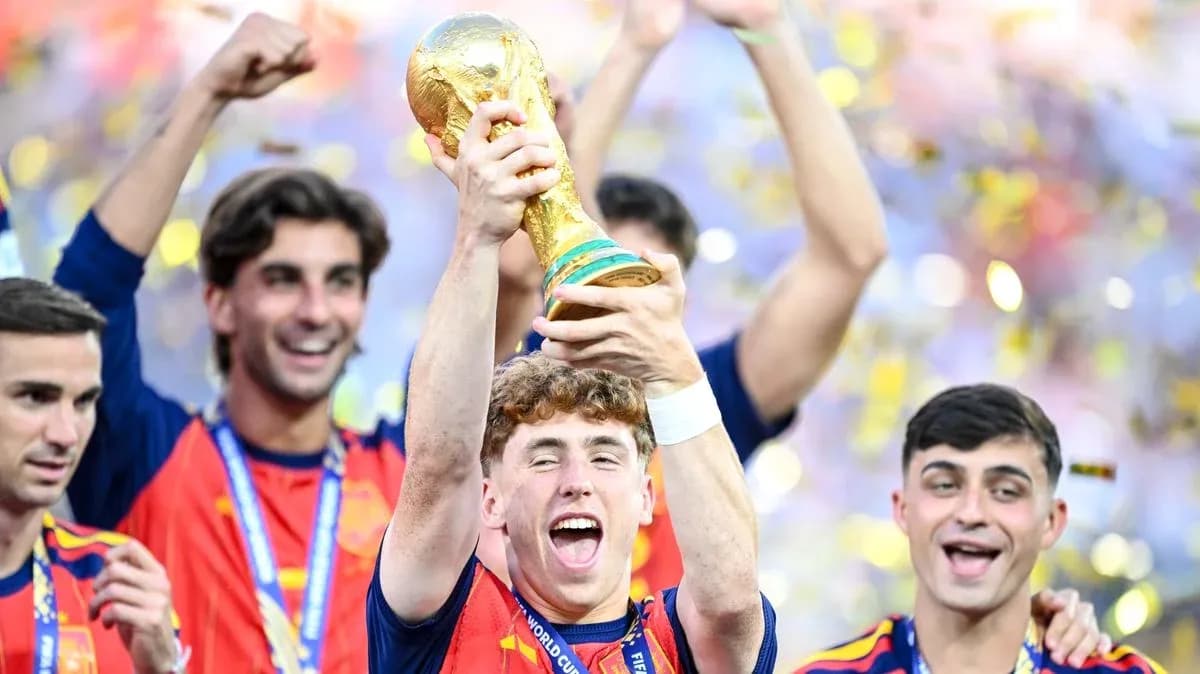
The World Cup finally staggered over the line after 104 games, a blur of VAR rows, timekeeping chaos and tactical trench warfare. In the end, Spain rose above the noise, outplaying an Argentina side that leaned heavily on the dark arts in a final that never caught fire.
For Liverpool, it was a tournament of contrasting stories. Eight players travelled to the United States, Canada and Mexico. One came back as a world champion without kicking a ball. Another dragged his country to the brink of glory. A few reminded Anfield exactly what they can do when the stage is big and the pressure unforgiving.
Here is how they fared.
Victor Munoz – N/A
Spain were still wondering how they had failed to score against Cape Verde in their opener when news broke back home: Liverpool had triggered Victor Munoz’s £34.5million release clause at Osasuna. The first signing of the Andoni Iraola era was suddenly a World Cup story too.
Or so it seemed.
An injury struck at the worst possible moment. Munoz missed games, never recovered enough to convince Luis de la Fuente, and did not play a single minute as Spain went all the way. No cameos, no late runs off the bench, no highlight reel.
Yet he returns as a World Cup winner. Only the sixth serving Liverpool player ever to lift the trophy, joining Roger Hunt, Ian Callaghan, Gerry Byrne, Fernando Torres and Pepe Reina. No minutes, but a medal – and a tantalising question about what comes next at Anfield.
Alexis Mac Allister – 7
Alexis Mac Allister will not remember the final fondly. He was one of several Argentina players to fall flat on the biggest night, unable to break Spain’s grip on the game.
His tournament as a whole tells a very different story.
The midfielder played every minute bar the dead rubber against Jordan, Argentina already safely through as group winners. From a more advanced role, he stitched their play together, created a goal against Cape Verde and struck the opener in the quarter-final win over Switzerland.
When Argentina teetered on the brink against England, Mac Allister helped haul them back into the contest. He covered ground, took responsibility, kept offering for the ball. Across eight games, he was booked only once – no small feat for a 27-year-old who usually lives on the edge of the tackle.
Liverpool will not care about one bad night in the final. They will care that he looked sharp, influential and comfortable carrying a heavyweight midfield.
Alisson Becker – 7
Brazil arrived with the usual noise and left as a pale imitation of their great sides. Alisson Becker was one of the few who emerged with his reputation intact.
Back fit after injury, he offered exactly what Brazil needed: calm hands, clean handling, a sense of order behind a team that never fully convinced. He could do little about Erling Haaland’s ruthless double in the defeat to Norway that ended their campaign. The defending in front of him wobbled; he did not.
Alisson reminded everyone why he is still in the argument for the best goalkeeper in the world. For Liverpool, the message is simple. Keep him fit, and everything else becomes easier.
Alexander Isak – 6
Some Liverpool fans will have watched Sweden’s World Cup with a raised eyebrow. Alexander Isak, who never managed a full 90 minutes for the Reds last season, suddenly strung together three complete games out of four for his country.
He started in a blur against a poor Tunisia, scoring once and setting up two more. He looked loose, confident, happy to pull wide and drive at defenders. Another assist followed in the heavy win over Holland.
Then the returns began to shrink. The spark dimmed. Sweden faded, and so did he.
There was enough there to tease Liverpool supporters. Enough to ask why that version of Isak has not yet been seen consistently in red.
Cody Gakpo – 8
Cody Gakpo used this World Cup to breathe again.
Criticised heavily by sections of the Liverpool support last season, he seemed to shed that weight the moment he pulled on the Holland shirt. Deployed off the left, he looked liberated and dangerous, especially in the standout display against Sweden where he scored twice and laid on another.
His movement was sharper, his finishing more instinctive, his confidence obvious. This was the PSV version of Gakpo, the one Liverpool thought they were signing.
Then came the most human moment of Holland’s campaign. In the round of 32 defeat to Morocco, Gakpo scored shortly after the heartbreaking news of the loss of his unborn son. He played through grief on the world stage, and still delivered.
On the pitch, he reminded everyone of his ceiling. Off it, he showed a resilience that will not be forgotten.
Virgil van Dijk – 7
Virgil van Dijk’s World Cup will be dissected in his homeland far more harshly than anywhere else. That is nothing new.
The Holland captain scored in the entertaining draw with Japan and added an assist against Tunisia, contributing at both ends. Yet criticism still followed, much of it from familiar voices who have never fully warmed to him in orange.
Ronald Koeman built a side that wanted to attack, often at the expense of defensive security. Holland conceded in all four of their matches, the back line repeatedly exposed by the team’s ambition.
Van Dijk was not flawless. He was also far from the liability some tried to paint. For Liverpool, the key takeaway is that he came through another intense tournament with his authority intact.
Ryan Gravenberch – 7
Ryan Gravenberch arrived at this World Cup as a player still searching for his Liverpool identity. With Holland, he found a different one.
Used in a more advanced midfield role early on, he opened the tournament with two clever assists against Japan, ghosting into pockets and threading passes between the lines. It looked natural, like a throwback to the teenager who burst onto the scene at Ajax.
Then the tactical handbrake went on. Against Morocco he dropped deeper, asked to protect rather than probe. He was substituted before Holland conceded the late equaliser that forced penalties and eventually sent them out.
Even so, this was a quietly important tournament for Gravenberch. He showed he can hurt teams higher up the pitch. Iraola will have taken note.
Florian Wirtz – 6
On paper, Florian Wirtz delivered. Three assists in four games, operating mostly off the left for a Germany side that never really caught light.
The numbers flatter the feeling.
His quality is obvious – the first touch, the disguise on passes, the way he drifts into half-spaces. Yet there was a nagging sense he left something out there, that he never quite seized the tournament by the throat when Germany badly needed a leader in the final third.
By the time Germany’s controversial penalty shootout defeat to Paraguay unfolded, Wirtz was already off the pitch. Their campaign ended without him on the grass, which felt oddly fitting for a player who threatened to dominate the World Cup but never fully did.
Now the medals, bruises and disappointments are packed away, the focus returns to club football. Munoz will arrive at Liverpool as a world champion yet still an unknown quantity. Mac Allister, Gakpo, Van Dijk and the rest will rejoin Iraola’s squad during the US tour, with Sunderland, Leeds United and Wrexham waiting.
The World Cup has drawn its line in the sand. The real question for Liverpool is who can carry their international form back to Anfield – and who has a point to prove when the Premier League starts asking harder questions.