.svg&w=384&q=75 "naujapitch logo")
Lazio W Dominates Ternana W 2–0 in Serie A Women’s Match
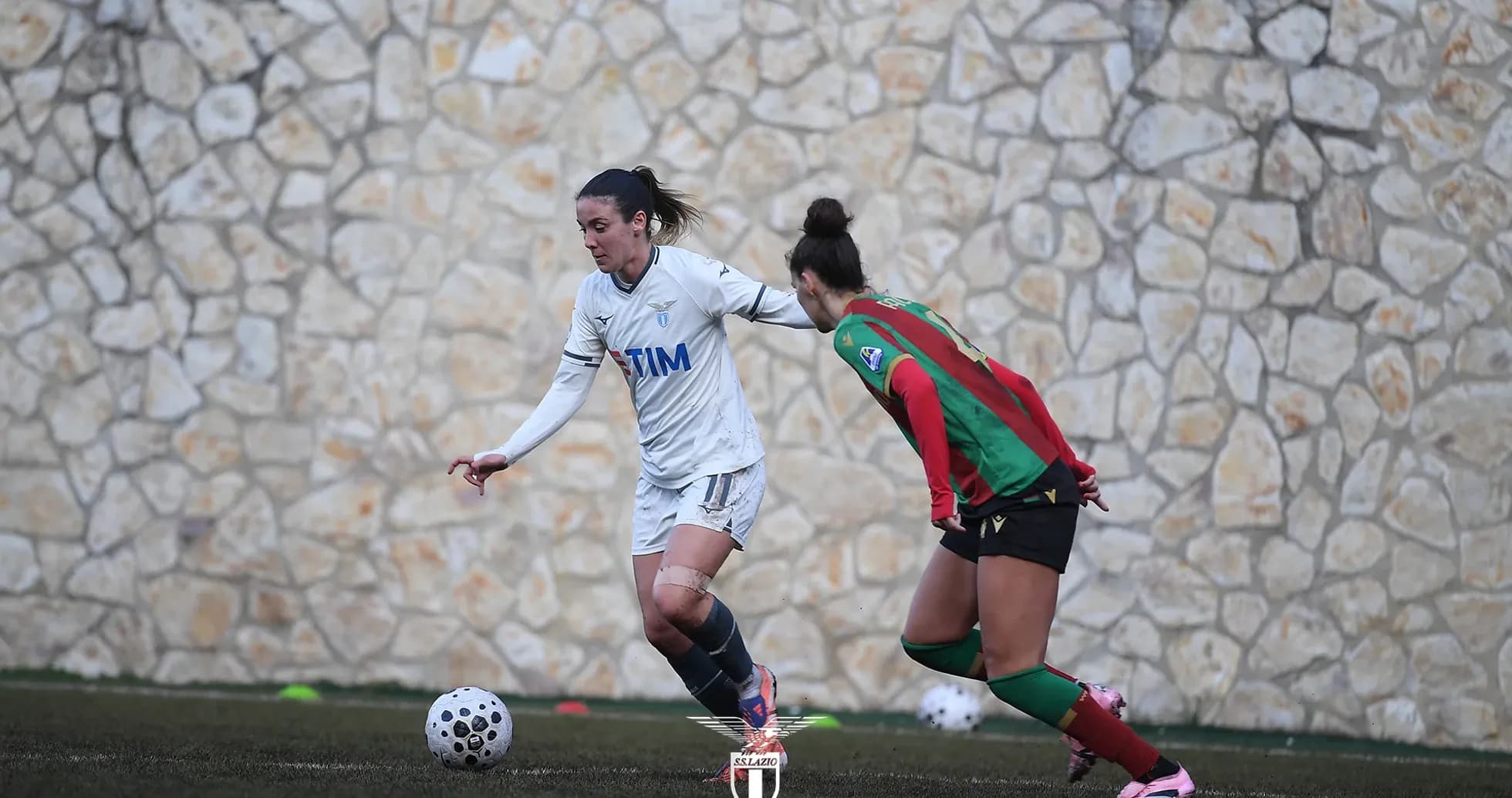
On a bright afternoon at Campo Mirko Fersini in Rome, Lazio W delivered a statement of control and composure, easing past Ternana W 2–0 in Serie A Women’s Regular Season - 21. Following this result, the league table snapshots tell a clear story: Lazio W, ranked 4th with 33 points and a goal difference of 2, are consolidating themselves as a top-half force, while 11th-placed Ternana W remain trapped in a relegation dogfight on 14 points with a goal difference of -22.
The match itself mirrored the seasonal DNA of both sides. Lazio W, who overall average 1.4 goals for and 1.3 against per game, again found the balance between risk and control. At home they have been steady rather than spectacular, with 13 goals for and 12 against across 11 matches, but this clean 2–0 win sharpened the impression of a side that knows how to manage game states. Ternana W, by contrast, arrived with the numbers of a team constantly on the brink: overall they concede 1.9 goals per game and score just 0.9, and away from home the picture is even harsher – 4 goals scored and 23 conceded across 11 trips, an average of 0.4 for and 2.1 against. On their travels, they are almost always under siege, and Rome was no exception.
Gianluca Grassadonia’s lineup was notable for its blend of structure and creativity. With the season’s most-used systems being 3-4-2-1 and 3-1-4-2, Lazio W’s starting eleven felt like a fluid evolution of those patterns. F. Durante anchored the side from goal, with C. Baltrip-Reyes and E. Oliviero offering reliability and progression from the back and midfield respectively. The presence of F. Simonetti, N. Visentin and M. Monnecchi among the starters hinted at a front unit designed to stretch Ternana’s fragile defensive block rather than simply pin it back.
On the opposite bench, Mauro Ardizzone’s Ternana W arrived with the scars of a long season. Their most common formation has been a 4-3-3, and the starting group – G. Ciccioli in goal, a defensive line including L. Peruzzo and M. Massimino, with C. Ciccotti and A. Gomes further ahead – suggested a side trying to remain faithful to a proactive shape despite the numbers warning against it. The bench depth, with options like V. Di Giammarino and F. Quazzico, underlined a squad that has bite and aggression, but not always control.
If there were tactical voids caused by injuries or suspensions, they are not documented in the data; the more telling absences were structural. Lazio W’s disciplinary profile this season shows a side that lives on the edge without losing its head. Their yellow cards peak between 46–60 minutes at 23.33%, and they have red-card incidents spread across 16–30, 76–90, and 91–105, a reminder that their intensity can spill over at any time. Yet in this match they navigated the emotional currents well, keeping Ternana from dragging them into a chaotic contest.
Ternana W’s card distribution is more ominous. Their yellow cards spike late, with 22.22% coming between 76–90 minutes, and they have a dramatic red-card concentration between 31–45 minutes, where 100.00% of their reds occur. That pattern speaks of a team that unravels under pressure as halves reach their emotional peak. In a game where they trailed from the first half and were chasing against a structured Lazio block, the risk of a self-inflicted wound was ever-present, even if this particular afternoon passed without a major disciplinary flashpoint being recorded in the data.
Within that framework, the key matchups came into sharp focus. The “Hunter vs Shield” narrative was shaped more by season-long profiles than by a single name on the team sheet. Lazio’s attacking edge, built on the finishing of M. Piemonte (7 goals overall) and the supporting runs of N. Karczewska and C. Le Bihan, met a Ternana defence that has been porous all year, particularly away. On their travels Ternana concede 2.1 goals per game, and Lazio’s 2–0 here slotted neatly into that pattern. Even without Piemonte on the match lineup list, the collective habits she has helped forge were visible: aggressive occupation of the box, a willingness to shoot, and a side comfortable playing high in the final third.
The “Engine Room” duel was embodied by E. Oliviero for Lazio W and, in broader seasonal terms, by Ternana’s midfield enforcers such as Giada Cimò and V. Di Giammarino, even though they were not both in this particular starting XI. Oliviero’s season numbers – 5 assists overall, 414 passes at 71% accuracy, 23 tackles and 6 blocked shots – mark her out as the rhythm-setter and first line of counter-press. In this match, her presence alongside M. Zanoli and A. Castiello gave Lazio a three-player axis capable of both screening and launching. Against a Ternana side that overall concedes 40 goals and struggles to control central spaces, that axis was decisive. Lazio’s midfield repeatedly shut down transitions before they could reach A. Gomes or M. Petrara in advanced zones.
Defensively, Lazio W’s back line carried the imprint of C. Baltrip-Reyes’ season. With 29 tackles, 6 blocked shots and 21 interceptions overall, she embodies a defender who steps out aggressively and reads danger early. Against a team that has failed to score in 10 of 21 matches overall, that anticipation often killed Ternana’s attacks before they became chances. The clean sheet was not an accident but an extension of a pattern: Lazio have 6 clean sheets overall, 4 of them at home, and this 2–0 simply added another layer of evidence.
From a statistical prognosis perspective, the match played out almost exactly as the underlying numbers would have predicted. Lazio W, with 30 goals for and 28 against overall, sit on a narrow but positive goal difference of 2, and their attack is significantly more productive than Ternana’s. Ternana’s away record – 1 win, 1 draw, 9 losses – coupled with a -19 away goal difference (4 for, 23 against) made them heavy underdogs. Even without explicit xG data, the profiles point to a contest where Lazio would generate the higher-quality chances and Ternana would rely on set-pieces or isolated breaks.
In that light, a 2–0 home win feels almost conservative. Lazio W asserted their top-four credentials with controlled authority, while Ternana W’s season-long struggle on their travels continued unabated. Following this result, the gap between a side building towards European ambitions and one fighting simply to stay in the division has rarely looked so stark.