.svg&w=384&q=75 "naujapitch logo")
Kubo Takefusa's Absence: Japan Faces Brazil in World Cup Showdown
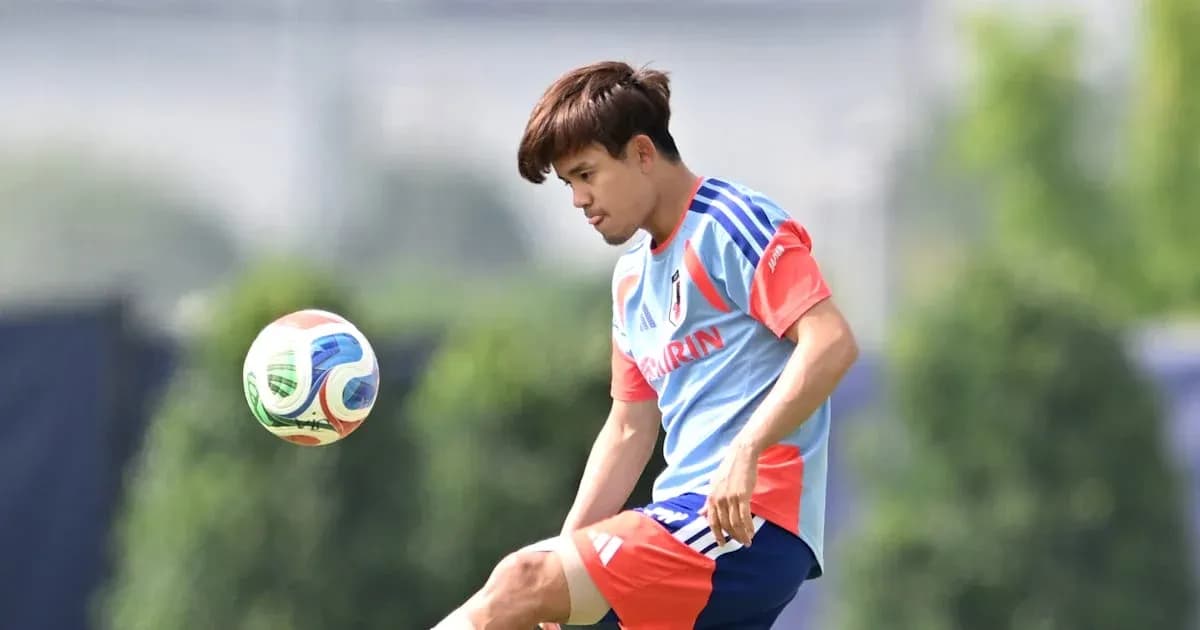
On the eve of Japan’s World Cup round of 32 showdown with Brazil, Kubo Takefusa walked past the cameras, his left knee heavily strapped, and offered two words.
“I’m good.”
He isn’t. Not good enough to play, at least. Since going down in Japan’s tournament-opening draw with the Netherlands, the Real Sociedad playmaker has been reduced to rehab sessions and lonely running drills, a spectator with a captain’s influence and a passenger’s role.
On Sunday, coach Moriyasu Hajime ended the suspense.
“Kubo will not play in the Brazil game,” he confirmed at the pre-match press conference, a blunt line that cut through a nation’s late-night anticipation. Millions will stay up until 1am to watch. Many will wonder the same thing: what if?
Moriyasu tried to steady the mood.
“I’m hoping for a speedy recovery and he’s doing everything he can to pick up his conditioning,” the coach said. The message was clear: Kubo’s tournament is not over, but this chapter will be written without him.
A missing magician
There is no escaping it. Japan are a better side with Kubo on the pitch.
At 25, he carries a rare blend of flair and incision in that left foot, a touch and vision that no one else in the squad quite replicates. With Mitoma Kaoru, captain Endo Wataru and Minamino Takumi already ruled out, Kubo had grown into a de facto leader, his influence stretching from the dressing room to the training ground.
He was becoming the reference point in a team suddenly stripped of its headline names.
Now, as Brazil loom, that creative hub disappears. On paper, it looks like a fatal blow. On the training pitch, Japan insist it is not.
Depth as a weapon
If this Japan side has a defining trait, it is not a single star. It is the line behind him.
Moriyasu has leaned heavily on his squad depth, using all but three of his 26 players so far – the only outfielders yet to appear are the two backup goalkeepers. The rotation has not felt like compromise. It has felt like design.
The “next man up” mantra, so often tossed around as a cliché in sport, has taken on substance in this camp. When one player drops out, another steps in and the level barely dips. That has been Japan’s quiet backbone in this World Cup.
Without Kubo, that belief will be tested against the ultimate benchmark.
Fearless talk before a giant
Brazil still carry a name that echoes through Japanese football history. When the J.League launched 33 years ago, the Selecao were the gold standard, the model to copy, the dream to chase. Brazilian imports lit up the early years, and Joga Bonito became a kind of distant ideal.
That era of awe has faded.
Asked to name the strongest teams at this World Cup, Wolfsburg striker Shiogai Kento pointed to France and Argentina. Brazil did not make his list.
“You don’t really hear about Brazil lately,” he said, a line that would have sounded almost sacrilegious in 1993.
The questions kept coming. What about Neymar? The same Neymar who has scored nine times in five games against Japan?
“That’s Neymar of the old,” Shiogai replied. “I think we’re OK right now.”
It was not bravado for the cameras. It was a window into a generation that has grown up seeing Japan beat giants, not just admire them.
A nation on edge
So here they stand: Kubo sidelined, the squad stretched, Brazil waiting.
Japan have not come to this World Cup to make up the numbers. Inside the camp, the message has been bolder than ever. They believe they can beat Brazil. They talk openly about winning the World Cup, not just surviving its early rounds.
The absence of their most gifted playmaker threatens that ambition, but it does not define it. Not in their eyes.
Once, Brazil were untouchable in the Japanese imagination. Now, a forward can dismiss their aura with a shrug, and a coach can lose a star and still talk calmly about options, depth, and belief.
The questions will not stop until the final whistle. Can this Japan, stripped of Kubo and other leading lights, really stand toe-to-toe with Brazil on the sport’s biggest stage?
We are about to find out.