.svg&w=384&q=75 "naujapitch logo")
Jordy Bos: A Standout Performance at Right-Back for Australia
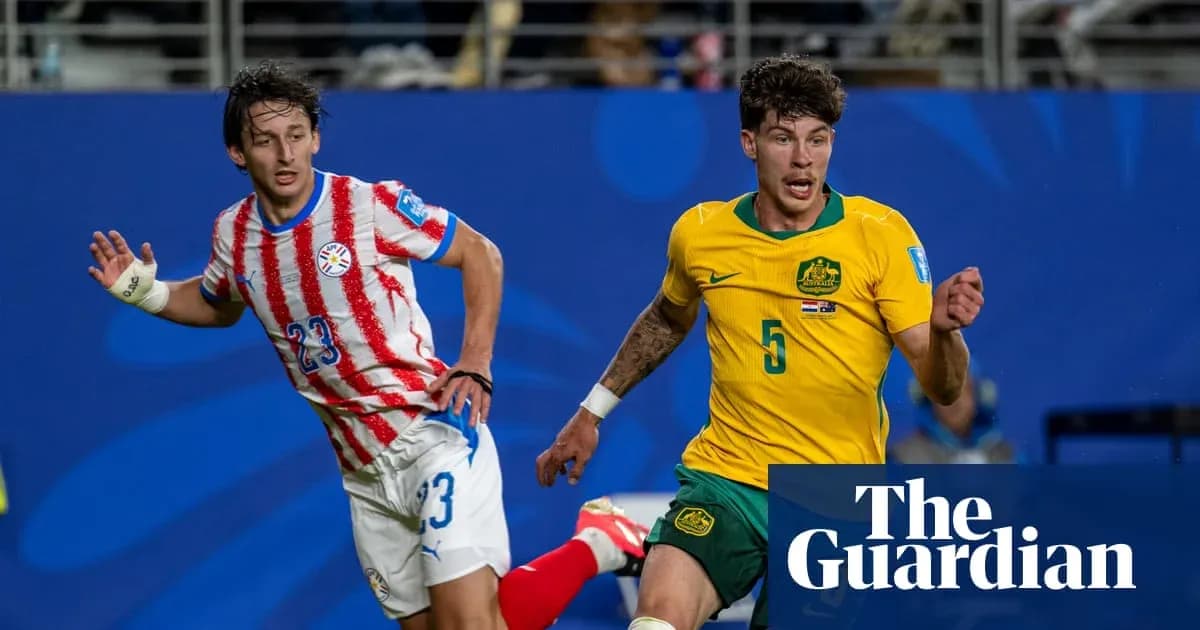
Jordan Bos did not so much play right-back as rip up the job description and write his own.
He came thundering down that flank again, a natural left-back charging into unfamiliar territory, skipping one challenge, riding another, and bursting into the box with the kind of conviction that drags a team – and a nation – up the pitch. Every surge felt like a rising tide. Every stride seemed to lift the Socceroos a little closer to safety.
The scoreboard at 0-0 against Paraguay said stalemate. The stakes said anything but. On a cool night by the San Francisco Bay, Australia were edging towards the World Cup last 32, minute by agonising minute, yet one Paraguayan pass or one mistimed tackle could have rewritten the script in an instant.
Julio Enciso kept finding pockets of space. Patrick Beach kept being asked for one more save. Each time he answered, 12,000 Australians draped in yellow exhaled as one and went back to staring at the clock.
Tony Popovic stared at it too. His team did not need a goal to progress from Group D. They needed control. They needed calm. Above all, after the bruise of defeat to the United States, they needed a performance that felt like a jolt of electricity to their campaign.
They found it in the most Silicon Valley way possible: just down the road from Google’s Mountain View campus, their search threw up one standout result. Jordy Bos.
Time and again, Bos collected the ball on the right, bounced through one would-be tackler, then another, and sprinted away from danger. Every metre he gained was another step away from the edge of the cliff. Paraguay’s attacks broke on him like waves.
The second half brought changes. Cristian Volpato, his partner in crime on that flank before the break, was withdrawn. Nestory Irankunda, the match-winner against Turkey and the spearhead of so much pre-game hype, also went to the bench. The stage, in the end, belonged to the full-back playing on the “wrong” side.
Bos kept driving. Into bodies. Into space. Into the box. The right-wing substitute Ajdin Hrustic, stationed just ahead of him, had the best vantage point in the stadium to watch one of the most complete Australian World Cup displays in recent memory.
“He’s a great player, he’s got power, you’ve seen it,” Hrustic said afterwards, sounding less like a teammate and more like a paying spectator. Aiden O’Neill, handed the player of the match trophy, almost apologised for taking it, admitting Bos probably deserved it more.
Inside the dressing room, the admiration bordered on awe. Captain Harry Souttar called him “a special player, a special guy, and just takes everything in his stride” before adding, with a grin, that “the guy’s body’s just unbelievable to look at”. Souttar did not want to heap pressure on a 23-year-old, but he could not help himself. “If he keeps performing like that then there’s no ceiling.”
The plaudits kept coming. Milos Degenek, never shy with an opinion, went all in: Bos, he said, is already a top-five left-back in the world and the best at his age. “That’s my opinion, I’m very biased, and I love him.” Asked if his teammate had just put himself among the elite right-backs as well, Degenek laughed. “Top 10.”
Irankunda went even higher with his praise. “He’s the best player in the world, Jordy Bos, best winger in the world,” he said, only half-joking. In his eyes, the positional conversation has already shifted. “He might have to switch to a winger, in my opinion. He’s done so well at right-back today, but he got so high up the pitch today and he showed glimpses of what he can do with the ball.”
The twist, of course, is that Bos was not meant to be there at all. Popovic had natural right-backs available in Kai Trewin and Jason Geria. Instead, he gambled on a left-footer on the opposite side, banking on what he had seen during Bos’s stint in Belgium with Westerlo and a half-hour cameo at right-back against New Zealand nine months earlier.
“We’ve seen that he can adapt and play on that side,” Popovic said. “It’s the best game he’s played of the three [World Cup matches] by far.”
Bos arrived at this tournament carrying expectations. His season in the Dutch Eredivisie had already marked him out as one of the most polished players in this young Socceroos group. At 23, he represents its future as much as its present. Until Thursday, his World Cup had been tidy, reliable, but not transformative.
Then came the explosion – and it came with layers of difficulty. Out of position. Under the shadow of a possible suspension, knowing that one yellow card would rule him out of the last 32. With Enciso and company probing his flank, any hesitation could have been fatal.
Instead, he played like a man unburdened.
At training this week, Hrustic had started calling him “Dani Alves” after the Brazilian great, a nod to Bos’s comfort flying forward from full-back on his unnatural side. Others have likened him to Arjen Robben, the classic left-footed right winger, cutting in from the flank. Bos brushed those comparisons aside with a shrug. “Unfortunately I didn’t score like him, but I tried,” he said.
The numbers backed up the eye test. No Australian took more shots than Bos’s three. No one created more chances; he sat joint-top in that category. He completed four successful dribbles, more than anyone in green and gold, and won the most duels on the pitch, including seven of nine in the air. For a full-back, those are wild figures. For a makeshift right-back, they are staggering.
“I was enjoying it too, honestly, tonight,” Bos admitted. You could tell.
The name that has followed him longest, though, is Gareth Bale. Like Bale, Bos started as a left-back and is being nudged, almost inevitably, higher up the pitch. Like Bale, his game is built on long, loping strides, raw power, and the sense that once he hits top speed, there is not much anyone can do about it.
Asked which comparison he liked most – Alves, Robben, Bale – Bos hesitated, then smiled. “Yeah, Robben … I don’t mind Bale, to be honest.” In truth, the choice hardly matters. The labels will stick or fall away on their own.
What mattered on this night was simpler. Under pressure, with a place in the knockout rounds on the line and a nation watching the clock, Jordy Bos stopped being a collection of references and became something else.
He became the player everyone else will now be compared to.