.svg&w=384&q=75 "naujapitch logo")
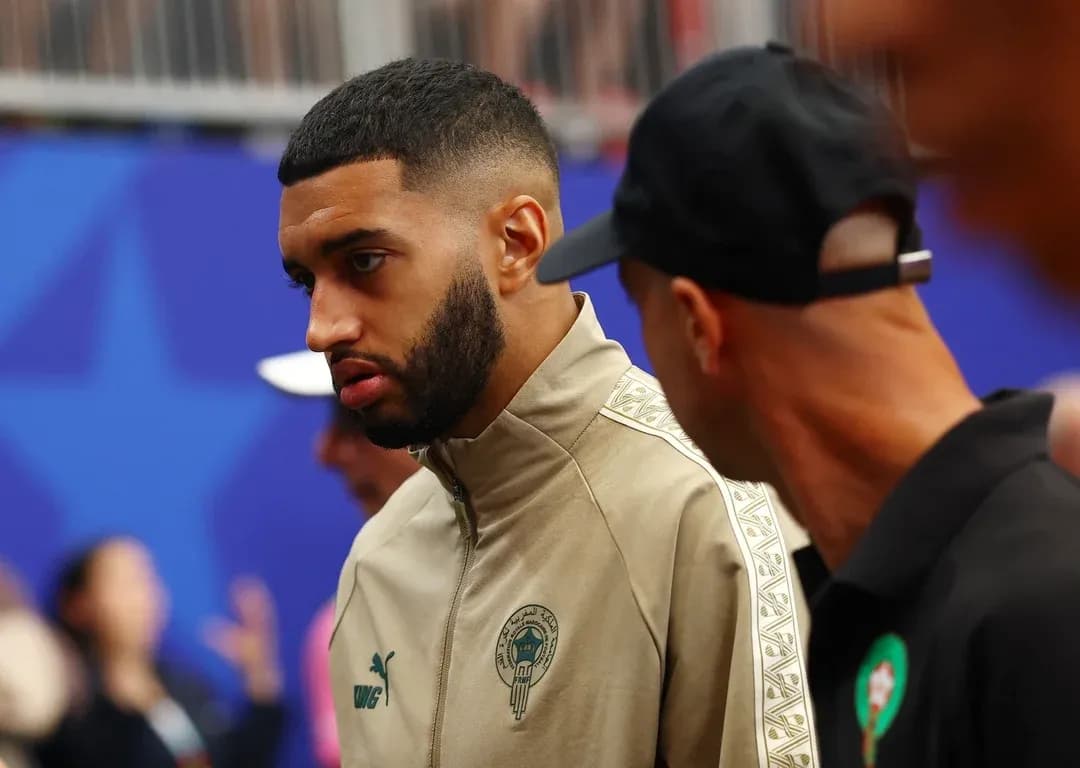
Ismael Saibari's Injury Concerns Ahead of Morocco's Quarterfinals
Ismael Saibari’s World Cup lit up early. It might now be hanging by a thread.
The Morocco playmaker, their leading scorer at this tournament with three goals, lasted just 22 minutes against Canada on Saturday before his body betrayed him again. In full flow during an attacking move, he pulled up sharply, hand instantly in the air, the universal signal no player ever wants to make.
He knew. So did everyone watching.
Star man stops, stadium holds its breath
Saibari sank to the turf, clutching the back of his right thigh. Medical staff rushed on. Morocco were already in control, the Atlas Lions playing with the swagger of a side that has grown used to the World Cup spotlight, but the mood changed in a heartbeat.
After brief treatment on the pitch, there was no gamble. The coaching staff did not hesitate: Soufiane Rahimi was sent on, Saibari limped off, his face etched with discomfort and frustration. Morocco would go on to cruise to a 3-0 win at Houston Stadium, but the scoreboard felt secondary in that moment.
Initial assessments point to a muscle injury to the back of the right thigh, consistent with a hamstring strain. The definitive verdict will only come after medical tests in the coming hours, yet the concern is obvious. This is not just any player. This is Morocco’s form man, their cutting edge, their symbol of a new, fearless generation.
A $63 million man at a critical crossroads
The timing could hardly be worse. Saibari arrives at this World Cup on the crest of a career wave. Fresh from a move to Bayern Munich in a deal worth around $63 million (€55 million), he signed on with the German giants until 2031, a long-term bet on his talent and temperament.
He has delivered on the biggest stage too. Goals against Brazil, Scotland, and Haiti in the group stage turned him from a promising name into one of the tournament’s breakout stars. His blend of power, timing, and cold-blooded finishing has given Morocco a different dimension in the final third.
Now, with Morocco back in the FIFA World Cup quarterfinals for the second straight edition, their attacking hub is suddenly a doubt for the rest of the campaign.
A familiar, unwelcome pattern
This is not an isolated setback. Saibari’s body has been whispering warnings for a while; on Saturday it spoke loudly.
Earlier this year, between April and May, he missed about a month and three matches for PSV Eindhoven in the Eredivisie because of a muscle injury. Go back to April and May of 2023 and there was another muscular problem, undisclosed but serious enough to rule him out for 22 days.
Different seasons, different clubs, same theme: muscular issues interrupting momentum.
For an explosive attacking midfielder whose game relies on acceleration, sharp changes of direction, and repeated sprints, the hamstring is not just a muscle. It is a lifeline. When it goes, confidence can follow.
A fighter from the very beginning
Saibari, though, is no stranger to adversity. Long before the transfer fees and World Cup goals, there was a far more fundamental battle.
A congenital foot condition complicated his early childhood, preventing him from walking normally until around the age of two. Orthopedic treatment eventually corrected the issue, and the boy who once struggled to walk grew into a man sprinting past defenders on the world stage.
That childhood condition has no relation to the injury sustained against Canada. Yet it does frame the story of a player who has already had to overcome more than most just to get here.
Morocco’s quarterfinal puzzle
For Morocco, the equation is brutal in its simplicity. With Saibari, they have a proven match-winner, a midfielder who arrives in the box at just the right time and has the composure to finish. Without him, the structure remains, the defensive solidity remains, the collective belief remains — but the cutting edge changes.
The staff were right to take no risks on Saturday. Protect the player now, or lose him for months. That was the calculation. The problem is that the tournament does not wait. The quarterfinals are here, again, and Morocco’s ambitions stretch far beyond simply matching their last run.
So the country waits for the scans, for the verdict on a hamstring that could shape the rest of their World Cup.
Morocco have shown they can stand toe-to-toe with anyone. The question now is whether they will have their most dangerous midfielder with them when the stakes rise again.