.svg&w=384&q=75 "naujapitch logo")
Graham Potter's Sweden Shines with 5-1 Victory over Tunisia
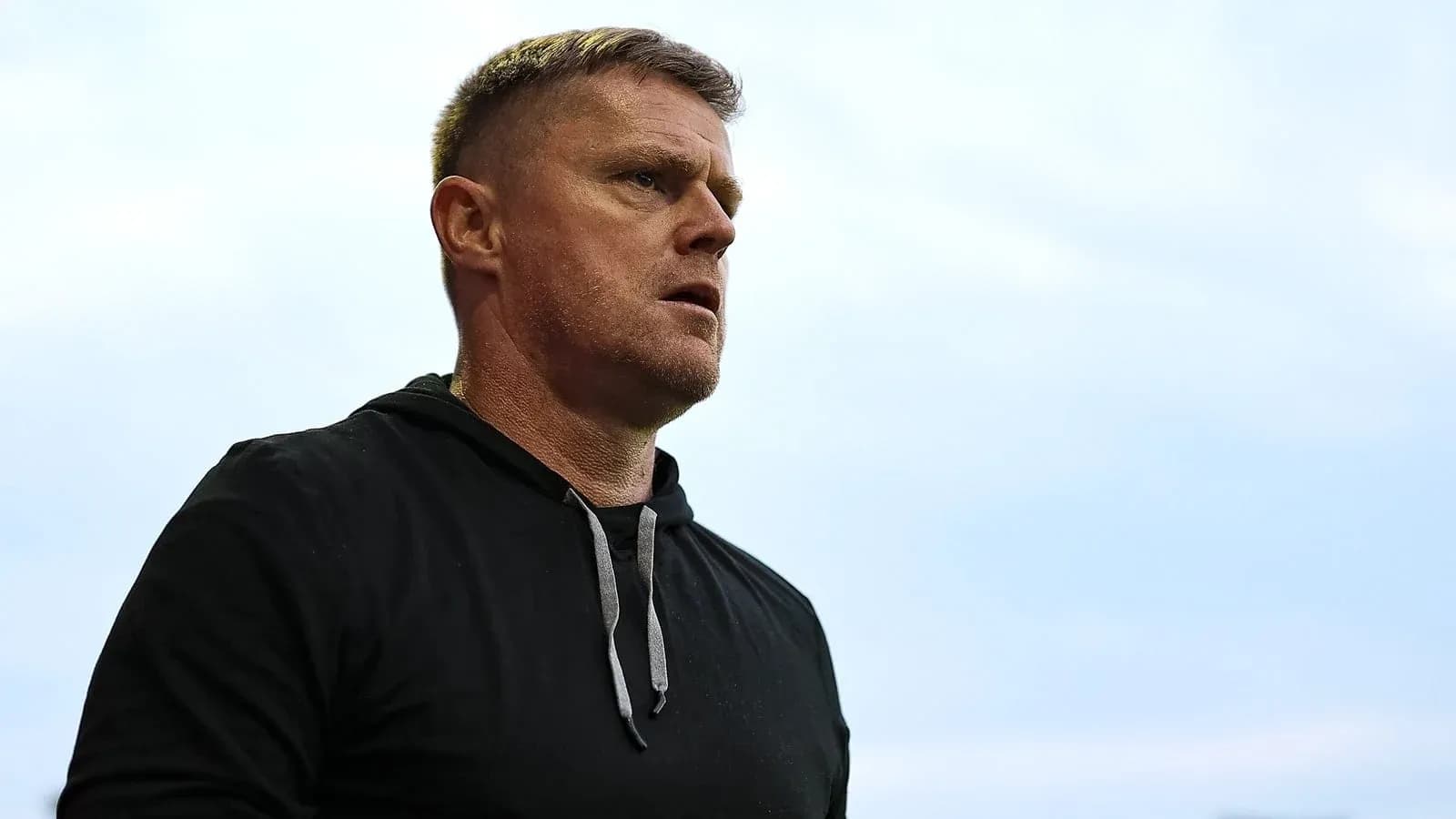
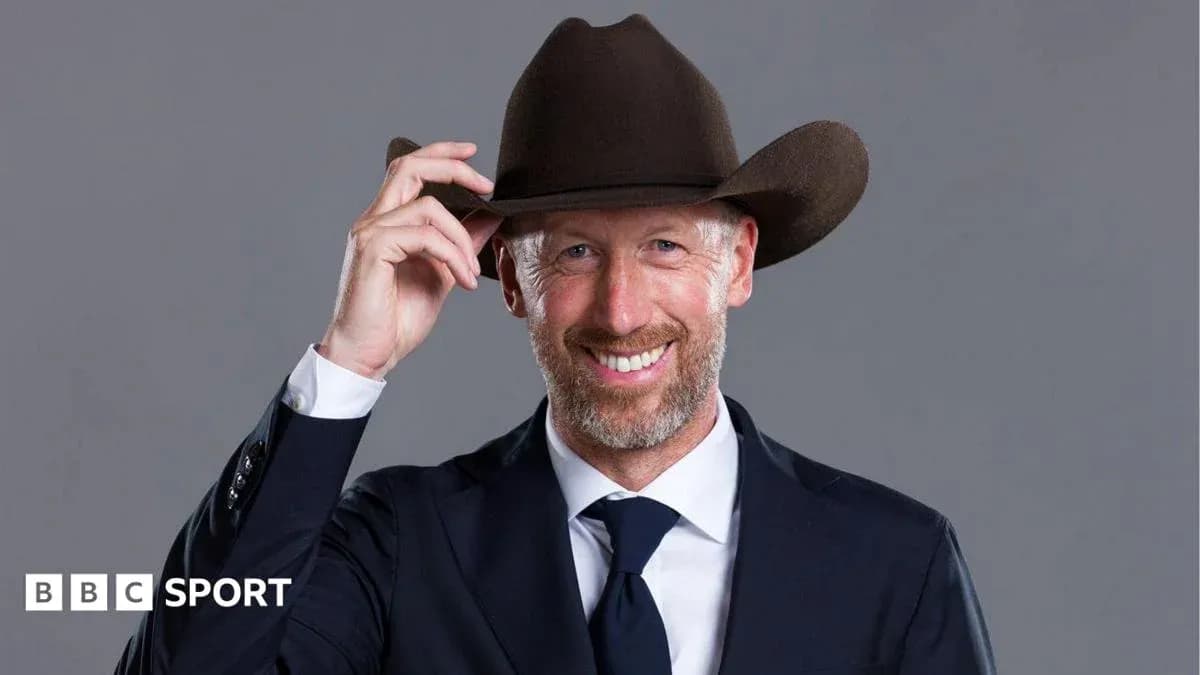
Graham Potter walked out to Sweden training in Texas last week wearing a Stetson. A joke, on the surface. A manager leaning into the World Cup’s cowboy backdrop.
It also felt like a costume for a man many had already written into the final act of his elite coaching career.
Two sackings in 15 months, Chelsea and then West Ham, had left Potter cast as the polite Englishman who couldn’t handle the heat at the very top. “Last-chance saloon” was the easy line.
In Monterrey, that script was ripped up.
Sweden 5–1 Tunisia. Ruthless, sharp, utterly convincing. On a humid Mexican night, Potter’s team announced themselves as something far more serious than a nice backstory in a big hat.
A manager back from the brink
This is not where Potter expected to be this season. He started it in east London, under the glare of the Premier League, and was out of West Ham by late September after just six wins in 23 league games. That followed the bruising Chelsea spell, where the job swallowed him after the promise he had shown at Brighton.
By the time Sweden called in October, he was a coach with a damaged reputation. The national team he inherited looked just as fragile.
Under Jon Dahl Tomasson, Sweden had stumbled through qualifying. Automatic World Cup qualification slipped away, and by the time Potter arrived the damage was beyond repair. They finished bottom of their group, behind Switzerland, Kosovo and Slovenia, without a single win in six games.
They survived on a technicality, sneaking into the play-offs via their Uefa Nations League ranking of 34. Hardly the stuff of fairy tales.
But that ranking opened a door. Potter walked through it.
Sweden beat Ukraine. Then Poland. From a broken qualifying campaign to a World Cup spot in Texas and Mexico. For Potter, it was a lifeline and a test: could he still build a functioning, dangerous team on the big stage?
On this evidence, yes.
Five goals, and a statement
Sweden scored four goals in their entire qualifying group. They scored five in 90 minutes against Tunisia.
The contrast tells you everything about the transformation.
Potter’s side didn’t just beat Tunisia, ranked 56th in the world. They dismantled them. The movement was crisp, the pressing coordinated, the attacking combinations far beyond a side supposedly short on confidence and experience.
“You never know, that's the truth,” Potter said after the game. “You never know how things are going to go. We were optimistic because we felt confident in the work. But until the game is played you don't know for sure. That's the beauty of sport. We are delighted with how we performed tonight and it's a great start for us.”
The numbers back him. Five goals, fluid patterns, and a front line that looks like it belongs in the latter stages of this tournament, not just the group.
Isak, Gyokeres and a front line with teeth
The return to full fitness of Alexander Isak changes everything. A £125m striker for Liverpool, he carries the aura of a player who expects to decide games. Against Tunisia, he looked like exactly that.
His partnership with Viktor Gyokeres, Arsenal’s powerful frontman, gives Sweden an attack that can trouble anyone. They combined smartly, each assisting the other, a detail that will quietly please Potter as much as the goals themselves.
This is not a romantic, underdog forward line. It is expensive, modern and dangerous.
For a nation back on the World Cup stage after missing Qatar 2022, that matters. Sweden will not just sit deep and hope. With Isak and Gyokeres, they can punch back.
A coach who feels “very Swedish”
If Potter looks refreshed, it is not an accident. This is a return to familiar ground, even if the stadiums are different.
He built his career in Sweden, taking Ostersunds FK from the fourth tier to the Allsvenskan, winning the domestic cup and guiding them into Europe. Those seven years shaped him as much as any Premier League stint.
“I feel very Swedish when I'm working,” he told BBC Sport before the tournament. “I even look a bit Swedish. Two of my children were born in Sweden. I had seven unforgettable years at Ostersunds, with memories that will stay with me for life.
“I came from the fourth tier of Swedish football, which is quite low, and worked my way up through the system to the Allsvenskan.
“You almost become Swedish in a coaching sense because of the experiences you have. I think it has definitely helped.
“Now I'm working for the Swedish FA as head coach of the national team, so I feel very Swedish.”
His Instagram feed in recent months has been filled with lakes, forests, Nordic novels and cultural events. It painted the picture of a man reconnecting with a place he trusts.
But this is not a sabbatical. The work has been meticulous. The tactical structure, the clarity of roles, the sharpness in transition – none of that comes from sightseeing.
Raw squad, clear task
For all the noise around the scoreline, this is still a raw Sweden squad. Only Victor Lindelof has played at a World Cup before; goalkeeper Kristoffer Nordfelt watched from the bench in Russia in 2018 but never got on the pitch.
Potter must weld together a group that is talented but green at this level, and guide them through a format that rewards fast starters. With this expanded tournament, five goals in the opener already gives them a strong platform to reach the last 32.
There will be sterner examinations. Tunisia, for all their spirit, are not a heavyweight. The real measure comes on Saturday against Netherlands, one of the favourites.
“We just focus on what we can do, we focus on our performances,” Potter said. “It doesn't matter what people think from the outside or opinions.
“That's the beauty of the World Cup everyone has predictions and forecasts but we have to focus on our job and how we play as a team.
“We will meet another top team at the weekend who are one of the favourites for the competition.”
That is where we discover whether this was a perfect opening night or the start of something more durable.
Echoes of history
Sweden’s best World Cup finishes both ended with bronze medals. In 1958, on home soil, they finished third under another Englishman, George Raynor. In 1994, when the tournament was staged in the USA, they did it again, a generation remembered for bold attacking football and fearless performances.
The omens are neat. Another English coach. Another World Cup on American soil. A team that suddenly looks like it wants to attack.
No one inside the Sweden camp will talk about 1958 or 1994 yet. Potter certainly won’t. He knows how quickly football can turn.
But after a cowboy hat in training, a battered reputation and a chaotic route through the play-offs, he walked into Monterrey needing a performance that said he still belongs at this level.
Five goals later, the answer felt emphatic. The question now is not whether Graham Potter is finished.
It is how far this Sweden side can drag him – and themselves – into the World Cup’s sharp end.