.svg&w=384&q=75 "naujapitch logo")
Ghana's World Cup Bid: Steel and Stardust in 2026
Ghana arrive at the 2026 World Cup with a familiar identity and a fresh layer of intrigue. The Black Stars conceded just six goals in 10 qualifiers, a record that underlines how hard they are to break down. That platform, though, has taken a brutal hit.
Defence: Rock-Solid, But Rocked by Injury
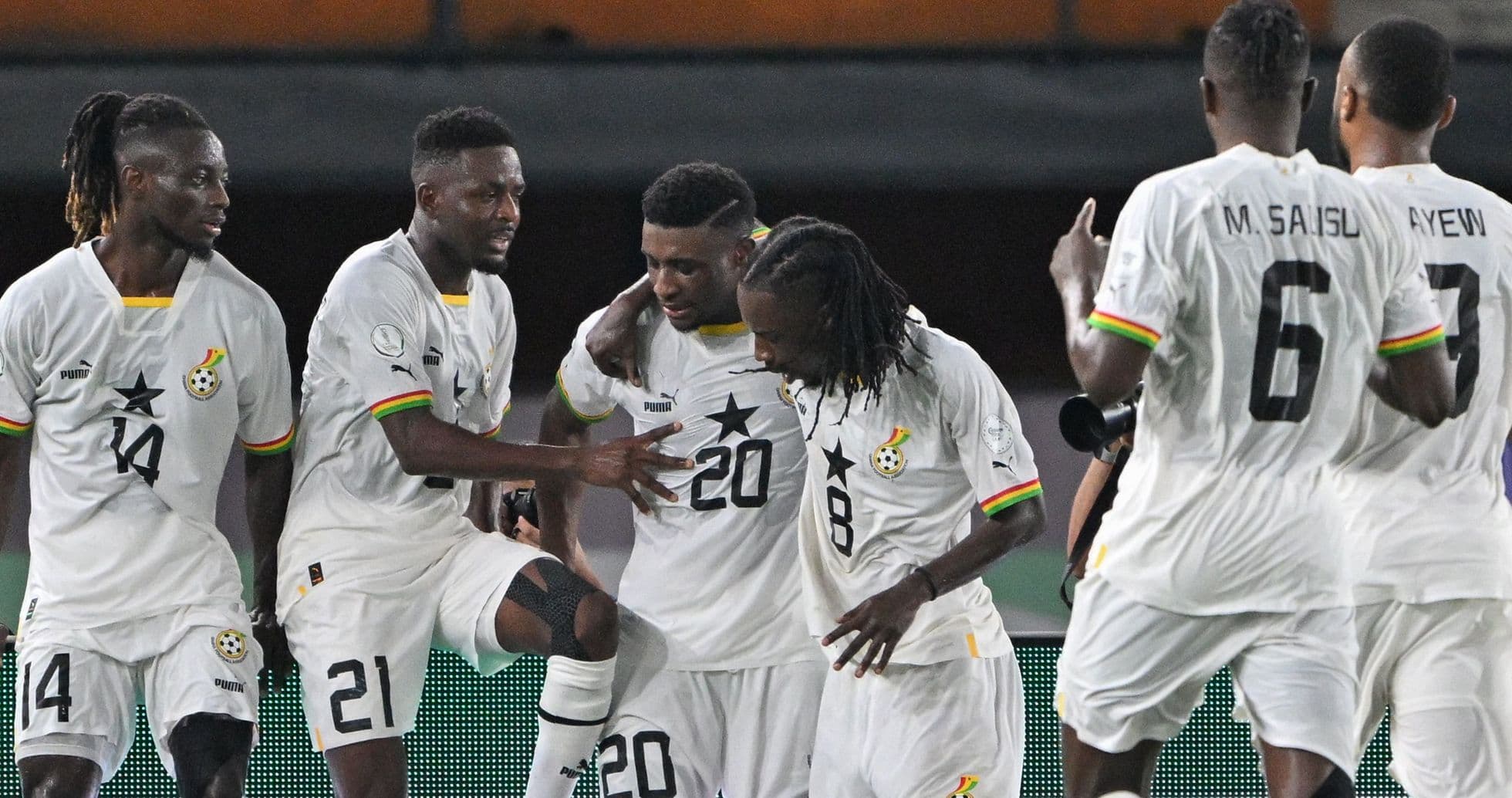
Aleksander Djiku and Mohammed Salisu built one of Africa’s most reliable centre-back pairings in qualifying. They were the calm in the chaos, the reason Ghana could squeeze games and trust their structure. Now Salisu is out with an ACL injury, and the spine of Otto Addo’s defence needs surgery.
Djiku, now at Spartak Moscow, stays as the defensive reference point. Beside him, the door swings open. Jerome Opoku of İstanbul Başakşehir looks best placed to step in, his physical presence and aerial strength offering something close to what Salisu brought.
On the left, Gideon Mensah has long been the default option. Consistent, hard-working, trusted. But his place is no longer guaranteed. Derrick Kohn’s rise in the Bundesliga with Union Berlin has been one of Ghana’s quieter success stories in Europe. Now he arrives with momentum and a real chance to dislodge Mensah if he impresses in the pre-tournament friendlies.
Addo has widened the net in defence. Patric Pfeiffer (Darmstadt 98), Marvin Senaya (Auxerre) and Derrick Luckassen (Pafos FC) have all been brought into camp for the warm-up games, each handed a late audition for the final squad.
There is youth too. Kojo Peprah Oppong, the promising defender who broke through at Nice, earned his first cap at the end of last year. He will be desperate to keep his place and force his way into the tournament picture, adding energy and versatility to the back line.
Behind them all, Benjamin Asare is set to start in goal. He will marshal a back four likely to read: Alidu Seidu, Opoku, Djiku and either Mensah or Kohn. It is a unit built on discipline, even if it now has to cope without one of its original pillars.
Midfield: Kudus the Star, Partey the Anchor
In midfield, one name dominates the conversation: Mohammed Kudus. Now at Tottenham, he is Ghana’s creative heartbeat, the man who scored the goal that sealed qualification against Comoros. His club season in the Premier League has been bruising, dogged by poor form and injuries, but the World Cup offers a reset. If he is fit, he is the one who can tilt games.
Thomas Partey remains the reference point in the middle of the pitch. His minutes at Villarreal have been limited, yet his influence for Ghana has not faded. During qualifying, he knitted play, broke up attacks, and brought the composure of a veteran who has seen it all. At this stage of his career, his value is as much about control and leadership as it is about legs.
Elisha Owusu of Auxerre is another key cog. When healthy, he gives Ghana balance: tidy on the ball, sharp in the press, and tactically intelligent. His battle is with his own body. If he can finally shake off his injury issues, he could start and free Kudus to roam higher up the pitch.
Ibrahim Sulemana’s return to the squad in time for the March friendlies offered Addo another dynamic option. Salis Abdul Samed (Nice), Kelvin Nkrumah and Prince Owosu (both Medeama SC), and Kwasi Sibo of Oviedo round out a midfield pool that blends ball-winners with ball-players.
Not everyone will make it. Abu Francis will almost certainly miss the tournament after suffering a double leg fracture in a friendly against Japan at the end of 2026, a cruel blow for a player who had edged into contention.
For now, the blueprint is clear: Partey as the anchor, Sibo alongside him for industry and structure, Kudus ahead of them as the creative spark.
Attack: Firepower, Reputation and a Selection Headache
If the defence is about stability, the attack is about competition. Real, ruthless competition.
Antoine Semenyo is the headline act. His rise has been electric. He lit up the Premier League with Bournemouth, then earned a move to Manchester City in January and carried on scoring, adding a Carabao Cup winners’ medal in March. For Ghana, he is the man expected to stretch defences, to bully centre-backs, to turn half-chances into goals. He is a guaranteed pick and a likely star.
Alongside him, there is experience in abundance. Inaki Williams, the tireless Athletic Club forward, brings relentless movement and a proven goal threat. Jordan Ayew, now leading the line for Leicester, is the captain and the finisher who dragged Ghana through qualifying with seven goals. This will be his third World Cup. He does not need telling what is at stake.
Then comes the big question: Andre Ayew. The veteran has not featured since AFCON 2023, but his name refuses to leave the conversation. At 36, his legs may not be what they were, yet calls persist for his loyalty and service to be rewarded with one last World Cup. For Addo, it is a delicate call: sentiment versus sharpness.
The wide areas are loaded with flair. Abdul Fatawu Issahaku has been a revelation at Leicester, scoring spectacular goals and playing with fearless confidence. Kamaldeen Sulemana, now at Atalanta, remains one of the most exciting dribblers in African football, capable of unpicking deep blocks with a single burst. Ernest Nuamah (Lyon), Christopher Bonsu Baah (Al Qadsiah), Brandon Thomas Asante (Coventry) and Prince Adu (Viktoria Plzen) add depth and different profiles.
The likely shape? A front three with Jordan Ayew through the middle, Semenyo to his side, and Fatawu Issahaku given licence to attack from the wing. Kudus will drift in behind them, looking for pockets of space and moments to decide matches.
The XI Taking Shape
Strip it all back and a clear structure emerges. Ghana are expected to line up in a 4-3-3:
Asare; Seidu, Opoku, Djiku, Mensah; Partey, Sibo, Kudus; Fatawu Issahaku, Jordan Ayew, Semenyo.
It is a team built on a mean defence, anchored by Partey, and ignited by Kudus and Semenyo. Around them, places remain up for grabs. Kohn’s challenge to Mensah, the battle for that second centre-back slot, the debate over Andre Ayew’s place – all of it will shape the final squad.
Ghana have the steel. They have the stars. The question now is simple: can this blend of grit and glamour finally turn potential into a deep World Cup run?