.svg&w=384&q=75 "naujapitch logo")
Ghana vs England: Key Strategies for Success
Ghana survived Panama. England will be a different storm.
Ranked 39 places below Panama, the Central Americans were supposed to be the warm-up act. Instead, they dragged Ghana’s World Cup opener into a scrap, exposing flaws that Thomas Tuchel and England will have already bookmarked.
Carlos Queiroz escaped with a 1-0 win thanks to tweaks from the touchline and sheer will from his players. He will not get that margin for error again on Tuesday, when Ghana face the group’s heavyweight.
This will be the first competitive meeting between Ghana and England, 13 years after their only senior clash – a 1-1 friendly at Wembley in 2011. The stakes this time are unforgiving. And Queiroz has decisions to make.
The Jordan Ayew question
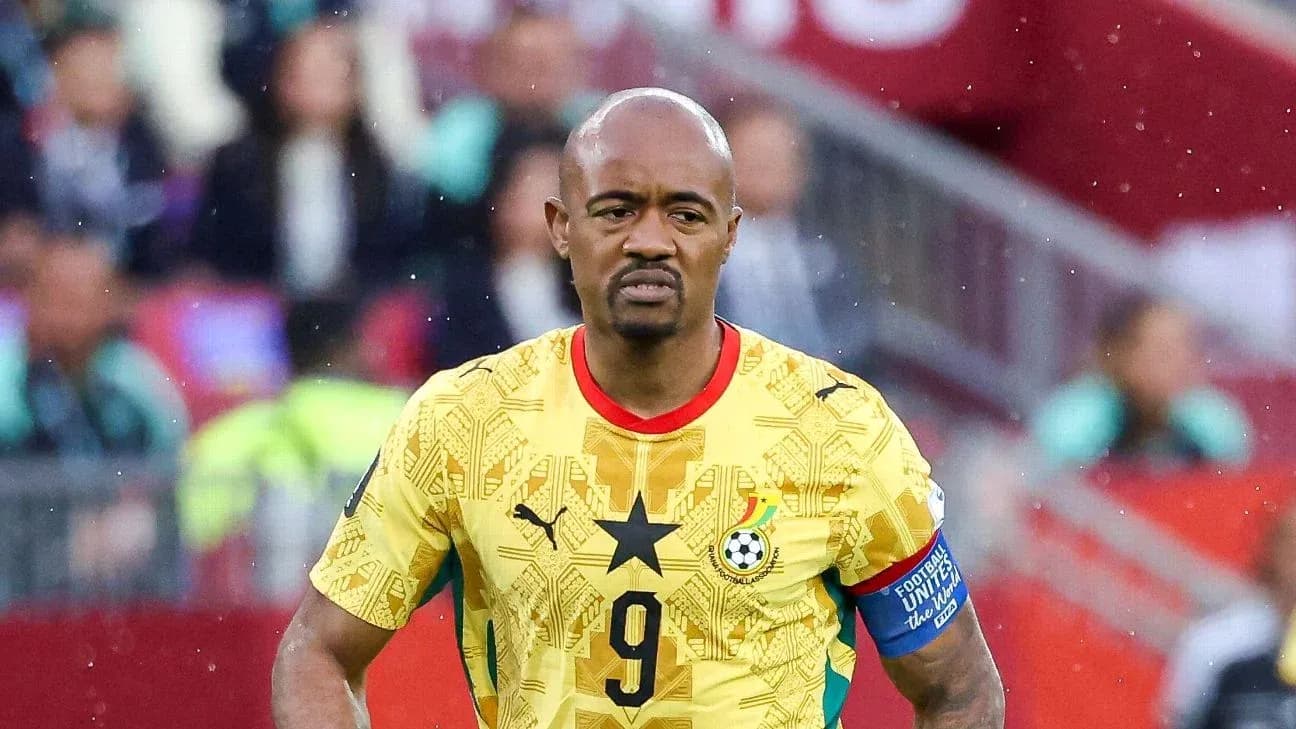
Jordan Ayew is the heartbeat of this squad. He is also its problem.
He is captain. He is the most-capped player in the group. He carries three World Cups on his back and the weight of the Abedi Pele surname. When he led the team out against Panama, he joined an elite list of Ghanaians to appear at three tournaments.
But sentiment does not win games at this level.
Against Panama, Ayew looked off the pace. His lack of speed was glaring, his choices on the ball often muddled. The standout moment came when Antoine Semenyo slipped him a pass and burst into space. The Manchester City forward’s run opened the pitch. The pass was on. Instead, Ayew drove straight into traffic and lost it. The move died at his feet.
Panama could not punish that. England will.
A static centre forward will be easy prey for England’s defence. Brandon Thomas-Asante, who provided the assist for Caleb Yirenkyi’s winner, offers pace and aggression, but not Ayew’s experience or aura. He plays in England, yes, but has not yet faced the calibre of opponent he will see in this World Cup.
So Queiroz stands at a crossroads. Bench his captain and lose a leader in the most demanding game of the group? Or persist with him up front and risk suffocating his own attack?
The answer sits in between the lines.
Ayew’s best moments against Panama came when he dropped deeper, linked play and acted as a connector rather than a runner. In an advanced midfield role, he can see the whole pitch, knit midfield to attack and drift into pockets of space in front of England’s back line. There, his lack of raw pace hurts less. His brain becomes the weapon.
With Ayew operating as a 10, Semenyo can lead the line, flanked by one of Thomas-Asante or Abdul Fatawu. Ernest Nuamah is another option to stretch the game wide. That setup gives Ghana what they lacked for long spells against Panama: speed attacking the channels and fullbacks, not asking a 33-year-old captain to win footraces he cannot win anymore.
Ayew’s intelligence between the lines can still tilt a game. The challenge is to place him where his mind, not his legs, dictates the tempo.
Partey’s time to step in
If there was one glaring lesson from the Panama game, it was this: Ghana cannot go into a midfield war against elite opponents without Thomas Partey.
Elisha Owusu struggled. The shape around him did not help, but he was swamped by Panama’s midfield, forced to chase instead of control. Against England, that scenario turns from worrying to fatal.
England’s middle is the engine of their team. Jude Bellingham and Declan Rice dominated Croatia in a 4-2 win in their opener, driving through lines, dictating tempo, and setting the tone of the match.
Partey changes the conversation.
Alongside the impressive Yirenkyi, he gives Ghana a platform. With those two sitting and screening, Ghana can compress the central areas, deny England’s midfielders the space to surge forward and, crucially, push Rice into more defensive work than he would like.
If Rice spends his evening tracking runners and closing passing lanes instead of stepping into advanced positions, England’s attacking rhythm shifts. That, in turn, frees Ayew to roam between midfield and attack, finding pockets where he can connect with Semenyo and the wide forwards.
Without Partey, Ghana react. With him, they can dictate at least parts of the game.
Where England can be hurt
England beat Croatia, but they bled chances. Two goals conceded, and it could have been worse.
The vulnerability was clear: the flanks.
Reece James lost his man on one Croatian goal. On the opposite side, Nico O’Reilly impressed going forward but looked raw defensively, a “work in progress” at left back. Croatia targeted those areas and found joy whenever they attacked quickly before England’s back four settled.
This is Ghana’s opening.
Semenyo’s direct running can pin James and O’Reilly back, forcing them into uncomfortable one-on-one duels. Thomas-Asante’s pace and physicality can drag centre-backs out of position and open space for late runners. Fatawu, with his ability to drive at defenders from wide areas, can stretch England horizontally, pulling their line apart.
Nuamah offers similar chaos. If Queiroz releases them early and often, England’s fullbacks will have to decide: bomb forward and risk the space behind, or sit deeper and blunt their own side’s width.
Ghana have the speed. They have the power. They cannot afford to play this game slowly.
No more slow starts
Against Panama, Ghana spent an hour on the back foot.
The Central Americans controlled the ball, created the better chances and forced Ghana into a reactive, nervous pattern. Only when Queiroz pushed Semenyo centrally and injected energy with substitutions did the Black Stars seize control and press with conviction.
They cannot wait that long against England.
Tuchel’s side showed against Croatia that they can be rattled when pressed high and early. Croatia’s aggression forced errors, dislodged England’s shape and produced two first-half goals. But England also scored twice before the break. They do not need many chances to tilt a game.
If Ghana sit off as they did against Panama, they may find themselves chasing a scoreline they cannot recover from. Harry Kane does not offer second invitations.
The Black Stars must start at the tempo they finished with against Panama and sustain it for as long as legs and lungs allow. Turn this into a contest of endurance, duels and discomfort. Make every England build-up a chore, every touch under pressure.
This has to feel like a grind for the favourites, not a rehearsal.
The set-piece trap
One area offers England a built-in advantage: dead balls.
On the World Cup’s opening matchday, England produced the highest non-penalty expected goals and most shots on target from set pieces. Kane’s second goal against Croatia came from a Rice corner and an unmarked header – a familiar English storyline at major tournaments.
Ghana cannot afford that kind of lapse.
There is already uncertainty in goal. Lawrence Ati-Zigi went off at halftime against Panama after a heavy collision, opening the door for Benjamin Asare. Whichever goalkeeper starts, the instruction will be the same: no free headers, no lost markers, no ball-watching.
That starts long before the ball is swung in. Ghana must cut out cheap fouls around the box and close the central gaps that appeared too often against Panama. This is another reason why Partey’s presence matters. He reads danger early, plugs holes and reduces the number of desperate tackles that invite set pieces.
Inside the area, concentration becomes non-negotiable. England drill these routines relentlessly. One lapse, one mismatch at a corner, and the game can tilt beyond reach.
And if the worst happens and a penalty is conceded, the psychological battle begins. Kane has studied goalkeepers’ habits. His run-up is part technique, part mind game. Asare and Ati-Zigi must do their homework in return.
After the Panama win, Queiroz summed up the task ahead with a blunt truth: “We have to suffer; there is no other way.” He called results at this World Cup “very expensive” and insisted his players are ready to pay.
Now comes the real bill.
Solve the Ayew puzzle. Restore Partey. Attack the flanks. Start fast. Defend every dead ball as if it is match point.
If Ghana can do all that against England, the question will not be whether they belong on this stage. It will be how far they can push the favourites before the lights go out.