.svg&w=384&q=75 "naujapitch logo")
Germany's World Cup Woes: A Cycle of Stagnation
Germany have been here before. That is precisely the problem.
When Joachim Löw’s world champions crashed out of the 2018 World Cup in the group stage, the diagnosis was brutal and instant. The era was over. The coach who had taken Germany to the top of the game had presided over a shambles, undone by Mexico and South Korea. The logical conclusion was to draw a line under a 12-year reign.
The DFB blinked.
Löw stayed on, his past glories buying him time that the present no longer justified. Three more years drifted by, with little sign of renewal. At Euro 2020, delayed to 2021, Germany bowed out meekly to England in the last 16. Löw finally walked away, but the sense lingered that German football had wasted precious time clinging to the past.
Hansi Flick arrived as the fresh start. A treble winner with Bayern Munich, a coach with modern ideas and a clear identity. He took Germany to the 2022 World Cup on a wave of optimism. Then came Japan.
Germany led. They lost. The opening defeat set the tone for another group-stage exit. Again, the assumption was that the DFB would act. Again, it hesitated. Flick stayed until autumn 2023, a string of poor results eventually forcing the issue and opening the door for Julian Nagelsmann.
Nagelsmann: the bright young thing, the tactical prodigy, the man supposed to drag Die Mannschaft back to the elite.
For a while, it felt like he might.
From home hope to Foxborough nadir
Nagelsmann took charge in September 2023 and immediately changed the mood. His selections felt sharp. His communication seemed fresh. Germany went into Euro 2024 on home soil with something they had not felt for years: genuine belief.
The tournament, in many ways, delivered. Germany played with purpose, reconnected with their public and reached the quarter-finals. They fell to Spain, the eventual champions, but the campaign restored a sense of pride. Nagelsmann, flushed with approval, set his sights higher almost immediately: the 2026 World Cup would be the next step, the real target.
Back then, he was the most popular national coach since Löw at his peak. It already feels like a different era.
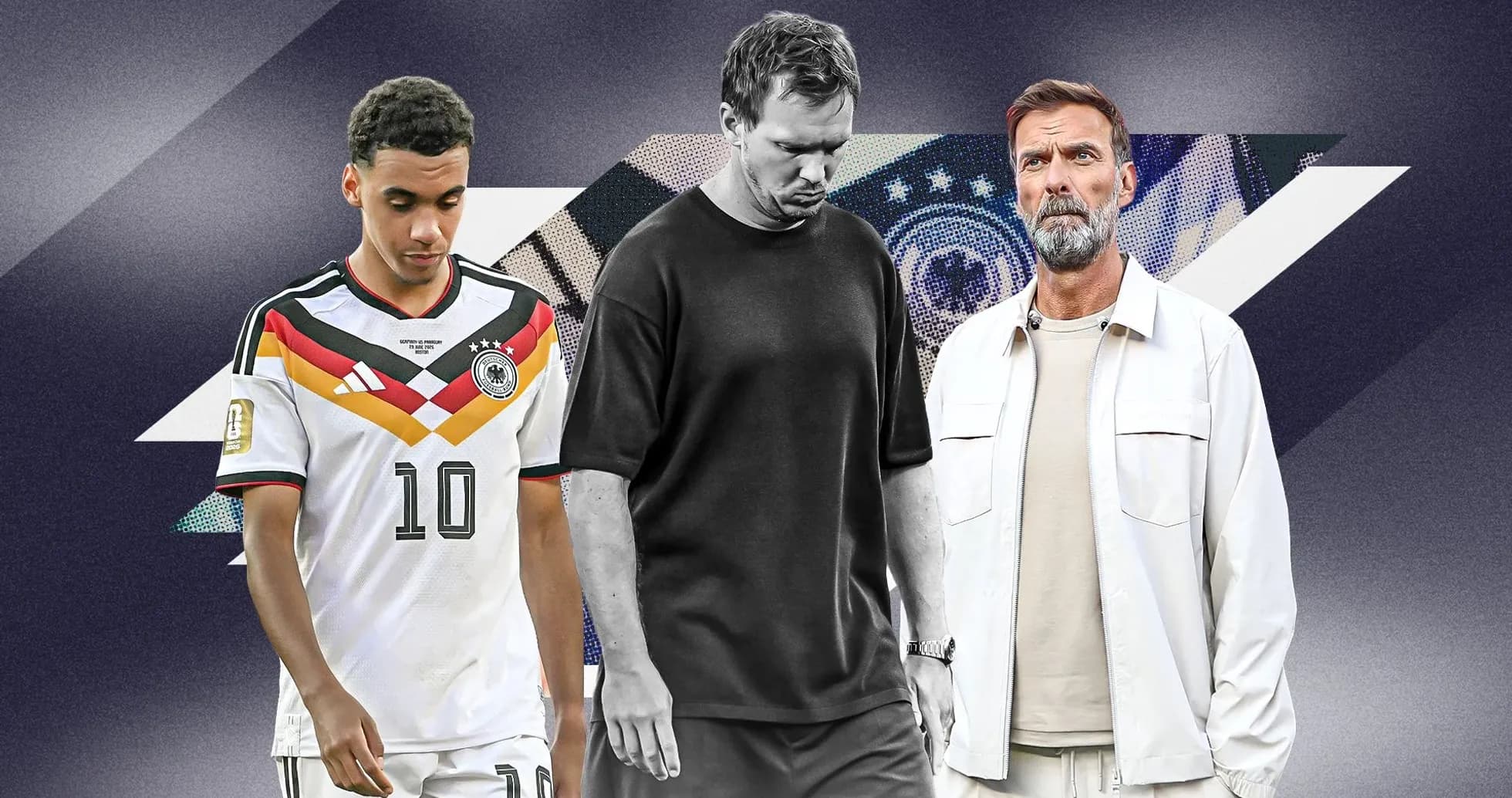
Over the past two years, Nagelsmann has squandered that goodwill at startling speed. The World Cup in the United States has turned that slow erosion into a landslide, with the low point coming in Foxborough on Monday. Germany’s exit was not a shock. It was a culmination.
A coach who talked too much – and delivered too little
Nagelsmann did not just coach. He talked. Constantly.
Press conferences and interviews became stages for detailed critiques of his own players, delivered every few weeks with a forensic edge that quickly felt unnecessary. What might have been framed as honesty began to look like a craving for attention. Some statements were clumsy. Others, according to those around the camp, were simply untrue.
Worse, he broke promises. Roles that had been outlined to players were quietly altered. Assurances about status and usage proved unreliable. When journalists pushed back, Nagelsmann’s composure often slipped. The national coach came across not as a calm leader but as prickly, patronising, and thin-skinned – a pattern that repeated itself during the World Cup.
The decisions on the pitch did not rescue him.
After Toni Kroos’ impressive return for Euro 2024, Nagelsmann went back to the past again, hauling Manuel Neuer out of international retirement for this World Cup. He had repeatedly insisted he would not do it. He did it anyway. The move cut deep with Oliver Baumann, outstanding through qualifying and widely seen as having earned the No. 1 shirt.
Neuer’s performances did not justify the upheaval. He did nothing that Baumann could not have done. The recall, handled clumsily and defended weakly, became a symbol of a coach losing his way.
Then there was Joshua Kimmich. Captain, leader, and tactical chess piece. Nagelsmann’s constant positional tinkering – most starkly the switch between right-back and central midfield during the defeat to Paraguay – left his skipper shuttling between roles and the team without a stable spine.
A campaign that went backwards
Germany’s World Cup was a slow-motion collapse.
The warning signs were clear long before Paraguay delivered the final blow. Since the Euros, there had been no discernible progress. Apart from a brief second-half surge against minnows Curaçao, the team underperformed across the tournament.
They lacked creativity in attack. They looked fragile at the back. Against Ivory Coast, Ecuador and Paraguay – none of them heavyweights – Germany never imposed themselves as a serious contender. On pure footballing merit, this World Cup felt even more disappointing than 2022. Back then, at least, there was the salvage point against Spain.
This time, nothing of that calibre.
To their credit, the players did not turn on their coach. After the exit, they shouldered the blame collectively and went out of their way to protect Nagelsmann publicly. But international football is unforgiving. The head coach is paid to supply a clear plan, to align talent with structure. Germany had the talent. Nagelsmann never found the structure.
His in-game management only deepened the doubts. Substitutions against Ecuador raised eyebrows. The decision to start super-sub Deniz Undav against Paraguay – a player whose impact had come from the bench – removed one of Germany’s few unpredictable weapons and dulled their attacking edge.
The defeat in Foxborough was not a one-off failure. It was the logical end point of a badly steered campaign.
Klopp in the studio, Klopp in the air
As if the pressure on Nagelsmann needed any extra twist, his every misstep was being dissected in real time by the man many Germans now see as his natural successor.
Jürgen Klopp sat in the television studio, not on the touchline, but his words carried the authority of a man who has shaped modern German coaching – and the weight of a fanbase’s longing.
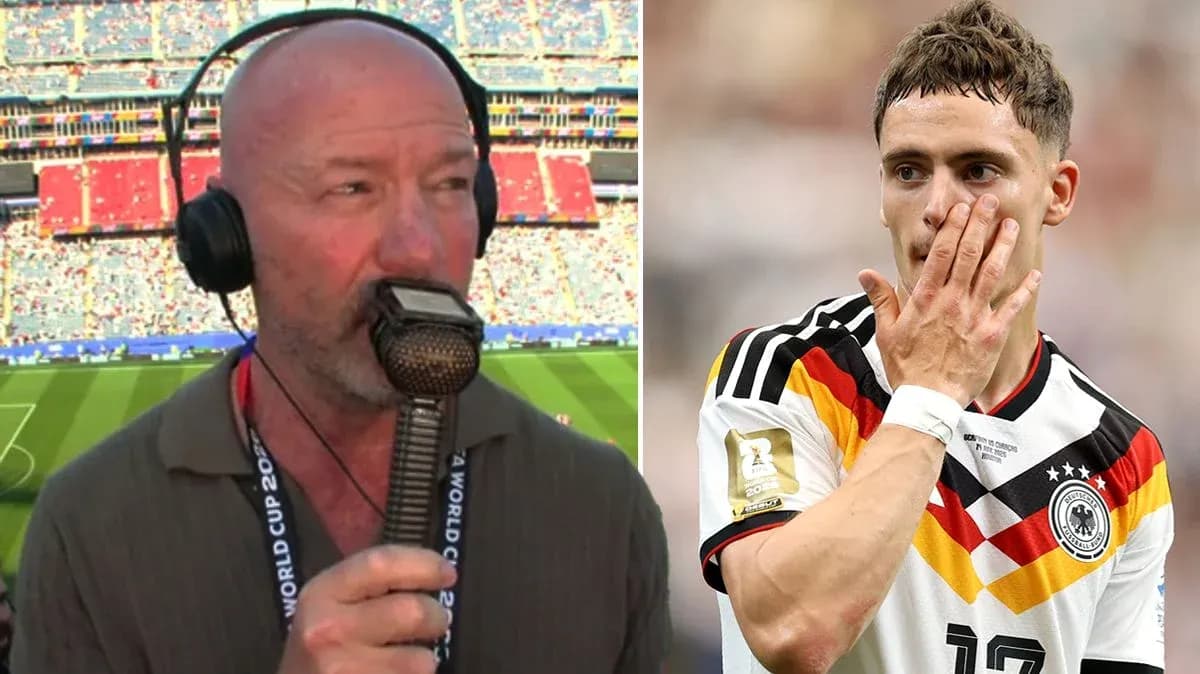
“You have to attack down the wings. There’s no alternative,” Klopp told Magenta TV after Germany’s elimination. He pointed to the gap between the quality of players such as Florian Wirtz and Jamal Musiala and what they had produced on the pitch. In three months, he said, people would be raving about them again. Just not now.
His analysis cut to the heart of Germany’s mental state. Paraguay played with the hunger of a side chasing history. Germany played with the burden of expectation. The stadium waited for the inevitable German turnaround. It never came.
“We let them off the hook,” Klopp said, before broadening the focus. “We can talk about the DFB. We absolutely have to change a few things.”
For many supporters, that “change” has a very specific shape. They want Klopp to leave his role as Red Bull’s head of soccer and lead the national team into Euro 2028 and the 2030 World Cup. The idea of the former Liverpool and Borussia Dortmund coach in the Germany dugout is not just popular. It is electrifying.
Klopp, though, did not bite when asked in Boston.
“I haven’t thought about that yet,” he said. He acknowledged that his name will always surface when the national team job is discussed, but refused to go further. “It’s not the moment to really talk about it. There’s nothing to say about it. I have a job that I enjoy very much. As far as I know, it’s not a part-time job.”
The decision the DFB can no longer dodge
Inside the Germany camp, Nagelsmann still has allies. Senior players have stood by him. Sporting director Rudi Völler has offered public backing. The DFB, once again, faces a familiar choice: loyalty or clarity.
This time, it cannot afford to repeat the same mistake for a third cycle.
The pattern from Löw to Flick to Nagelsmann is stark. A traumatic tournament exit. An instinct to protect the coach. A delay. Stagnation. Another crash. German football has already lost eight years to that loop.
If the federation believes Nagelsmann can still lead a reset, it must say so clearly and accept the consequences. If it does not, it must act with the ruthlessness it has so often lacked.
Because Klopp will not sit in that studio forever. And Germany, with another wasted World Cup behind it, is running out of time to convince the right man to step down from the gantry and into the dugout.