.svg&w=384&q=75 "naujapitch logo")
Football’s Media Narratives: Ego, Empathy and Bias
There are football opinions, and then there are football stories that say more about the storytellers than the players. This week delivered a few classics.
Kane: The “Humblest of Superstars” With No Ego… Except That Ego
The Daily Mail’s Craig Hope describes Harry Kane as a man without ego “in a traditional sense” and “the humblest of superstars,” before adding that he could not score the goals he does without “a stubborn streak of high self-regard.”
So which is it?
You cannot simultaneously strip a player of ego and then credit his success to a hardened belief in himself. High-level forwards live on that edge. Kane is no exception. Calling it a “stubborn streak of high self-regard” is just a verbose way of saying he has the ego every elite striker needs.
The contrast becomes starker when you remember the labels thrown at Jude Bellingham from the same corner: “divisive soloist,” “poster boy for moodiness,” “brand ambassador for petulance,” “an angry young man.” Kane’s self-belief is framed as admirable, almost quaint. Bellingham’s edge is painted as a character flaw.
Same sport. Same stage. Very different vocabulary.
Bayern, Barca and a Lesson in Condescension
Hope’s piece also tried to explain why Barcelona might lure Kane away from Bayern Munich, dropping this little explainer:
“Bayern is not Barca and the Bundesliga is not LaLiga. Der Klassiker is not El Clasico. Der Klassiker is Bayern versus Dortmund, by the way.”
As if no one watching European football has ever heard of Germany’s biggest fixture.
Barcelona do have a richer global mythology, but the framing of Bayern as merely “stable,” “familiar” and “logical” against the “irresistible” pull of Camp Nou ignores the reality on the pitch. Bayern went further in the Champions League last season. Bayern won more trophies. Stability at the top of the game is not a consolation prize; it is the point.
Romanticising Barcelona while talking down Bayern is less analysis, more branding exercise.
England, Brazil and the Japan “Boost”
Over at the Daily Mirror, Matty Hewitt reported on Brazil’s win over Japan with a line that jarred:
“It looked as though the Three Lions were going to be given a major boost after Japan took the lead in the first half, with the Canarinho at risk of exiting the competition.”
A “major boost”? England lost to Japan three months ago. Recent history does not exactly support the idea that Japan represent some kind of soft landing.
In fact, England have beaten Brazil more recently than they have Japan. Context matters. Results matter. Calling Japan a “boost” for England ignores both.
Cunha, “Classy Acts” and the Myth of Niceness
The same game produced a very different narrative from Jeremy Cross at the Mirror:
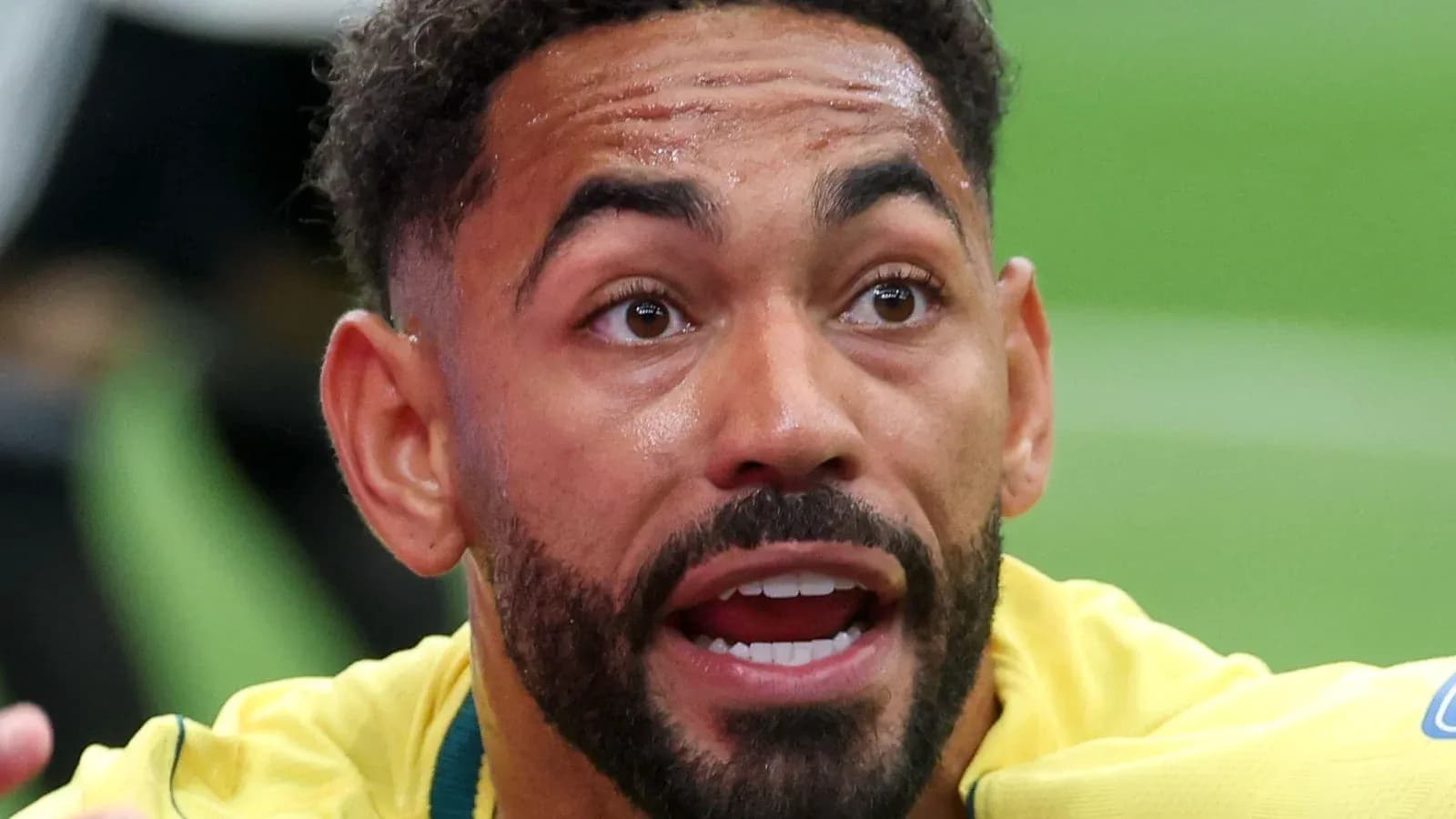
“Matheus Cunha’s classy World Cup act can’t hide uncomfortable Brazil truth for Man Utd star.”
The “classy act” in question? Cunha consoling Japan’s Ao Tanaka briefly before joining Brazil’s celebrations. A simple, human moment between professionals.
From there, we are told of a supposed “general feeling” and “awkward narrative” around Cunha: that he “lacks the grit to go with the guile needed to become a great footballer, instead of a good one.”
This is news to most. Cunha has hardly built a public image as a shrinking violet. He was once banned for removing an Ipswich security guard’s glasses during a fracas – not exactly the calling card of a player short on edge.
Yet a few seconds of compassion become Exhibit A in the case for him being “too nice,” a man whose kindness apparently blocks his path to greatness at Brazil and, by implication, at Manchester United.
The final line drives the point home:
“When Neymar decides to call time on his international career and pass the baton to someone else, the chances are he will hand it to Vinicius Jr – not Cunha.”
Of course he will. Vinicius Junior is already one of the best players in the world, a Ballon d’Or contender and the face of Real Madrid. That succession plan has nothing to do with Cunha taking a moment to comfort a distraught opponent. It has everything to do with talent, production and status.
Being decent in defeat or victory does not disqualify you from being decisive. Niceness is not a tactical weakness.
Nagelsmann, “Snapping” and the Gendered Headline
Germany’s World Cup exit on penalties to Paraguay brought another headline, this time from MailOnline:
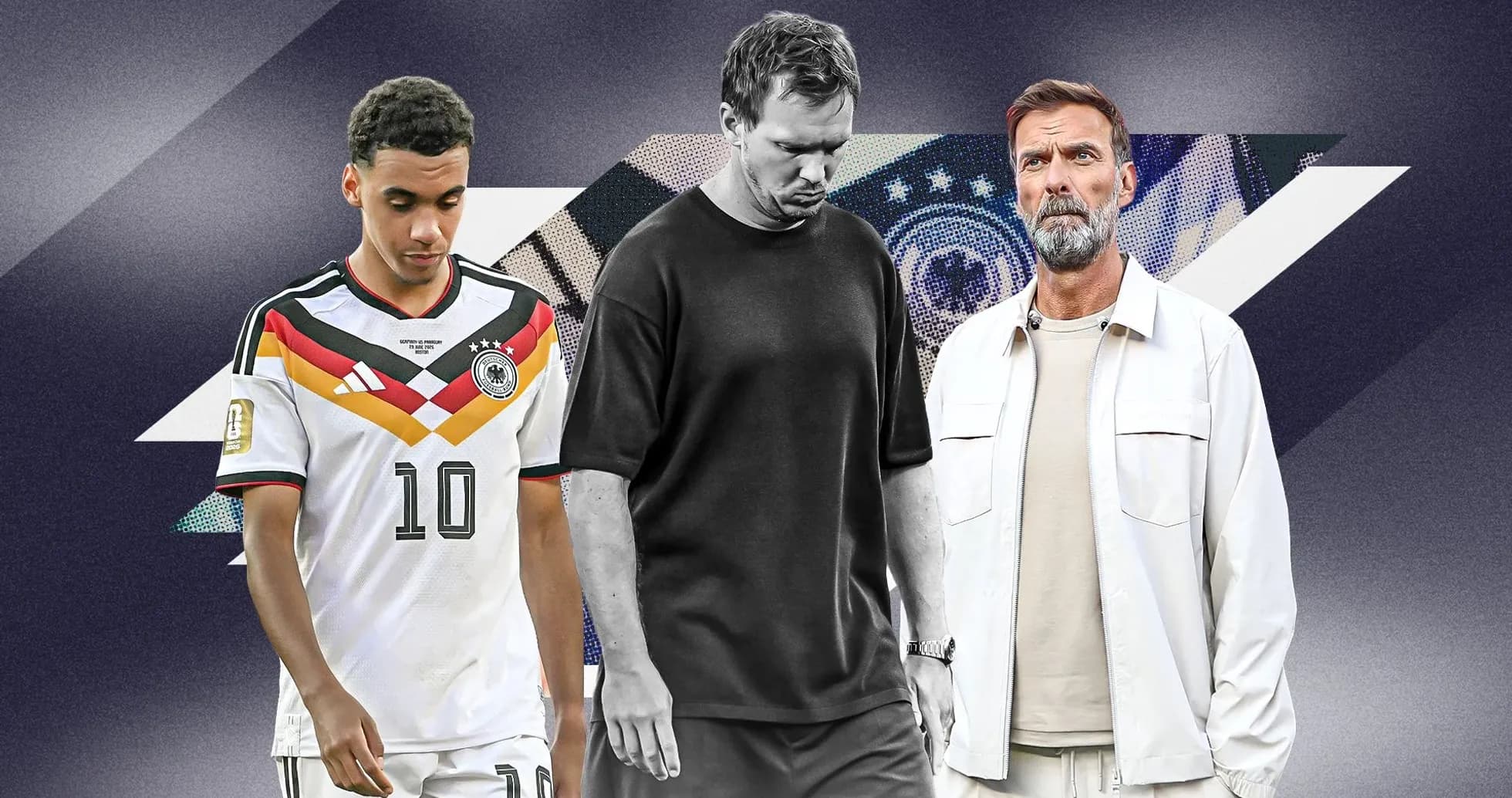
“Germany manager Julian Nagelsmann snaps at female reporter’s questioning after being knocked out of the World Cup by Paraguay – as Jurgen Klopp eyes up his job.”
Two choices stand out.
First, the decision to identify Lili Engels as a “female reporter” in the headline, only to refer to her simply as a “reporter” in the body of the piece. The gender tag is not there for clarity; it is there for effect. It changes the implication of the confrontation before you even see the clip.
Second, the word “snaps.” Watch the exchange and you see a tense, pressured coach and a journalist pushing him, both doing their jobs. It is not a meltdown. It is not a tirade. It is a slightly edgy interview in the immediate aftermath of failure.
Label it a “snap,” pair it with “female reporter,” and you inflate a routine post-match exchange into a morality play.
The Fixing Cloud
Away from the personalities, the Daily Mirror also reported:
“FIFA take decision over investigating Algeria vs Austria clash following match fixing claims.”
The mere presence of match-fixing allegations drags a game into a darker space. Once that word appears, trust is damaged even if no wrongdoing is eventually proven. The story is still unfolding, but the headline alone shows how quickly suspicion can wrap itself around a fixture.
Who Gets to Define the Story?
Strip all of this back and a pattern emerges.
Harry Kane’s ego becomes “humble.” Jude Bellingham’s edge becomes “petulance.” Bayern’s dominance becomes “logical” while Barcelona’s chaos is “irresistible.” Japan are framed as a “boost” for England despite beating them. Matheus Cunha’s empathy becomes a stick to beat his supposed lack of “grit.” Julian Nagelsmann’s testy interview becomes a “snap at a female reporter.”
These are not just descriptions. They are choices. They shape how fans see players, coaches and clubs long before a ball is kicked.
The game will always belong to those on the pitch. But as long as narratives like these keep circling, one question hangs over every headline: who is really being analysed here – the footballers, or the people writing about them?