.svg&w=384&q=75 "naujapitch logo")
England’s World Cup Journey: Unlikely Heroes and Michael Owen's Insight
Sixty years on from England’s greatest footballing hour, the lesson from 1966 still echoes: tournaments are built on unlikely heroes.
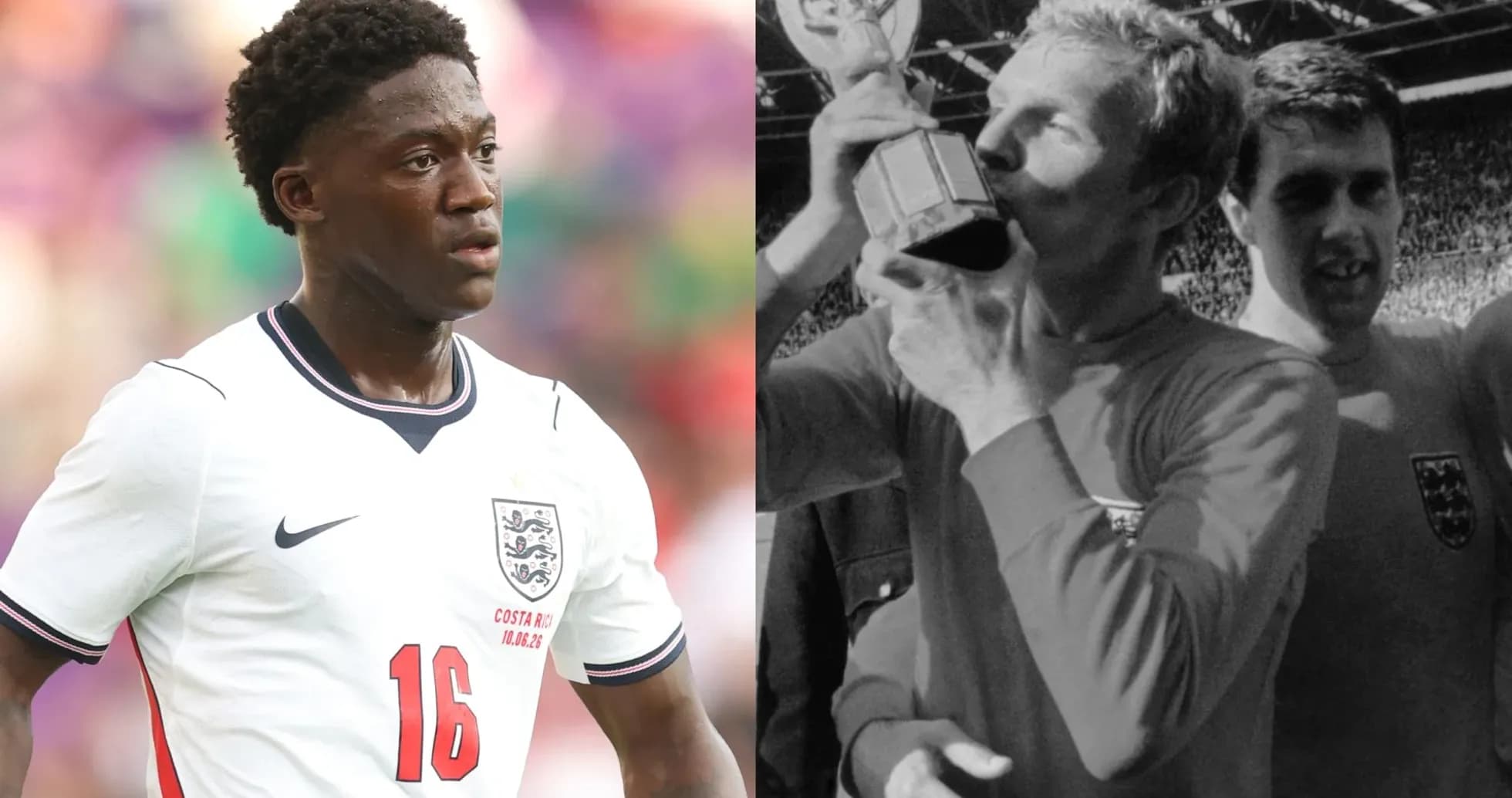
Back then, Wembley belonged to Jimmy Greaves. The Tottenham phenomenon was the superstar, the man every England fan expected to spearhead a home World Cup triumph. Geoff Hurst was the understudy, a solid striker at West Ham but very much second in line.
Then football did what it always does. It twisted.
Greaves suffered an untimely injury, the door opened, and Hurst walked through it with the kind of ruthless clarity that defines careers and shapes history. A hat-trick in the World Cup final against West Germany, the first and only of its kind, and his name carved permanently into English sporting folklore. So iconic was that day that fans were spilling onto the pitch before the referee finally confirmed it was, in the famous words, “all over”.
No England side has matched that achievement since. Hurst remains a reference point, a reminder that the biggest stages often belong not to the favourites, but to the men who seize their moment when fate suddenly points in their direction.
That is the backdrop Michael Owen reaches for when he looks at Kobbie Mainoo and this England team.
Owen, the former Three Lions forward and now UK ambassador for Casino.org, sees something in the young midfielder that England may yet need. Speaking to GOAL, he admitted he has sympathy for Mainoo as England search for calm and control in the middle of the pitch.
“I do a little bit, because I think he's definitely got the ability to play a role in the World Cup. And who knows? Things change, you get unlikely heroes,” Owen said.
He went straight back to 1966 to make his point.
“Our greatest moment ever in this country, winning the World Cup, who would have thought Geoff Hurst would have been playing? Jimmy Greaves was the best thing since sliced bread. My dad just raves about Jimmy Greaves. When anyone's talking about the best England XI and things like that, my dad's like, ‘Jimmy Greaves’ straight away. He was insanely good. Now, things happen, and all of a sudden, Geoff Hurst plays, and look what happens.”
That is the space Mainoo occupies now: on the fringes of the story, but close enough that one twist could drag him to the centre of it. Owen believes England’s campaign almost demanded that someone unexpected would emerge.
“There will be, or there could be, a surprise. And it could be Mainoo, you can't switch off,” he said, before turning his gaze to the wider picture and the level England have faced so far.
“Really, what we've done so far, if we had been knocked out, there would have been a huge inquest. I mean, nobody should be really in our league.”
Owen was unimpressed by how some of England’s earlier opponents had been framed.
“We've built it up as if Mexico was the hardest game of all time, but come on. Norway, if we played Norway at a neutral ground, let's say we play Norway in Spain tomorrow, people would expect us to beat them two or 3-0. So when you look back, we should be beating every single team.”
The real test, in his eyes, comes now.
“This [Argentina] is now the first game, this is a proper game, this is one that is a toss of a coin, this is one that's going to challenge us. But everything so far has been what you would expect from England, surely.”
This is the kind of fixture that defines eras. The sort that either hardens a side into champions or exposes the cracks everyone suspected were there. It is also exactly the type of occasion where a young midfielder, waiting patiently for his chance, can change his life in 90 minutes.
Owen knows tournaments rarely follow the script. The star names carry the burden, but history often belongs to the player nobody was talking about a month earlier.
“We will see, but if we're going to win it, there are going to be so many twists and turns and so many heroes that we won't even be thinking at the moment. And Mainoo could be one of them.”
Sixty years ago, that sentence would have had Hurst’s name in it, not Greaves’. The question now is simple: when this World Cup is remembered, whose name will be spoken in the same breath?