.svg&w=384&q=75 "naujapitch logo")
England Triumphs in 6–4 Victory Over France in World Cup 3rd Place Final
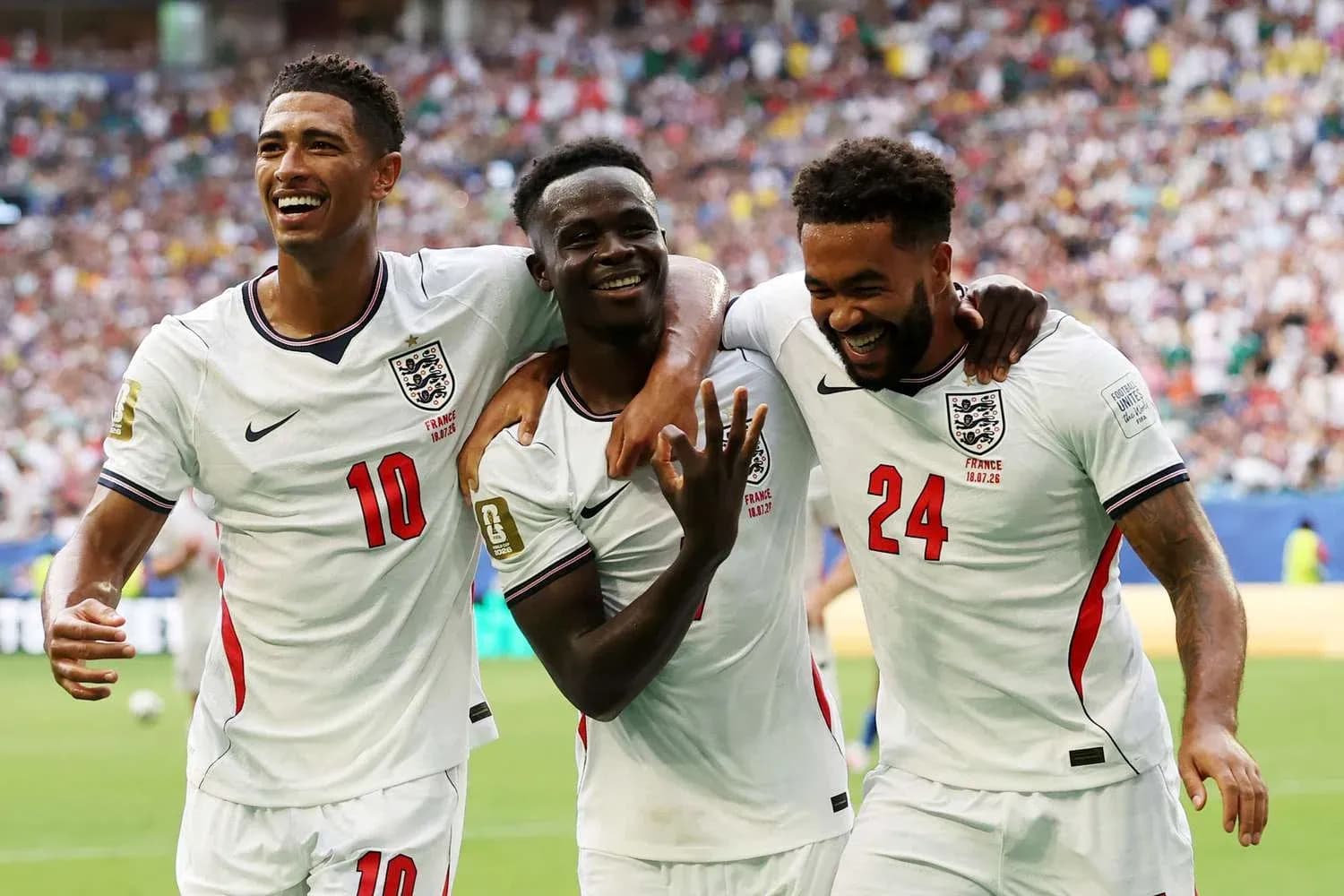
Under the Miami lights at Hard Rock Stadium, the World Cup’s 3rd Place Final brought together two sides whose entire tournament arcs were written in goals. France and England arrived with identical overall scoring output – 20 goals each in total this campaign – but with very different attacking signatures and emotional baggage. What followed, a 6–4 England win after a 4–0 first‑half blitz, felt like the logical extreme of those profiles.
I. The Big Picture – Two Heavyweights Built to Attack
Heading into this game, France had been ruthless across eight matches: 20 goals in total, split evenly between home and on their travels, with a total average of 2.5 goals per game. At home they had scored 15 and conceded 9; on their travels they had scored 5 and conceded 1. Overall, they had allowed 10 goals in total, for a total goal difference of +10 (20 scored, 10 conceded). Their Group I campaign had been perfect: 3 wins from 3, 10 goals for and 2 against, a group‑stage goal difference of +8. Didier Deschamps’ side leaned heavily into a 4‑2‑3‑1 used in all eight matches, and he kept faith with that here.
England’s route under Thomas Tuchel was more elastic. Across eight matches they also scored 20 in total, but the distribution told a bolder story: 13 goals on their travels, only 7 at home. On their travels they averaged 3.3 goals per game, compared to 1.8 at home; overall they sat at 2.5 goals per match. Defensively, they had conceded 12 in total – 5 at home, 7 on their travels – for a total goal difference of +8. Group L had been navigated with 7 points from 3 games, 6 goals scored and 2 conceded.
In Miami, the contrast in setups was stark. France’s 4‑2‑3‑1 featured M. Maignan behind a back four of M. Gusto, I. Konate, M. Lacroix and T. Hernandez. W. Zaire‑Emery and A. Rabiot formed the double pivot, with an inventive band of three – M. Olise, R. Cherki, D. Doue – supporting K. Mbappe as the lone forward.
England lined up in a 4‑1‑4‑1, Tuchel’s more recent tweak from his usual 4‑2‑3‑1. D. Henderson started in goal, shielded by J. Quansah, E. Konsa, M. Guehi and D. Spence. D. Rice anchored in front of the defence, with a high‑energy quartet of B. Saka, M. Rogers, E. Eze and M. Rashford behind centre‑forward I. Toney. It was a structure designed to spring forward quickly and punish transitions – exactly where England’s away scoring numbers had been so devastating.
II. Tactical Voids – Absences and Discipline
Both coaches had to navigate notable absences. For France, W. Saliba was ruled out with a back bruise. While not a starter here, his status as one of Deschamps’ key defensive options meant that the centre‑back hierarchy was thinner; M. Lacroix’s inclusion alongside I. Konate placed a great deal of responsibility on a pairing less tested at this level.
England were without K. Mainoo due to a wound, removing one of Tuchel’s more progressive midfield options. That absence partly explained the decision to use D. Rice as a lone sentinel, trusting his positional discipline and ball circulation rather than pairing him with a second deep midfielder.
Disciplinary trends framed the emotional texture of the match. France’s yellow cards this tournament were skewed late: 33.33% of their bookings came between 76–90 minutes, with additional spikes at 0–15, 16–30, 61–75 and 91–105. England’s bookings were more evenly spread but peaked at 31–45 and 61–75 (25.00% each), with a further 12.50% between 0–15, 16–30, 46–60 and 91–105. Importantly, England had already seen a red card this campaign, shown between 46–60 minutes, and J. Quansah arrived in Miami carrying that history: in 200 minutes of action he had collected one yellow and one red.
France’s penalty record also hinted at psychological stress points. They had earned 2 penalties in total, scoring 1 and missing 1, a 50.00% conversion rate that made any spot‑kick far from routine. England, by contrast, had been perfect from 12 yards: 3 penalties taken, 3 scored, no misses.
III. Key Matchups – Hunter vs Shield, and the Engine Room
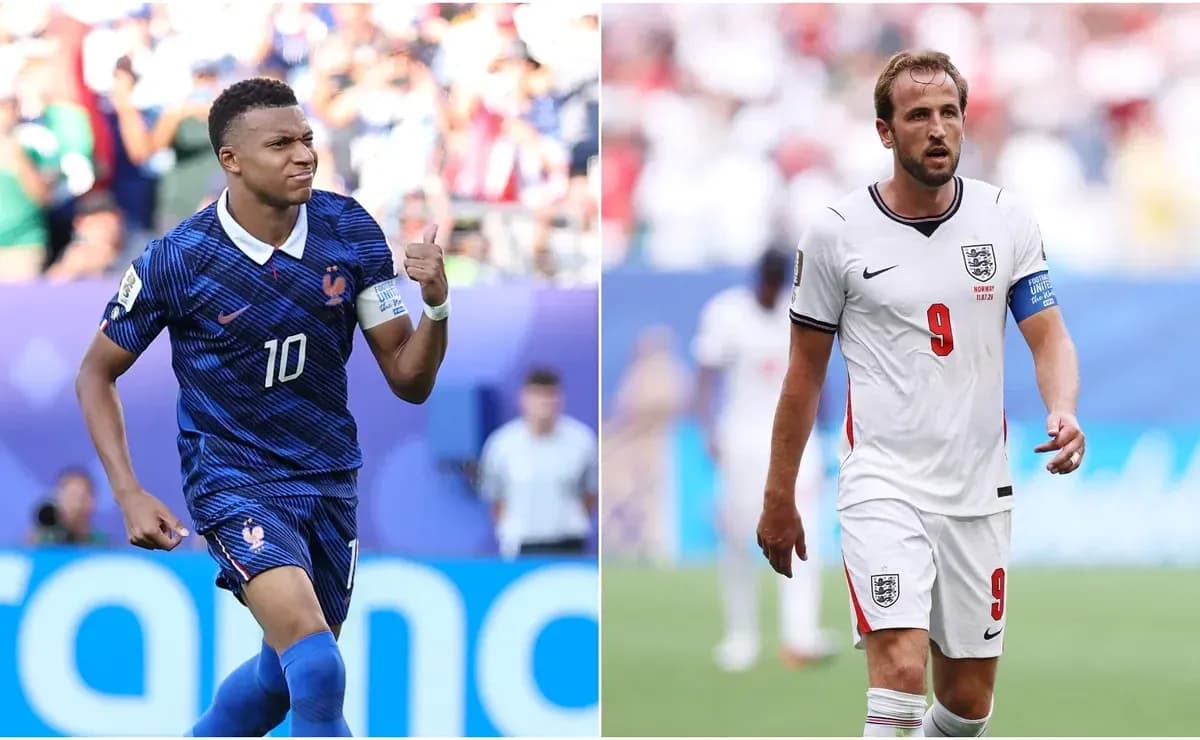
The headline duel was obvious: Kylian Mbappe against England’s defensive structure. Mbappe entered as the tournament’s leading scorer with 10 goals and 4 assists in 8 appearances, backed by 36 shots (23 on target) and 18 key passes. His dribbling volume – 36 attempts, 13 successful – and his ability to win penalties (1 earned, 1 scored, 1 missed) made him the focal point of every French surge.
Tuchel’s answer was layered rather than individual. The first shield was D. Rice, one of the competition’s most complete midfielders: 571 minutes, 331 passes at 92% accuracy, 11 tackles, 4 blocks and 5 interceptions. His job was to close the central lanes into Mbappe’s feet and track R. Cherki’s drifting between the lines. Behind him, E. Konsa and M. Guehi were tasked with holding a high line without overcommitting into Mbappe’s channel runs, while J. Quansah’s previous red card made his right‑side duels with D. Doue and T. Hernandez a potential fault line.
On the flanks, the “Engine Room” battle had its own subplots. M. Olise, the World Cup’s leading provider with 7 assists in 8 games, carried 411 completed passes at 86% accuracy, 17 key passes and 16 successful dribbles. His duel with M. Rashford and D. Spence on France’s left side was as much about pressing as creation; if Olise could drag England’s right‑back out of shape, lanes would open for Mbappe and late runs from W. Zaire‑Emery.
For England, B. Saka was the creative fulcrum in wide areas. With 3 goals and 3 assists in 7 appearances, 10 shots (7 on target) and 8 key passes, he offered both end product and ball progression. His matchup against T. Hernandez and the help defence of A. Rabiot was pivotal: every time Saka isolated Hernandez, France’s back line had to tilt, exposing gaps for M. Rogers and E. Eze to attack.
Behind those artists, the more rugged battle belonged to Rice and France’s double pivot. W. Zaire‑Emery’s energy and A. Rabiot’s experience had to contain England’s central runners while still feeding Olise and Cherki. Any hesitation in their pressing triggers allowed Rice to step forward and connect with the advanced four, turning England’s 4‑1‑4‑1 into a wave of five attackers.
IV. Statistical Prognosis – A Game Destined to Open Up
Even before a ball was kicked, the numbers screamed volatility. France’s home matches averaged 2.5 goals scored and 1.5 conceded; England’s games on their travels averaged 3.3 scored and 1.8 conceded. With both sides sitting on 20 goals in total this campaign and neither built around deep, conservative blocks, a low‑scoring stalemate was statistically unlikely.
France’s reliance on a single formation and a narrow creative core around Mbappe and Olise meant they could generate sustained pressure but were vulnerable in transition, especially after committing full‑backs high. England’s 4‑1‑4‑1, powered by Saka, Eze and Rashford behind Toney, was tailor‑made to exploit those spaces, particularly in the first half when Tuchel’s sides typically press with the greatest intensity.
The disciplinary and penalty profiles added further fuel. France’s late‑game yellow surge suggested that if they were chasing the match, emotional control could fray. England’s prior red and Quansah’s record hinted at a high‑risk, high‑reward approach in duels. Combine that with France’s 50.00% penalty conversion and England’s perfect 100.00% from the spot, and you had a game where marginal calls in the box could swing momentum sharply.
In the end, the 6–4 scoreline mirrored the data more than it defied it. England’s away‑style attacking ferocity translated to neutral turf, overwhelming France’s back line in a devastating first half. France, powered by Mbappe’s relentless threat and Olise’s craft, found their own surges after the interval but were always chasing a deficit created by structural imbalances that had been visible in the numbers all along.
This 3rd Place Final did not just entertain; it crystallised what these squads had been all tournament: two sides defined by their ability to create and convert chances, and ultimately separated by England’s slightly more adaptable structure and cleaner edge in the decisive zones.