.svg&w=384&q=75 "naujapitch logo")
England's Tactical Masterclass in 6-4 Victory Over France
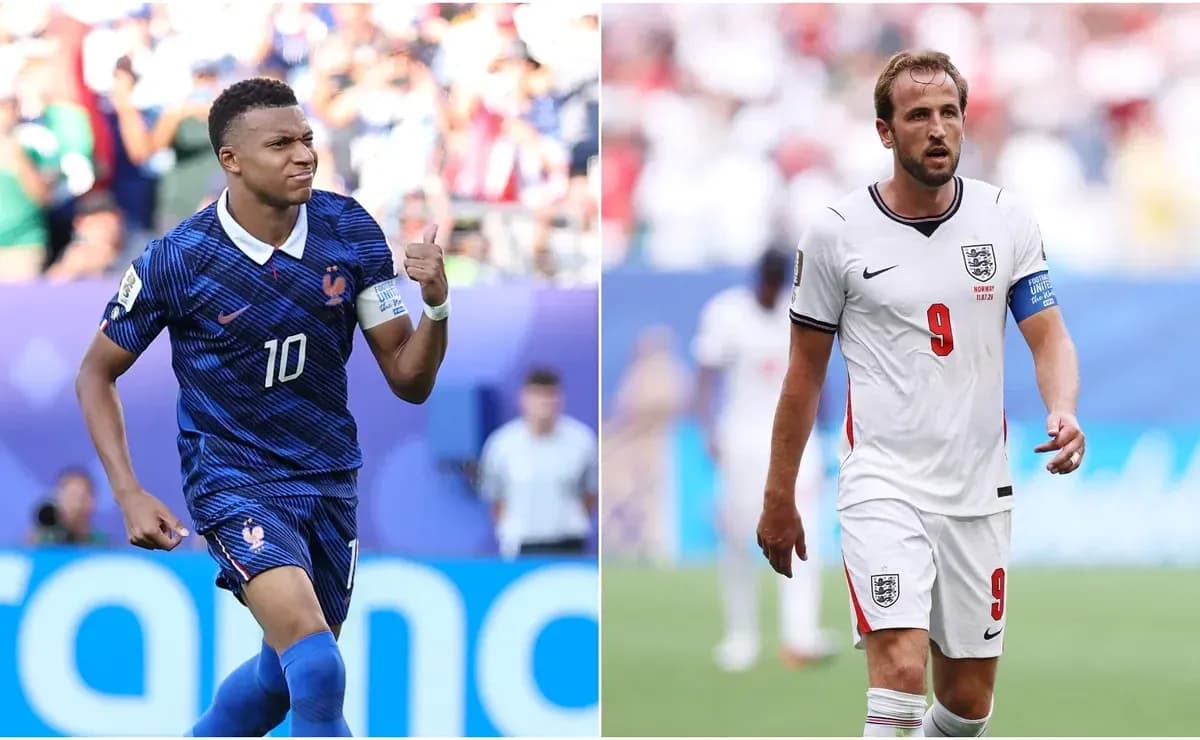
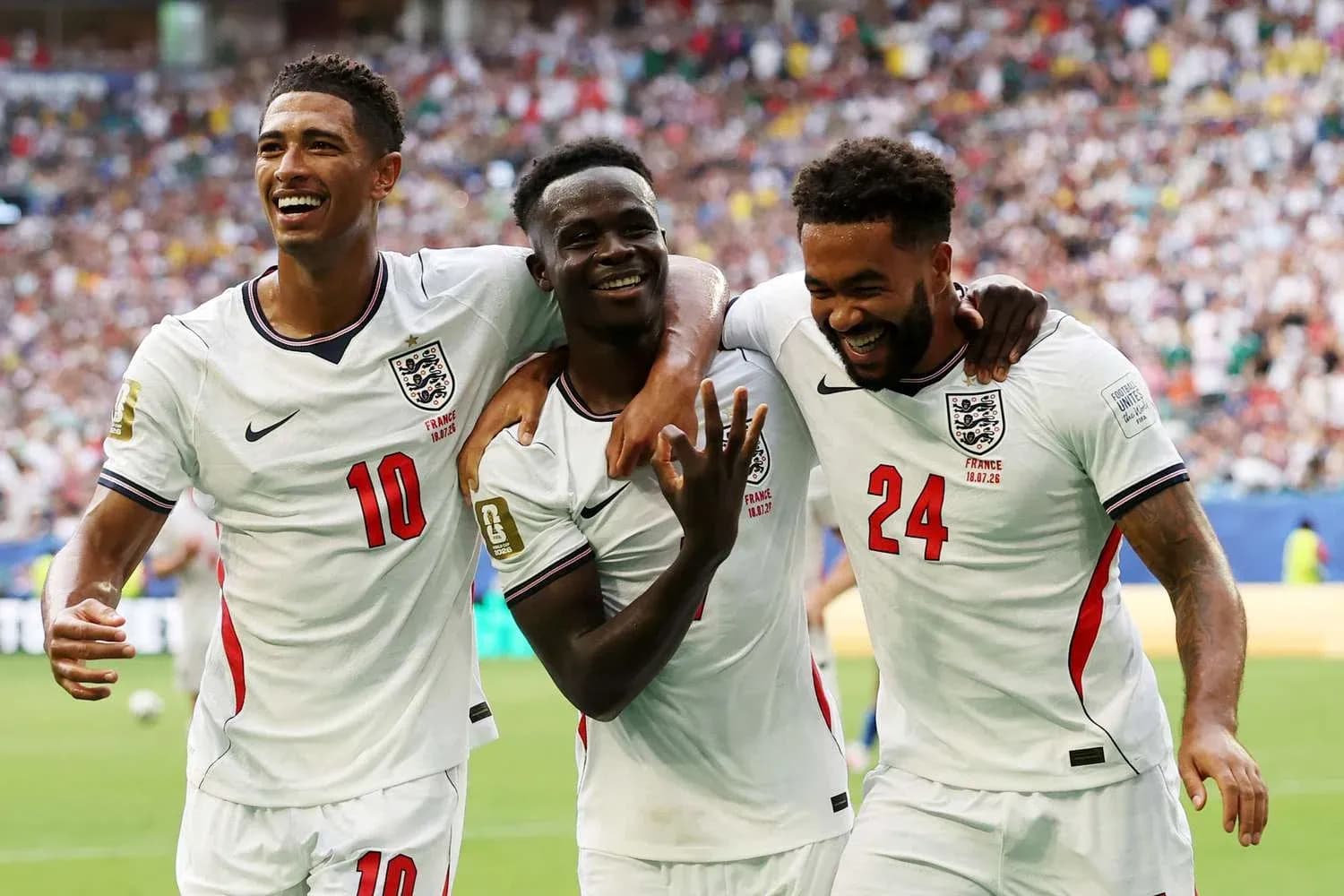
France’s 6-4 defeat to England at Hard Rock Stadium, Miami Garden was an attacking spectacle shaped more by structural imbalances and in‑game adjustments than by raw finishing alone. England’s early 4-0 lead by half-time framed everything that followed: France were forced into a high‑risk, high‑press second half that produced four goals of their own but never fully closed the defensive gaps England had exploited.
Tactical Overview
Tactically, the opening phase belonged entirely to Thomas Tuchel’s England. With Declan Rice as the single pivot and Bukayo Saka and Marcus Rashford operating as narrow wide midfielders, England built through the middle and half-spaces rather than the touchlines. The statistical profile backs this up: 54% possession, 515 total passes with 467 accurate at 91%, and 16 of their 19 shots coming from inside the box. This was not a counter-attacking game; it was controlled, positional dominance that pinned France back.
France, under Didier Deschamps, started with a midfield of Warren Zaïre-Emery, Adrien Rabiot, Michael Olise, Rayan Cherki and Désiré Doué behind Kylian Mbappé. On paper this offered technical quality and creativity, but in practice it left large defensive distances between the lines. England repeatedly found Rice free in the first line of build-up, and from there vertical passes into Morgan Rogers and Eberechi Eze turned France’s midfield around. The early goals for Rice and Ezri Konsa came from precisely this pattern: France’s midfielders were attracted to the ball, leaving the edge of the box and second phases unprotected.
The numbers underline France’s structural problem in the first half. They finished with the same Total Shots as England (19-19) and a higher xG (2.87 vs England’s 2.58), but trailed 4-0 at the break. That gap is explained less by finishing luck and more by chance quality and defensive organisation. England’s 16 shots inside the box to France’s 12 show how often they were able to arrive in prime zones with bodies in the area, while France’s early efforts were more speculative and less connected.
Second Half Adjustments
At half-time, Deschamps executed a radical reset. Four substitutions at 46' — Bradley Barcola (IN) for Désiré Doué (OUT), Ousmane Dembélé (IN) for Rayan Cherki (OUT), Dayot Upamecano (IN) for Ibrahima Konaté (OUT), and Lucas Digne (IN) for Theo Hernández (OUT) — completely reshaped the French structure. The wide threat of Dembélé and Barcola pushed England’s full-backs deeper, and Mbappé was freed to roam more centrally and between the lines rather than playing as a fixed reference point.
The impact was immediate. France’s attack, which had been sterile despite volume, became vertical and incisive. They ended with 12 shots inside the box and 9 shots on goal, a clear sign that the second-half adjustments produced higher-quality looks. The passing data is revealing: 445 total passes with 405 accurate (91%) suggests France were technically secure, but the difference after the break was where those passes were played — higher up, into Mbappé’s feet and into the channels for Barcola and Dembélé.
England's Response
England’s response was more conservative. Tuchel’s changes at 79' — Jude Bellingham (IN) for Eze (OUT) and Elliot Anderson (IN) for Ivan Toney (OUT) — and later Reece James (IN) for Jarell Quansah (OUT) at 83', then Trevoh Chalobah (IN) for Marc Guéhi (OUT) at 90', were designed to restore control and shore up the back line. The statistical footprint shows a team trying to manage the game: only 8 fouls committed compared to France’s 14, and 4 corner kicks to France’s 3, indicating England were largely dictating territory even as they absorbed more pressure.
From a defensive perspective, both sides were porous. Mike Maignan (France) faced 11 shots on goal and made 5 saves, while Dean Henderson (England) faced 9 shots on goal and made 4 saves. The goals prevented metric is identical at 0.05 for each side, underlining that neither goalkeeper significantly outperformed the quality of chances faced; the defensive lines in front of them were the real issue. England’s 6 Blocked Shots to France’s 4 highlight their greater commitment to last-ditch defending as France chased the game in the second half.
Match Dynamics
The foul count and lack of cards (no Yellow Cards or Red Cards recorded for either team) point to a surprisingly open, low-interruption contest for a World Cup 3rd Place Final. France’s 14 fouls were often tactical, attempts to halt England’s transitions once Deschamps pushed his full-backs higher and committed more bodies forward. England’s lower foul count fits with their more structured, possession-based control for long stretches.
Statistically, the match reads as a study in game-state dynamics. England’s early blitz, powered by a compact mid-block and ruthless exploitation of France’s loose spacing, built a 4-0 platform that allowed them to accept a degree of second-half suffering. France’s xG edge and equal shot volume reflect their dominance once the game became stretched, but the defensive damage from the first half was too great. England maintained efficiency inside the box, added late goals to manage momentum, and used their superior possession and pass completion to keep France at arm’s length whenever the contest threatened to spiral.
In sum, this was a high-variance, high‑tempo match where England’s early structural superiority and box occupation outweighed France’s later offensive surge and marginal xG advantage.