.svg&w=384&q=75 "naujapitch logo")
World Cup: Storms, Protests, and Historic Wins
The World Cup’s North American swing delivered everything but calm on Sunday: thunderstorm warnings in Philadelphia, political noise in Los Angeles, history in Vancouver and Miami, and a curious flag controversy for England.
All of it unfolded while France’s late kick-off against Iraq sat under a cloud – literally.
Storm threat hangs over France–Iraq
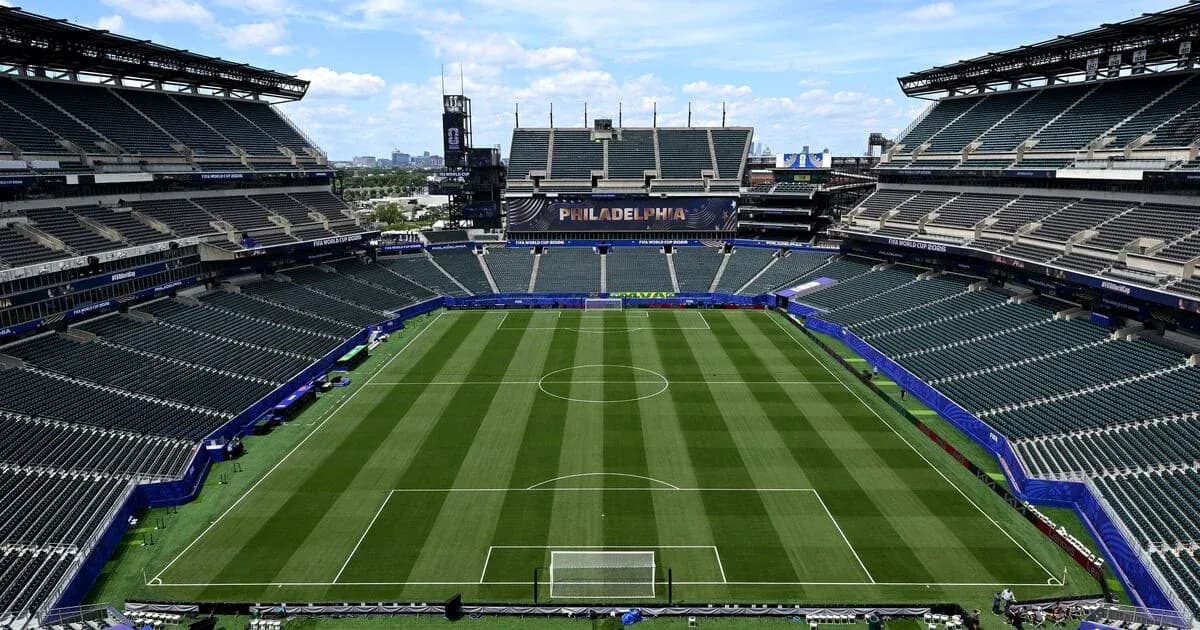
France’s meeting with Iraq in Philadelphia, scheduled for a 10pm kick-off, is at the mercy of an “apocalyptic” forecast.
Local projections warn of several severe thunderstorms, damaging winds, intense lightning and even a risk of isolated tornadoes around the city. Under FIFA protocol, a single lightning strike within eight miles of the stadium triggers an immediate shutdown.
“They'll start to evacuate the stadium to the main concourse and seek emergency shelter,” explained Lauren Lambrugo, chief operating officer of Philadelphia Soccer 2026. “And then it has to wait 30 minutes prior to them bringing everybody back on the field.”
If the storm sits overhead, that 30‑minute clock keeps resetting. A flagship World Cup fixture could quickly turn into a long, nervous wait.
Salah dances as Egypt finally arrive on the World Cup stage
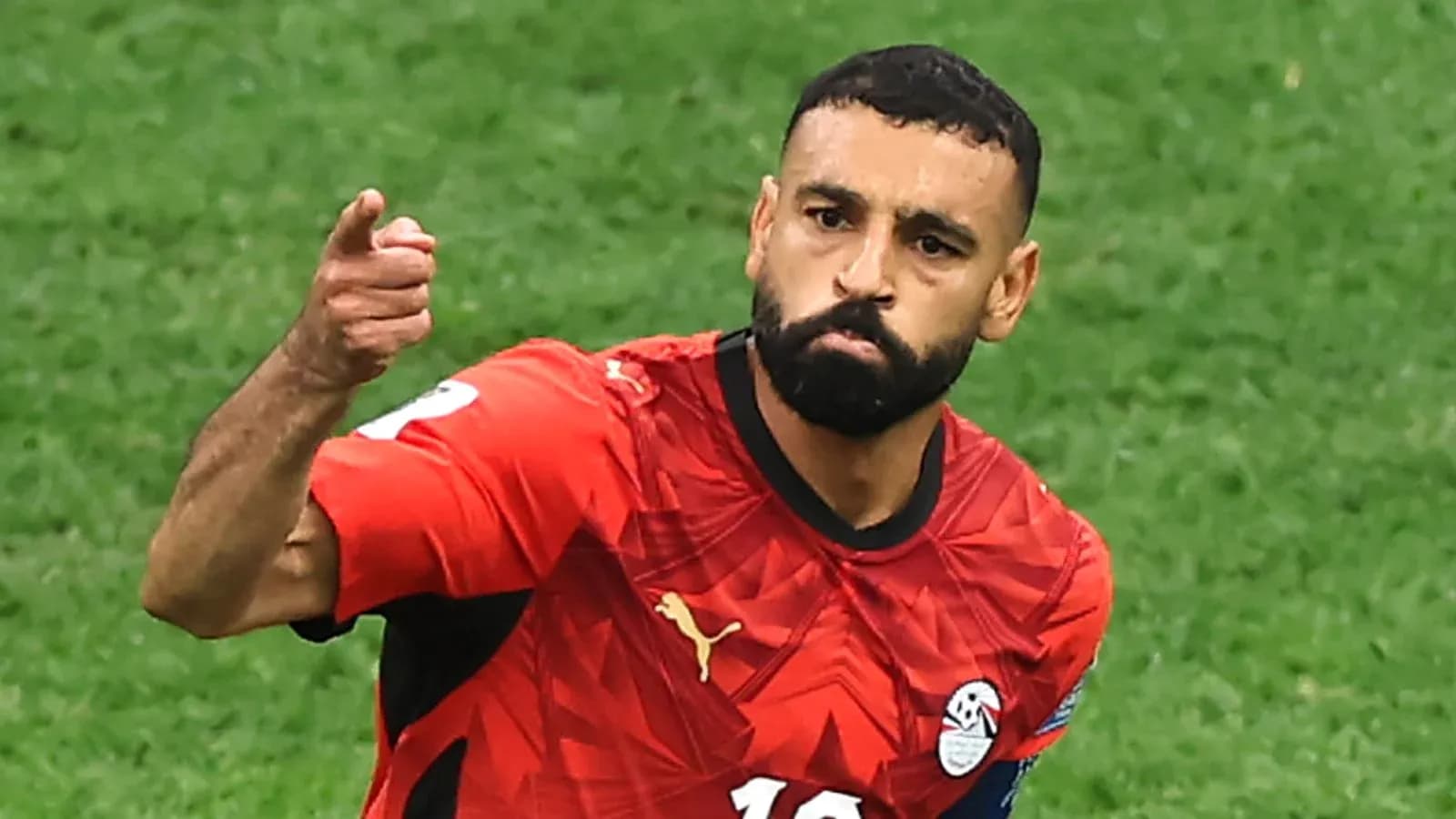
In Vancouver, the night belonged to Egypt and Mohamed Salah.
New Zealand had the script in their hands at half-time. Finn Surman’s towering header from a corner – the kind that belongs on a coaching manual – gave them a 1-0 lead and left Egypt staring at another World Cup disappointment. Salah had gone closest with a free-kick that curled wide. It was flat, anxious, and nowhere near a classic.
Then Egypt woke up.
Ziko struck just before the hour, finishing off a spell of relentless pressure to level the game and flip the mood. From that moment, there was only one team playing with conviction. The Pharaohs swarmed forward, and the sense of inevitability grew.
Salah delivered it. A sharp one-two, a low, ruthless finish: his first goal of the tournament, and the moment Egypt stepped into World Cup history with their first ever win at the finals. Trezeguet then sealed it, making it 3-1 as New Zealand unravelled under the second-half onslaught.
The scenes afterwards matched the scale of the achievement. Footage emerged of Salah in the streets of Vancouver, singing and dancing among fans, celebrating a victory that had taken Egypt a lifetime to find.
For New Zealand, the wait goes on. Nine World Cup games now, and still no win.
Cape Verde keep swinging in Miami, Uruguay stumble again
In Miami, Cape Verde’s debut campaign continued to defy logic and reputation.
They went ahead in style. Kevin Pina stepped up from around 30 yards and detonated a free-kick into the top corner – a laser that stunned Uruguay and lit up the stadium. Marcelo Bielsa’s side, already under scrutiny back home, suddenly looked rattled.
Uruguay hit back with a familiar ferocity. First, a ball into the box was headed against the post before Araujo reacted quickest, diving to nod in the rebound. Moments later, a deep cross was headed back across goal by Araujo, and Canobbio was waiting to guide it past Vozinha. Two quick strikes, 2-1, and the South Americans seemed to have reasserted order.
They hadn’t.
Cape Verde refused to fold. With Uruguay trying to manage their lead, Helio Varela pounced just three minutes after coming off the bench. Fernando Muslera got caught in no man’s land, Varela read the panic, and rolled the ball into an empty net for 2-2 – another historic moment for a nation that is rapidly becoming the story of these group stages.
Cape Verde could even have stolen it late on. Instead they left with a point and a growing belief. Uruguay departed with questions, again. Two draws from two, a fractured camp reported back home, and now a decisive meeting with Spain to come.
Bielsa confirmed that neither Giorgian de Arrascaeta nor Ronald Araujo will be available for that clash or any potential round-of-32 tie. They have not played a minute at this tournament. Lose to Spain, and if either Cape Verde or Saudi Arabia win their match, Uruguay are likely out.
Spain reset, Yamal announces himself
Spain, stung by a goalless opening draw against Cape Verde, responded in Atlanta with the kind of controlled fury you expect from European champions who feel slighted.
Lamine Yamal, restored to the starting XI, changed the whole temperature of their play. It took him minutes to make it count. Mikel Oyarzabal whipped a teasing ball across the box, and Yamal arrived to tap in his first World Cup goal. The teenager, who once watched the tournament from a classroom, now has his own moment on the biggest stage.
Spain never looked back. Oyarzabal, poor in the opener, flipped the narrative with two goals of his own before the first drinks break. One as provider, one as finisher, then another tidy strike from close range. From 0-0 angst to 3-0 swagger in the space of 20 minutes.
Saudi Arabia never recovered. In the second half, Marc Cucurella’s effort deflected in off Hassan Al Tambakti for the eighth own goal of the finals, completing a 4-0 rout. Spain even had a fifth chalked off in stoppage time after VAR ruled Ferran Torres offside.
They barely needed to shift out of third gear. One foot is firmly in the knockouts.
Belgium and Iran serve up frustration in LA
Los Angeles offered tension without quality as Belgium and Iran stumbled to a 0-0 draw that pleased nobody.
Iran thought they had landed the first blow when Mehdi Taremi found the net in the first half, only for VAR to intervene and rule the goal out for offside. It was a sharp reminder of their threat, but not a sign of things to come.
Chances were sparse. A goalmouth scramble early in the second half saw Belgium swing repeatedly at loose balls inside the six-yard box, only for Iran’s defenders to throw themselves in front of everything.
Then came the flashpoint. Nathan Ngoy hauled down Taremi just past halfway with no other defender close. The referee produced a red card for denying a goalscoring opportunity, and VAR backed the decision. Belgium, already labouring, were left with 10 men and a mountain to climb.
They almost scaled it anyway. Maxim De Cuyper had the game’s best late chance, but shot straight at Alireza Beiranvand. The stalemate leaves both sides on two points from two games in Group G, with Belgium facing New Zealand next and Iran meeting buoyant Egypt.
Roy Keane, watching on ITV, did not spare them. He branded the game “rubbish”, criticising the passing, movement and decision-making from both sides, and arguing Iran looked more comfortable when simply sitting deep and defending.
Anthem boos and protests shadow Iran’s campaign
Iran’s football has been impossible to separate from the politics swirling around it.
Their national anthem was booed for a second consecutive game, a soundtrack that reflects the deep divide between sections of the fanbase and the team. Captain Alireza Jahanbakhsh tried to bridge that gap after the match, stressing that the players represent all Iranians, inside and outside the country, “with whatever ideology, whatever preferences they have,” and that their job is to play with heart and make people happy on the pitch.
Outside the stadiums, the message has been sharper. Iranian supporters in Los Angeles used the World Cup stage to call for the fall of the Islamic Republic and insisted the national team “does not represent us”. The protests are expected to continue as Iran’s campaign goes on.
England: injuries, curfews and a banned flag
Away from the pitch, England’s World Cup has taken a curious turn.
First, the flag. An England banner featuring a submarine was blocked from entering the stadium for the opener against Croatia. FIFA’s regulations prohibit military imagery on flags, and security staff enforced the rule at the gate. Barrow FC, whose identity is wrapped up in the submarine symbol, responded with a tongue-in-cheek post on social media, blurring out the image.
On the football side, Thomas Tuchel’s squad is juggling fitness concerns and strict discipline ahead of Tuesday’s meeting with Ghana in Boston. Declan Rice remains a doubt after hobbling off in the win over Croatia. Bukayo Saka arrived with an Achilles issue, managed his own programme on Saturday, and missed group training – but then completed a full session behind closed doors in Kansas City on Sunday.
Saka insists he is fine and that the problem has not worsened, yet Tuchel had suggested he might not risk the winger until the final group game against Panama. Now the England manager has a genuine selection headache. Push Saka now to secure early qualification, or hold him back and trust the depth?
Off the field, Tuchel has set a clear curfew. Defender Dan Burn revealed that players had to leave a concert early to make it back in time. It came on a friends-and-family day, with Burn’s wife flying in from Dallas, and an evening at an Ella Langley country gig that saw the towering defender in full cowboy hat and boots alongside Jason Steele and captain Harry Kane.
The message is obvious: enjoy the tournament, but on the manager’s terms.
Doku’s dilemma: country or childbirth?
No story has divided opinion quite like Jeremy Doku’s.
The Manchester City winger missed Belgium’s draw with Iran due to a chest infection, yet the bigger debate surrounds his plan to leave the World Cup camp for the birth of his first child, expected in the second week of July.
Doku has been clear. “It's my first child, so I would definitely want to be there,” he said. “If you ask me what I want, my answer is that nobody wants to miss the birth of their first child. But I also know that football involves many other considerations. I know the federation supports its players and understands their situations. We'll see what we can do.”
French TV presenter France Pierron sparked outrage by attacking that stance on air, calling the birth of a child a “disgusting moment” where the father is “useless”. She argued that leaving a World Cup – “a childhood dream come true” – was wrong. The backlash was immediate. Pierron has since apologised and been suspended, according to reports in France.
Within the game, sympathy lies largely with the player. England forward Ollie Watkins, himself a father of two, backed Doku’s right to choose.
“It only happens once, your first child,” Watkins said. “Welcoming them into the world is a blessing, and you don't get that opportunity again… I don't think it's anyone else's business. If he goes back and does that, that's fair enough.”
The decision, whenever it comes, will say as much about football’s evolving culture as it does about one winger’s priorities.
Respect, risk and what comes next
The tournament narrative tightens with every game now.
Brazil midfielder Lucas Paqueta spoke of “great respect” for Scotland before their Group C meeting, even though a draw would send both through. He insisted Brazil will still play to win. Cape Verde know a victory over Saudi Arabia will send them into the knockouts at the first attempt. Uruguay must find a performance against Spain or face the consequences.
Spain look ominous again. Egypt have finally joined the World Cup winners’ club. Belgium and Iran are stuck in the mud. England’s path is promising but fragile, resting on the fitness of key men and the judgment of a demanding manager.
And somewhere over Philadelphia, the storm clouds are gathering, threatening to halt France and Iraq in their tracks.
The football is gripping. The noise around it is growing louder. How many of these teams will still be standing when the weather – sporting and otherwise – finally clears?