.svg&w=384&q=75 "naujapitch logo")
Egypt's Historic World Cup Knockout Victory and Solidarity with Palestine
Egypt’s players stood in a tight circle on the Dallas Stadium pitch, arms locked, faces drained. Ninety minutes hadn’t settled it. Neither had extra time. The World Cup debutants were one shootout away from the greatest night in their football history – or a brutal exit.
They chose history.
A 4-2 penalty victory over Australia, after a tense 1-1 draw, carried Egypt into the last 16 and lit up screens and streets from Cairo to Gaza. It was their first-ever World Cup knockout win. It felt like much more than that.
A breakthrough on the pitch
The game itself was edgy, cautious, the kind of round-of-32 tie where one mistake can haunt a generation. Egypt struck first, and early. In the 13th minute, Emam Ashour timed his run to perfection and met a cross with a firm header, steering it past the goalkeeper to give his side a precious lead.
That should have settled them. It didn’t.
Australia grew into the contest, pressed higher, and kept forcing Egypt back. Ten minutes into the second half, the pressure told in the cruellest way for Mohamed Hany. A defensive intervention went wrong, the ball ending up in his own net, and Egypt’s advantage vanished with a stunned silence from their fans.
From there, the match turned cagey. Egypt, wary of overcommitting, tried to manage the tempo. Australia probed without fully breaking through. Half-chances came and went. Extra time dragged, heavy-legged and anxious, both sides more afraid to lose than bold enough to win.
So it went to penalties.
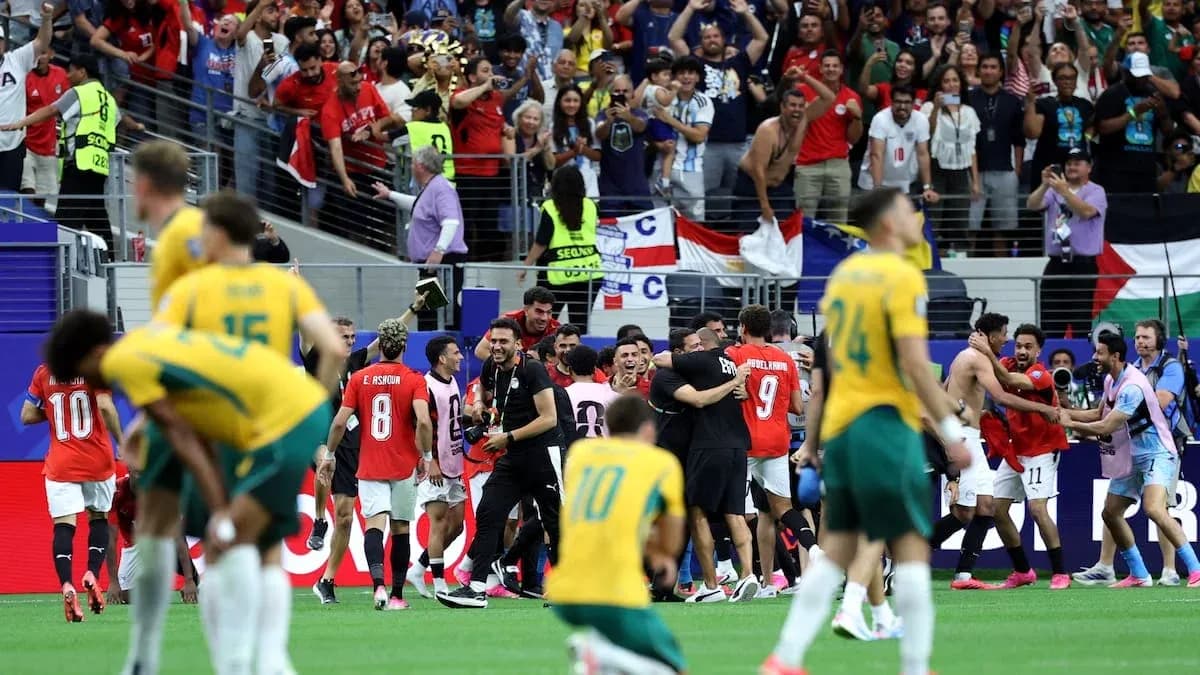
Hossam Abdelmaguid, calm amid the chaos, rolled in the decisive kick after Harry Souttar and Lucas Herrington failed from the spot for Australia. As his shot hit the net, Egyptian substitutes and staff exploded from the touchline, sprinting towards their match-winner. A World Cup milestone secured in the most nerve-shredding way possible.
Next, a last-16 showdown awaits against Argentina or Cape Verde. On football terms alone, that is a monumental task. But in Dallas, the story refused to stay just about football.
Hassan’s dedication and a shared celebration
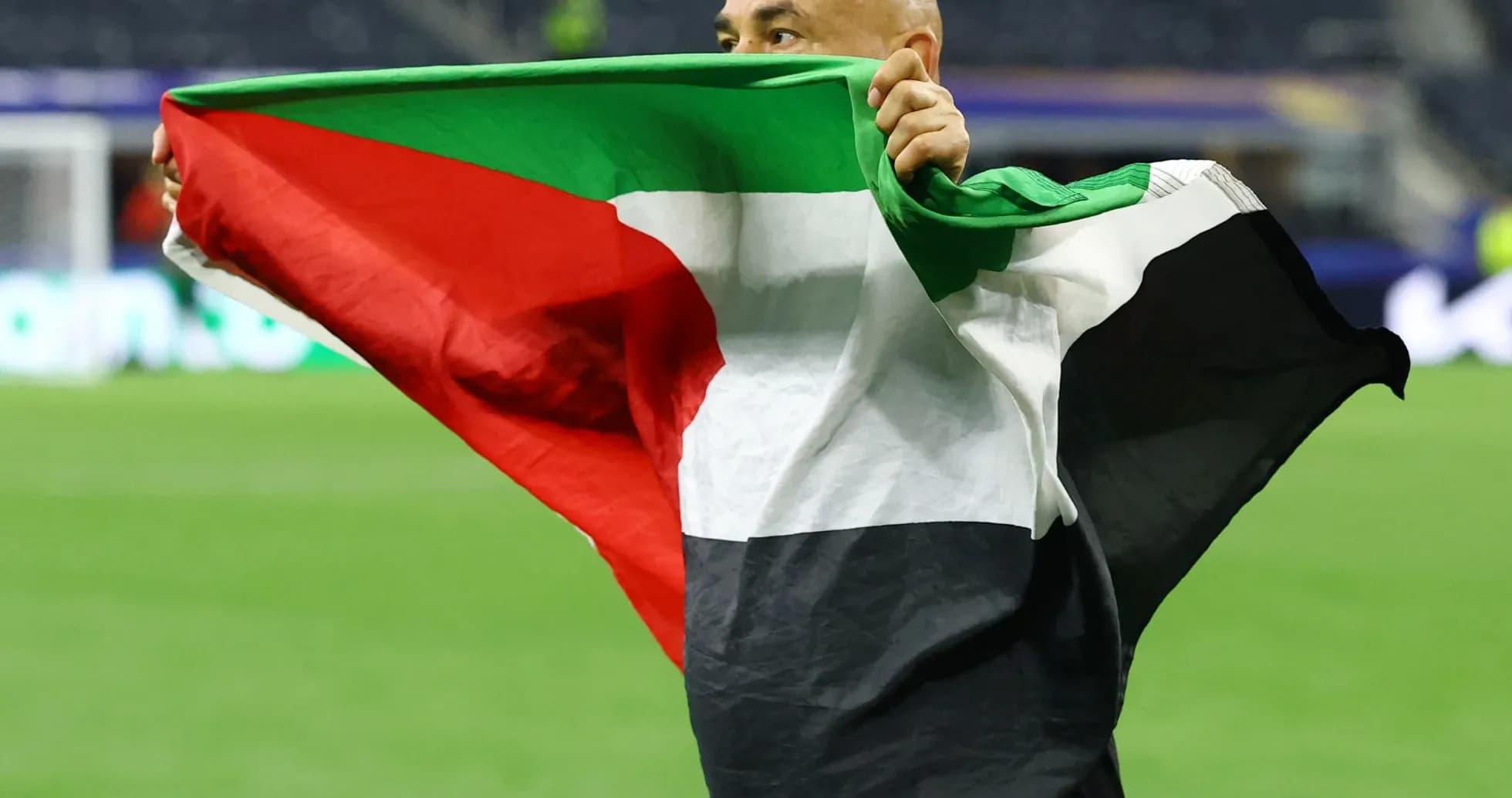
When the noise finally dipped and the formalities ended, coach Hossam Hassan stepped back onto the pitch carrying two flags – Egypt’s and Palestine’s.
His players dropped to the turf in collective prostration, a gesture of gratitude and release after a night that had pushed them to the brink. Around them, the two flags fluttered, a visual message as clear as any post-match quote.
Speaking afterward, Hassan dedicated the victory not only to Egypt but to the people of Palestine.
“May God grant them victory, may God have mercy on their martyrs,” he told reporters. “I’m saying to them: I’m dedicating this victory to the Egyptian people and Palestinian people, those kind and honourable people.”
The words travelled fast. So did the images.
Gaza finds a rare moment of joy
In Gaza, where daily life is framed by rubble, tents, and sirens, the match cut through the darkness for a brief, defiant pause.
Social media filled with scenes of people huddled around screens against a backdrop of bombed-out buildings and makeshift shelters. Children with Egypt’s flag painted on their faces. Smiles that had every right to disappear, but didn’t.
“For the first time, I’m following the World Cup with this much excitement,” Gaza-based Tamer Nahed wrote on X. He described thousands emerging from tents and destroyed homes to watch Egypt’s game, a crowd choosing 90 minutes of football as a temporary escape.
“Faces lit up with smiles, cheers filled the air, and it felt as if everyone had decided to give themselves a moment of life despite everything surrounding them,” he wrote.
Clips from the strip showed people roaring at every Egyptian attack, leaning into every penalty. When Abdelmaguid scored the winner, the celebrations in Gaza mirrored those in Cairo and Dallas. One goal, two flags, countless stories behind them.
Tension off the pitch
The night’s emotion had been simmering long before kick-off.
Hours earlier, members of the Egypt squad were involved in an altercation with police at their team hotel, a confrontation that quickly spread across social media. According to the Egypt national team, a Dallas police officer pushed team director Ibrahim Hassan and player Trezeguet as they tried to pose for a photo with a fan.
The Dallas Police Department later said the situation was resolved on the spot. No further action followed, but the incident added another layer of tension to an already charged occasion.
By the time the players walked out at Dallas Stadium, they were carrying more than the usual World Cup nerves.
A night that will echo
Egypt’s victory will go down in the record books as a first knockout win at a World Cup. A line in a tournament history. A bracket completed.
But the images that will endure are different: Hassan lifting both flags; players kneeling in unison on the grass; fans in Gaza, framed by ruins, erupting at a penalty shootout thousands of miles away.
The football journey continues now, into the last 16 and a meeting with a heavyweight or a rising force. The question is no longer whether Egypt belong on this stage.
It’s how far this team, and the people who claimed this win as their own, can ride the surge of a night like this.