.svg&w=384&q=75 "naujapitch logo")
Curaçao's World Cup Journey: Brenet's Redemption Story
On a small Caribbean island that still flies the Dutch flag, a World Cup story has come full circle.
Curaçao remains part of the Kingdom of the Netherlands, but on the pitch it has long since stepped out of the shadow of the former colonial power. Recognised by FIFA only since 2010, the national team now leans heavily on a diaspora that grew up in Dutch cities, not Willemstad’s streets. Of the 26 players in the current World Cup squad, just one was actually born on the island. He is also its most recognisable face: Tahith Chong.
A Dutch backbone with German chapters
Generations of Curaçaoans moved to the Netherlands, and their children and grandchildren now form the backbone of a team that has quietly become one of international football’s more intriguing stories. Many of them carry the polish of European academies and, in several cases, a shared chapter in Germany.
Chong, once the next big thing at Manchester United, is emblematic of that path. The winger managed 16 competitive appearances for the Old Trafford club before a short, faltering loan at Werder Bremen in 2021. He now turns out for Sheffield United, his career a reminder of how steep the climb can be from promise to permanence at the elite level.
He is far from alone in having tested himself in Germany. Gervane Kastaneer passed through 1. FC Kaiserslautern. Riechedly Bazoer wore the green of VfL Wolfsburg. Roshon van Eijma spent time with Preußen Münster. Jürgen Locadia and Joshua Brenet both landed at TSG Hoffenheim. For Brenet in particular, that move was supposed to be a springboard. It became something else entirely.
Brenet and Nagelsmann: the move that went wrong
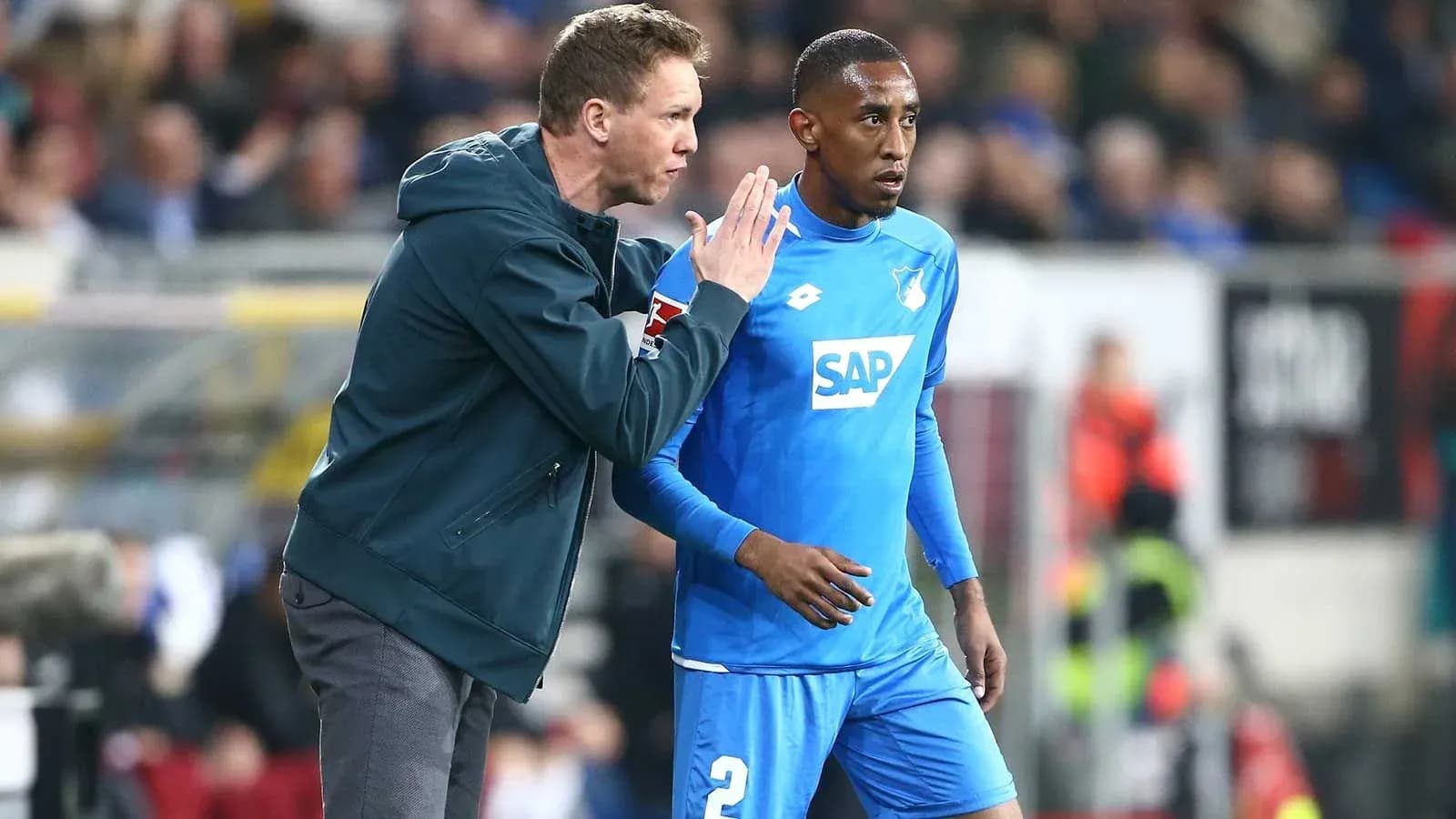
When Hoffenheim paid €3.5 million to bring Brenet from PSV Eindhoven in 2018, it looked like a smart, targeted signing. He was a three-time Eredivisie champion, had already played twice for the Netherlands, and arrived at the urging of a young coach rapidly building his own reputation: Julian Nagelsmann, now in charge of Germany.
The right-back never truly got going.
He spent the first Bundesliga matches after his transfer on the bench. Then came the turning point. Ahead of Hoffenheim’s first-ever Champions League game, against Shakhtar Donetsk, Brenet skipped a video session. Nagelsmann responded by dropping him from the squad for that historic night.
The door was not slammed shut. Nagelsmann later brought him back into the fold, but only on the fringes. Minutes were scarce, trust even scarcer. When Nagelsmann left, any lingering hope of a reset evaporated. His successor Alfred Schreuder, now working alongside Nagelsmann with the DFB, barely looked his way. Under Sebastian Hoeneß, Brenet slid further down the ladder, ending up with the reserves in the fourth-tier Regionalliga Südwest.
On-field struggles were only part of the picture. Repeated disciplinary issues, including persistent lateness, hardened perceptions inside the club. Hoffenheim tried to move him on, but no buyer emerged until 2022, when he finally left on a free transfer to Twente Enschede.
A career derailed off the pitch
In Enschede, the football returned. Brenet impressed again on the right flank, hinting at the player who once seemed destined to be a mainstay for club and country. Off the pitch, the pattern of self-sabotage continued.
In January 2023, he was caught driving without a licence twice in two weeks. The licence itself had already been taken from him in 2020 after a drink-driving offence. The case went to court, and the presiding judge did not mince words.
“He clearly has no regard for authority. It seems to me as though he is continuing to play football after receiving a red card,” the judge said, before handing down a one-month prison sentence in 2024.
It was not his first conviction. In 2021, Brenet had already received a suspended sentence, including a fine and community service, for domestic violence. The prison term for the driving offences was later converted to community service on appeal, but Twente’s patience had run out. The club terminated his contract.
His career scattered. Brenet moved to Al-Rayyan in Qatar, where he managed only six appearances in the 2024/25 season. From there he resurfaced at Livingston FC in Scotland last autumn, then switched again, this time to Kayserispor in Turkey for the second half of the campaign.
The constant movement underlined a simple reality: a defender with top-level tools, but a CV pockmarked by missteps.
From Oranje to Curaçao
On the international stage, his story is just as tangled. Brenet came through the Dutch youth ranks and even debuted for the senior Netherlands side during the 2016 World Cup qualifiers. For many, that would have closed the book on any other national allegiance.
FIFA saw it differently. After a request, world football’s governing body granted him permission to switch to Curaçao, the country of his parents. For a player whose club career had drifted, the move offered something powerful: a chance to belong again.
Since his debut for Curaçao in 2024, he has become a central figure. Six goals in 17 appearances tell part of the tale, but so does his role on the right side of the defence. In the final warm-up match against Aruba, he started at right-back and scored, a timely reminder of his attacking instincts from deep.
Facing the past in a World Cup opener
Now comes the kind of occasion that once seemed to belong firmly in his past.
On Sunday at 7 pm, Curaçao will walk out to begin their World Cup campaign against Germany. On the opposite bench: Julian Nagelsmann and Alfred Schreuder, the two coaches who oversaw the most turbulent chapter of his time at Hoffenheim.
For Curaçao, the fixture is a landmark in itself, a meeting of a young football nation and one of the game’s giants. For Brenet, it is something sharper. Across the halfway line, in the technical area, stand the men who first believed he could thrive in the Bundesliga, then watched him fall away.
Now he comes back into their orbit, not as a Dutch international, not as a Bundesliga signing in need of discipline, but as a key figure for Curaçao on the biggest stage of all.